Why China Is Betting on Dexterous Robotic Hands to Lead the Humanoid Economy
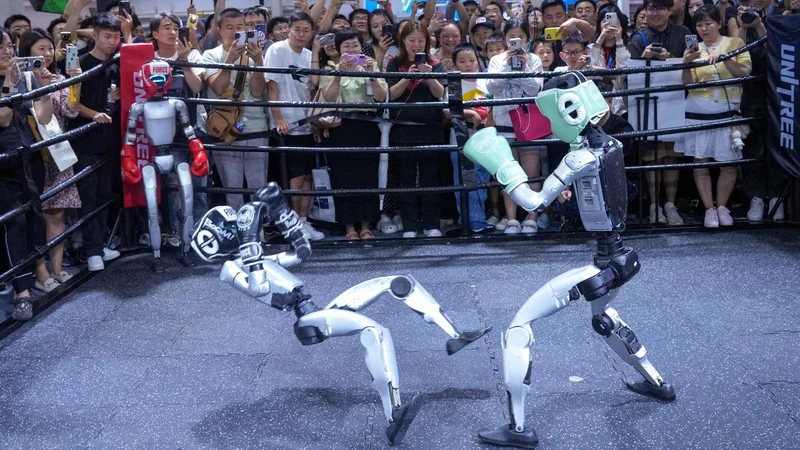
Image: Lemonde
Main Takeaway
China is scaling dexterous robotic hands as a strategic bet on manufacturing, labor shortages and a humanoid robot market projected to reach $5 trillion.
Jump to Key PointsSummary
The strategic bet on hands
China is treating dexterous robotic hands as a gateway to useful humanoid robots, tying advances in manipulation to industrial competitiveness and the future of manufacturing. Bloomberg describes advanced humanoid hardware as a strategic field where China has gained an early lead, while Morgan Stanley projects a humanoid robot market worth $5 trillion by 2050. The scale of that forecast explains the urgency behind the investment, even though commercial deployment remains an emerging industry.
A robotic torso or walking platform can attract attention, but hands determine whether a machine can perform the small, varied tasks found in factories, warehouses and homes. China’s push combines national technology ambitions with practical economic pressures, including a shrinking workforce and the need to preserve manufacturing output.
Why human hands are so difficult
Human hands remain robotics’ hardest mechanical and software problem because they combine many joints, sensitive feedback and rapid coordination in a compact structure. Buttoning clothing, tying laces, holding a pen and handling irregular objects require constant adjustments that people perform without conscious calculation. Replicating that choreography requires actuators, sensors, control systems and artificial intelligence to work together.
The Guardian frames dexterity as the step that can turn humanoid robots from demonstrations into useful products. The challenge is not simply copying the shape of a hand. A viable system must grip objects with different textures, apply the right force, recover from slips and repeat the task safely. That technical threshold gives China’s hand makers an important target, while also limiting how quickly the broader humanoid market can mature.
China’s manufacturing advantage
China’s case rests on industrial depth as much as on algorithms. A dense network of component suppliers, contract manufacturers and automation firms gives developers access to motors, sensors, precision parts and assembly capacity. Table compares that ecosystem with the supplier structure that helped China expand electric-vehicle production, where cost reduction and rapid iteration reinforced each other.
The emerging hand industry already shows signs of manufacturing scale. Linkerbot, a Beijing startup founded in 2023, is described as producing about 5,000 dexterous hands a month across 5 factories and seeking a $6 billion valuation. That account comes from a low-reliability source, so the figures require caution, but the example captures the central industrial thesis: production experience can improve the machines that build the next machines.
Labor and factory demand
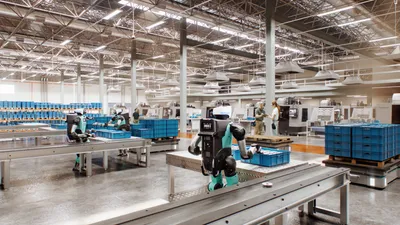
China’s interest in humanoids is closely tied to the future of work. Bloomberg’s analysis connects dexterous hands to a stronger manufacturing base and a slowly shrinking workforce, while the broader robotics boom reflects demand for machines that can operate in spaces designed for people. A hand that can pick, sort, assemble and manipulate parts expands the range of tasks automation can cover.
That does not make humanoid robots an immediate replacement for industrial equipment. Fixed robotic arms remain faster and more economical for repetitive tasks, and humanoids must still prove reliability, maintenance costs and safety. The business case improves when one adaptable machine can handle several jobs without a factory being rebuilt around it. China’s existing manufacturing base gives local companies many environments in which to test that flexibility.
From prototypes to a national industry
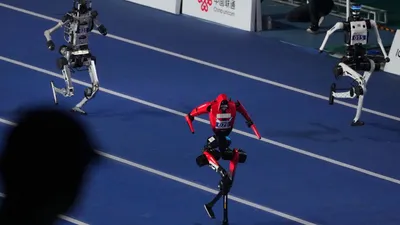
China’s robotics sector is developing through startups, suppliers, public demonstrations and industrial policy rather than through a single flagship company. The World Robot Conference and related events in Beijing have showcased industrial arms, AI-powered humanoids and competition robots, reflecting the sector’s growing visibility. Le Monde describes the country’s robotics industry as accelerating amid expectations of a multitrillion-dollar market.
The combination of demonstrations and manufacturing capacity matters because embodied AI needs physical data. Every successful grasp, dropped object and corrected movement can inform control software and hardware design. Chinese companies are pursuing that feedback loop at a time when the United States and other countries are also competing in humanoid robotics. Bloomberg places China among the early leaders in advanced humanoid hardware, raising the stakes for suppliers, developers and investors worldwide.
What happens next
The next test is deployment, not spectacle. Chinese robotics companies must show that dexterous hands can work reliably across real production lines, maintain consistent performance and justify their cost. Monthly output figures and high valuations matter less than whether customers can use the machines for measurable gains in throughput, safety or labor coverage.
Progress will also depend on software, batteries, actuators, tactile sensing and training data. A breakthrough in one component won't solve the whole system. Still, China’s supplier density, manufacturing experience and labor pressures give its hand-focused strategy a coherent industrial logic. If firms turn production scale into dependable manipulation, robotic hands can become the key interface between AI models and the physical economy.
Key Points
China is scaling dexterous robotic hands to anchor its humanoid robot and embodied AI strategy.
Dexterous hands remain robotics’ hardest challenge because manipulation requires sensing, force control and precise coordination.
China’s dense supplier network gives robotic-hand makers advantages in prototyping, production and cost reduction.
Humanoid robots address manufacturing automation needs as China’s workforce gradually shrinks.
Linkerbot is reported to produce about 5,000 dexterous robotic hands monthly across 5 factories.
Questions Answered
China wants robotic hands to strengthen manufacturing, address workforce pressures and lead the humanoid robot industry. Dexterous hands allow robots to perform varied tasks in factories and other human-designed environments.
Robotic hands must coordinate many joints, sensors and force levels while manipulating objects with different shapes and textures. Human tasks such as buttoning clothes or tying laces require rapid adjustments that machines still struggle to reproduce.
China’s supplier network provides access to motors, sensors, precision components and assembly capacity. That industrial base can speed prototypes, reduce costs and help companies scale production.
China is an early leader in advanced humanoid hardware, according to Bloomberg’s analysis. Its position reflects manufacturing depth, startup activity and investment, while reliability and commercial deployment remain key tests.
Morgan Stanley projects a humanoid robot market worth $5 trillion by 2050 and describes a future with up to 1 billion humanoids. Those forecasts depend on major improvements in cost, safety, reliability and dexterity.
Source Reliability
57% of sources are highly trusted · Avg reliability: 64
Go deeper with Organic Intel
Simple AI systems for your life, work, and business. Each one includes copyable prompts, guides, and downloadable resources.
Explore Systems