Uber and Wayve Launch London’s First Supervised Robotaxi Rides With Safety Drivers Aboard
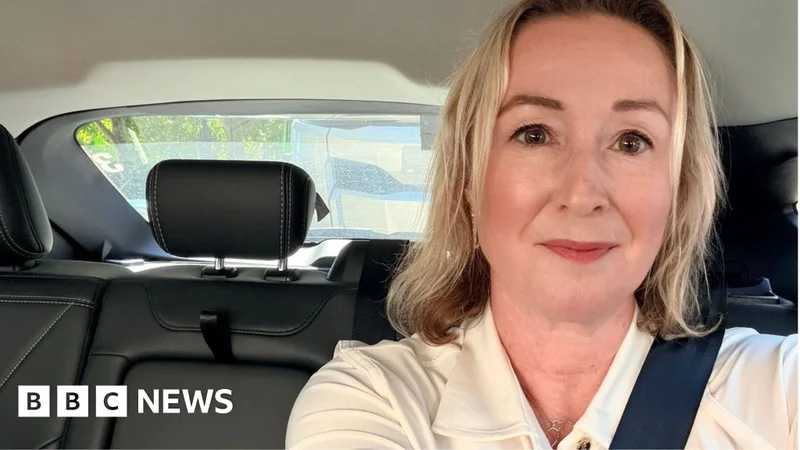
Image: Bbc
Main Takeaway
Uber and Wayve launched London’s first public autonomous rides in 15 vehicles, giving passengers self-driving trips while safety operators remain in the driver’s seat.
Jump to Key PointsSummary
London’s robotaxi service begins
Uber and Wayve launched the United Kingdom’s first public autonomous ride-hailing service in London on September 3, opening supervised self-driving trips through the Uber app. The initial fleet comprises 15 vehicles, with passengers matched to autonomous Ford Mustang Mach-E cars on eligible UberX, Uber Electric and Uber Comfort requests.
A trained safety operator remains in the driver’s seat during every ride, making the launch a public demonstration of autonomous driving rather than a fully driverless taxi service. The arrangement gives Uber a live commercial platform while Wayve gathers experience across London’s dense traffic, complex junctions and older road network.
How passengers access the rides
Passengers request a normal Uber journey and can be offered a Wayve-equipped vehicle through the app. Uber’s rider information says users will receive details about the autonomous vehicle and can choose whether to accept the trip, while the safety operator monitors the system and takes control when required.
The launch follows regulatory preparation in London. Transport for London granted private-hire-vehicle licences to Wayve’s autonomous vehicles, and more than 100,000 people joined Uber’s interest list before the service opened. The early rollout therefore combines a limited fleet with substantial public curiosity, creating a controlled path from testing to paid rides.
Why Wayve matters to Uber
The partnership gives Uber access to autonomous-driving technology without requiring the ride-hailing company to build its own complete vehicle-control system. Wayve, a British startup led by chief executive Alex Kendall, supplies the driving technology, while Uber contributes the customer app, dispatch network and operating experience.
The collaboration also puts Uber ahead of Waymo in offering paid autonomous trips in London, according to The Verge and Bloomberg. London presents a distinct engineering challenge: narrow and irregular streets, complex roundabouts, buses, cyclists, pedestrians and centuries-old road layouts create conditions that differ sharply from the broad, mapped streets used in some American robotaxi deployments. Wayve’s approach is designed to operate across varied roads rather than relying on a tightly restricted city geofence.
Supervision remains the dividing line
The service’s central limitation is visible from the passenger seat: a human still occupies the front position. That operator provides a safety layer during the first public phase, so the launch does not demonstrate commercially available driverless travel in the strictest sense.
The distinction matters for regulation, public trust and economics. A fully autonomous service removes the driver cost that makes robotaxis attractive to operators, while a supervised service still depends on trained personnel and human intervention. Uber and Wayve are using the London deployment to build operational evidence and rider familiarity before seeking a broader driverless model. The timetable for that next step remains tied to safety performance, regulatory approval and the companies’ experience with real passengers.
Regulation shapes the rollout
London’s launch follows a period of uncertainty over the United Kingdom’s autonomous-vehicle timetable. Government plans had pointed toward commercial trials of fully driverless taxis, but regulatory guidance and technical requirements delayed that ambition, The Guardian reported in August.
The supervised approval provides a narrower route into the market. Private-hire licences allow Wayve vehicles to operate within the existing ride-hailing framework, while a human safety operator addresses immediate oversight concerns. The result is a staged deployment rather than the rapid arrival of unrestricted driverless taxis. Its progress will test whether Britain’s regulatory system can move from supervised trials to scaled autonomous services without sacrificing public confidence.
What happens next
Uber and Wayve now face the harder task of turning a high-profile debut into a repeatable service. The companies need to demonstrate reliable performance across London’s weather, traffic patterns and road users, while collecting rider feedback and intervention data from the initial fleet.
Expansion depends on those results. A successful launch can give Uber a stronger position in European autonomous mobility and give Wayve a working relationship with a global distribution platform. Competitors, including Waymo and other autonomous-driving developers, will be watching the London data closely. For passengers, the immediate change is modest but tangible: a ride booked like any other Uber trip, with the car driving itself and a human still ready to take over.
Key Points
Uber launched London’s first public autonomous ride service with Wayve-powered vehicles and onboard safety operators.
Wayve’s 15 Ford Mustang Mach-E vehicles are available through selected UberX, Uber Electric and Uber Comfort requests.
More than 100,000 Londoners joined Uber’s interest list before the supervised robotaxi rollout began.
Transport for London granted private-hire licences supporting Wayve’s autonomous vehicles in the capital.
London’s complex roads provide a demanding test for autonomous driving beyond tightly geofenced American deployments.
Questions Answered
Uber and Wayve launched London’s first public autonomous ride-hailing service. The rides use Wayve-equipped vehicles booked through Uber, with safety operators remaining in the driver’s seat.
Uber and Wayve’s London robotaxis are supervised, not fully driverless. A trained human operator sits at the front and can take control during each ride.
Uber launched the London service with 15 autonomous vehicles supplied through its Wayve partnership. The initial fleet uses Ford Mustang Mach-E cars and operates on selected Uber ride categories.
Uber and Wayve became the first companies to offer public autonomous rides in the United Kingdom. The launch gives Uber an early position in London and gives Wayve real-world operating experience with passengers.
Passengers request an eligible Uber ride through the Uber app and can be matched with a Wayve autonomous vehicle. Uber provides information about the vehicle before the passenger accepts the trip.
Uber and Wayve will evaluate safety performance, passenger feedback and operational data before expanding the service. A fully driverless rollout requires further regulatory approval and successful supervised operations.
Source Reliability
75% of sources are highly trusted · Avg reliability: 86
Go deeper with Organic Intel
Simple AI systems for your life, work, and business. Each one includes copyable prompts, guides, and downloadable resources.
Explore Systems