Nvidia Veteran Says Physical AI Needs Basic Infrastructure Before Robotics Gets Its ChatGPT Moment

Image: TechCrunch AI
Main Takeaway
Former Nvidia robotics executive Amulya Vishwanath says physical AI remains in a foundational “Lego era,” creating investment opportunities across hardware, software and safety.
Jump to Key PointsSummary
Physical AI starts with infrastructure
Physical AI is still rebuilding the components that let machines perceive, decide and act safely in the real world, according to Amulya Vishwanath, a former Nvidia robotics executive and founder of Techable VC. He describes the sector as being in a “Lego era,” where actuators, robotic hands, software and safety standards remain unfinished or fragmented.
That diagnosis places the investment opportunity beneath the headline-grabbing humanoid robot. Nvidia has framed physical AI as a way to bring intelligent systems into factories, warehouses and other real-world settings, while investor coverage has focused on the companies supplying the technology. The common thread is a market forming around the parts needed to make robots useful at scale.
Why robotics lacks a ChatGPT moment
Robotics has not produced a single breakthrough comparable to ChatGPT because physical systems face constraints that software-only models avoid. A robot must interpret changing surroundings, control hardware precisely, recover from mistakes and operate without creating unacceptable safety risks.
Vishwanath’s view contrasts with the expectation that one general foundation model will quickly unify robotics. The debate reflects a split in the sector: some companies are pursuing broad models and shared data, while others are rebuilding the mechanical, computational and regulatory foundations underneath them. Nvidia’s robotics strategy, industry keynote messaging and investor analysis all point toward a stack that combines simulation, computing, sensors and control systems rather than a single software release.
Nvidia’s role in the physical AI stack
Nvidia is positioning itself as a platform provider for physical AI, supplying the computing and software layers used to train and run robotic systems. Its public robotics messaging connects simulation, accelerated computing and AI models with machines operating in factories and other physical environments.
That position gives Nvidia exposure to a wider market than robot makers alone. The company can benefit when manufacturers, logistics operators and robotics startups buy the infrastructure required to develop and deploy machines. The Wall Street Journal’s account of Nvidia’s push into global robotics, including demand from China, adds a geopolitical dimension: physical AI is becoming both an industrial technology market and a contest over the systems that power it.
Investors are backing the missing pieces
The investor activity around robotics and physical AI is spreading across the supply chain. Funds and former technology executives are looking at robot manipulators, actuators, simulation tools, training data, control software and safety systems, rather than limiting their attention to companies selling complete robots.
Business Insider’s investor and startup coverage captures that widening field, while Vishwanath’s fund offers a direct example of the former-operator-to-investor pipeline shaping the sector. Nvidia alumni bring knowledge of accelerated computing, robotics platforms and enterprise buyers into new companies. That network can speed capital formation, but it also raises the bar for startups: products must solve narrow operational problems before broad autonomy becomes commercially credible.
China and industrial demand raise the stakes
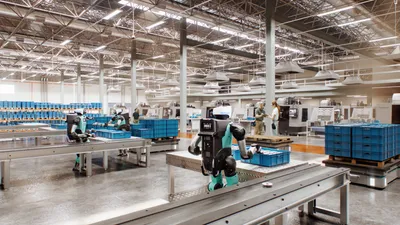
Industrial deployment is the clearest near-term test for physical AI because factories and warehouses offer structured environments, repeatable tasks and measurable returns. Nvidia’s reported engagement with Chinese robotics companies shows that demand extends beyond the United States, even as advanced computing and technology supply chains remain politically sensitive.
The commercial race therefore involves more than robot intelligence. It includes access to processors, simulation environments, sensors, mechanical components and software ecosystems. Nvidia’s global positioning gives it a central role, while startups and investors compete to fill specialized gaps around the platform. The result is a market where industrial adoption and national technology strategy reinforce each other.
What happens before broad autonomy
The next phase of physical AI will be measured by dependable deployments, not by a single public demonstration. Startups need to show that their systems can perform specific jobs repeatedly, integrate with existing operations and meet safety requirements. Investors are likely to favor companies that own a critical component or deliver clear savings in a defined workflow.
A general-purpose robotics breakthrough remains a longer-term ambition. In the nearer term, progress will come from assembling better pieces: stronger hands, more capable actuators, improved simulation, usable control software and shared safety practices. Vishwanath’s “Lego era” framing gives the industry a practical roadmap, while Nvidia’s strategy shows how much value can accumulate before robots reach a universal ChatGPT moment.
Key Points
Amulya Vishwanath says physical AI remains in a foundational Lego era before broad robotics autonomy arrives.
Nvidia is building a physical AI platform spanning computing, simulation, robotics software and industrial deployment.
Investors are targeting actuators, robotic hands, control software, safety systems and other infrastructure layers.
Robotics faces hardware, reliability and safety constraints that software-only AI systems largely avoid.
Chinese industrial demand adds geopolitical weight to Nvidia’s effort to supply the world’s robotics ecosystem.
Questions Answered
Amulya Vishwanath says physical AI is in a “Lego era” where its basic components are still being rebuilt. He identifies actuators, robotic hands, software and safety standards as key unfinished building blocks.
Robotics has not had a ChatGPT moment because machines must combine perception, physical control, hardware reliability and safety in changing environments. A general AI model alone does not solve those engineering and operational problems.
Nvidia is supplying computing, simulation and robotics software for physical AI systems. Its strategy targets industrial environments such as factories and warehouses, alongside a broader ecosystem of robotics companies.
Physical AI startups are attracting investment across actuators, robotic hands, sensors, simulation, control software, training data and safety systems. Investors are also backing companies that integrate robots into specific industrial workflows.
China is an important customer base and competitive arena for Nvidia’s robotics push. Chinese industrial demand gives physical AI commercial scale while adding sensitivity around processors, supply chains and technology access.
Source Reliability
33% of sources are highly trusted · Avg reliability: 73
Go deeper with Organic Intel
Simple AI systems for your life, work, and business. Each one includes copyable prompts, guides, and downloadable resources.
Explore Systems