Agility Robotics Takes Humanoid Robots Public, Putting Commercial Reality on Trial
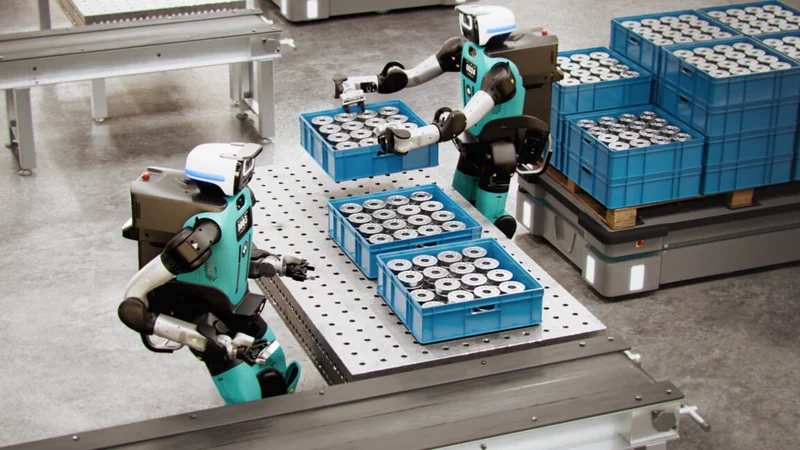
Image: Ars Technica AI
Main Takeaway
Agility Robotics is becoming the first US-listed humanoid robot company through a $2.5 billion SPAC merger, despite limited revenue and steep losses.
Jump to Key PointsSummary
Agility reaches the public market
Agility Robotics is becoming the first dedicated humanoid robotics company listed in the United States through a merger with Churchill Capital Corp XI. The transaction values the combined company at roughly $2.5 billion, with trading on Nasdaq under the ticker AGLT expected to begin on November 5, 2026. Agility announced the agreement in June and completed the business combination ahead of the listing, according to company and Nasdaq announcements.
The deal gives public investors direct exposure to a company building bipedal robots for warehouses and factories. It also turns Agility's commercial claims into quarterly disclosures, making deployment rates, revenue growth, production costs, cash use and customer retention central measures of the humanoid robotics market. The transaction includes about $465 million in new capital, according to TechCrunch.
Digit has industrial customers
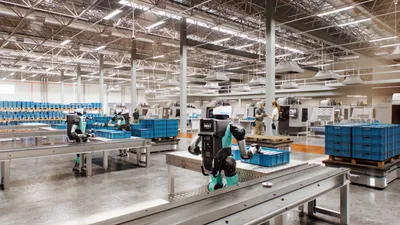
Agility's business centers on Digit, a two-legged robot designed to move materials and perform repetitive tasks in industrial environments. The company says Digit has accumulated more than 65,000 operating hours at customer facilities, while deployments include Schaeffler, GXO and Toyota Motor Manufacturing Canada. Those installations give Agility a commercial record that reaches beyond laboratory demonstrations, though the public-market test will focus on repeatable economics.
Agility has promoted more than $300 million in contracted Digit v5 orders across over 30 customers. The company is expanding its RoboFab manufacturing facility and has announced a new Pittsburgh location to support customer deployments. The order figure is a major part of the investment case, but contracted demand still has to become delivered systems, recognized revenue and profitable operations.
Financial reality meets valuation
Agility reported $1.8 million in revenue for 2025 and a net loss of $138.1 million, figures highlighted by Yahoo Finance. Those numbers leave a wide gap between current sales and the $2.5 billion transaction valuation. Investors will therefore be pricing production capacity, future contracts and the belief that humanoid robots can become a large industrial equipment business.
The loss reflects the cost of research, engineering, manufacturing expansion and commercialization. Agility says it is devoting substantially all of its resources to those activities, while its public-market filing gives investors a framework for tracking cash consumption and execution. The company has backing from Nvidia, Amazon, SoftBank Vision Fund 2, Foxconn and other strategic and financial investors, but that support does not remove the need to prove uptime, throughput, maintenance costs and labor savings.
Nvidia ties into the platform
Nvidia is a strategic investor and technology partner in Agility's effort to scale Digit. Digit v5 is designed to consolidate onboard computing around Nvidia IGX Thor modules, building on a collaboration focused on robot safety and AI processing. That relationship links Agility's public debut to Nvidia's broader push to supply computing platforms for physical AI.
The partnership matters because humanoid robots need perception, control and safety systems that operate in changing workplaces. Nvidia hardware can support those workloads, while Agility contributes the robot body, operating data and customer integrations. The arrangement also illustrates how robotics companies depend on a stack that includes chips, simulation, software, factory automation and logistics expertise. Other humanoid developers, including private rivals such as Figure AI, will face the same question: whether better hardware and models translate into reliable work at an acceptable cost.
Wall Street tests the category
Agility's listing gives public markets their clearest financial test yet of the humanoid robot investment story in the United States. Analysts and investors will examine whether robots can perform useful work for long shifts, integrate with warehouse and manufacturing software, and reduce costs after installation, training and maintenance. Those measures matter more than demonstrations because customers buy completed workflows, not isolated motion capabilities.
The debut also arrives amid intense competition and skepticism. TechCrunch described the listing as a reverse merger after a public exchange between Agility and Figure AI's chief executive, while other coverage framed the deal as a reality check for a fast-growing sector. A public valuation can help Agility fund factories and deployments, but it exposes the company to scrutiny over forecasts, customer concentration, production bottlenecks and the pace of commercial adoption.
What investors will watch next
Agility's next challenge is converting orders and pilot activity into a durable operating business. The company needs to manufacture Digit v5 at scale, keep robots productive in customer facilities and show that each deployment generates economic value after all operating expenses. Quarterly filings will provide the first consistent public evidence of whether its commercial pipeline is turning into revenue.
The outcome will influence funding and valuation across humanoid robotics. Strong execution would give suppliers, industrial customers and rival robot makers a clearer benchmark for demand. Weak sales or rising losses would put pressure on the sector's ambitious timelines. Agility's Nasdaq debut is therefore both a corporate milestone and a public experiment in whether humanoid robots are ready to move from promising demonstrations into repeatable industrial work.
Key Points
Agility Robotics is becoming the first US-listed pure-play humanoid robotics company through a $2.5 billion SPAC merger.
Digit humanoid robots have logged more than 65,000 hours across industrial customer facilities and deployments.
Agility reported $1.8 million in 2025 revenue against a $138.1 million net loss.
The company cites over $300 million in contracted Digit v5 orders spanning more than 30 customers.
Nvidia supplies strategic investment and IGX Thor computing technology for Digit v5.
Questions Answered
Agility Robotics is the first dedicated humanoid robotics company to list publicly in the United States. Its Nasdaq debut gives investors direct exposure to humanoid robots and creates public financial benchmarks for the sector.
Agility Robotics is valued at roughly $2.5 billion through its merger with Churchill Capital Corp XI. The transaction also includes about $465 million in new capital.
Agility Robotics reported $1.8 million in revenue for 2025. The company also reported a $138.1 million loss, so investors are focused on production growth, contracted orders and the path to profitability.
Agility Robotics' Digit robot moves materials and performs repetitive tasks in warehouses and factories. The company says Digit has logged more than 65,000 hours at customer facilities and is being prepared for broader commercial production.
Nvidia is an investor and technology partner in Agility Robotics' humanoid program. Digit v5 is designed to use Nvidia IGX Thor modules for onboard computing as part of a broader safety and physical AI collaboration.
Investors will watch Agility Robotics' revenue conversion, production volumes, robot uptime, customer retention and operating losses. The company must turn contracted Digit orders into delivered systems and repeatable customer savings.
Source Reliability
38% of sources are trusted · Avg reliability: 72
Go deeper with Organic Intel
Simple AI systems for your life, work, and business. Each one includes copyable prompts, guides, and downloadable resources.
Explore Systems