Wealth Managers Face AI Disruption as Client Trust in Automated Advice Grows
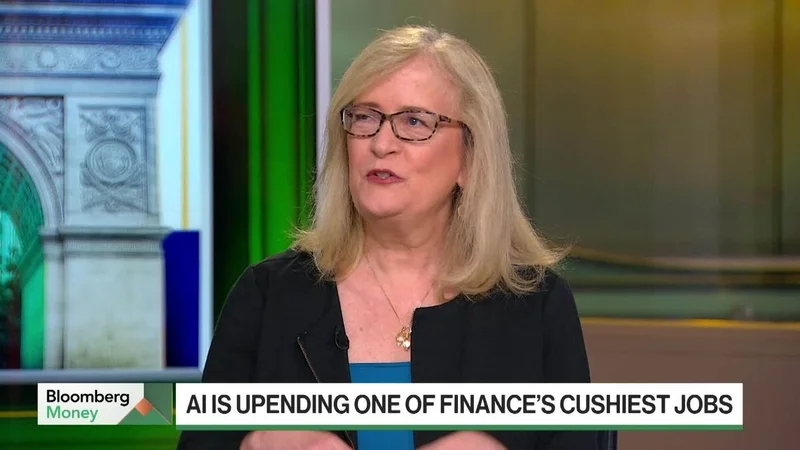
Image: Bloomberg AI
Main Takeaway
A growing share of investors trust AI for financial advice, threatening traditional wealth managers who now face a chatbot reckoning.
Jump to Key PointsSummary
Why wealth managers are suddenly vulnerable
Old-school wealth managers look more vulnerable to AI disruption than perhaps any other professionals in financial services. Bloomberg reports that a growing share of people now trust AI enough to receive financial advice, with many already using it to make investment decisions. This shift represents a fundamental challenge to an industry built on personal relationships and perceived expertise.
The threat is not merely theoretical. McKinsey has identified the current moment as a critical inflection point for wealth management's value proposition in the AI era. Traditional advisors who charge premium fees for portfolio construction and basic financial planning now compete against systems that can analyze vast datasets, identify patterns, and generate recommendations instantaneously. The economics of the business look increasingly precarious when clients can access sophisticated analysis through a chat interface.
Yet the disruption cuts both ways. Funds Europe notes that AI simultaneously represents asset management's existential crisis and its potential competitive advantage, suggesting firms that integrate the technology strategically may emerge stronger than those that resist.
What clients actually want from AI advisors
Investor attitudes toward AI financial advice remain deeply divided, creating a complex landscape for wealth managers to navigate. Yahoo Finance reports that despite growing comfort with AI tools, many investors still do not want chatbots handling their actual money. This hesitation provides traditional advisors with a temporary buffer, but not a guarantee of long-term security.
The trust gap appears generational and situational. Younger investors and those with simpler financial lives show greater willingness to rely on automated advice. For complex situations involving estate planning, tax optimization, and emotional decision-making during market volatility, human advisors still hold significant advantages. The challenge for traditional firms is that AI capabilities are expanding rapidly into these historically protected domains. Advisors must now articulate precisely what human judgment adds that algorithms cannot replicate, a sales pitch that grows harder as the technology improves.
How firms are responding to the competitive threat
Wealth management platforms are racing to bolt AI capabilities onto their existing infrastructure rather than waiting to be displaced. StratiFi markets itself specifically as an AI wealth management platform for registered investment advisors, signaling that even the advisor-facing technology stack is being rebuilt around intelligent automation. This pattern of incumbent adaptation rather than pure disruption mirrors what occurred in other financial services sectors.
The integration strategies vary widely. Some firms position AI as a productivity tool for human advisors, automating routine analysis while preserving the client relationship. Others are building hybrid models where AI handles initial client onboarding and portfolio construction, with humans stepping in only for complex exceptions. WiserAdvisor and Advisor Perspectives both document this transformation through innovation, though the long-term viability of these transitional models remains uncertain. The firms that most successfully blend technological capability with human trust may define the next generation of wealth management.
Where the industry goes from here
The wealth management sector faces a structural compression that will force consolidation and business model reinvention. McKinsey's framing of the current environment as requiring new value signals suggests that simply having a human advisor is no longer sufficient differentiation. Firms must demonstrate tangible outcomes that AI cannot easily replicate, such as behavioral coaching during market panics or complex multi-generational planning.
The economics will get brutal before they get clear. Advisors who serve mass-affluent clients with relatively simple needs face the most immediate pressure, as these portfolios are most easily replicated algorithmically. High-net-worth clients with intricate family dynamics and illiquid assets will retain demand for human judgment longer, but even this segment will see AI encroachment. The ultimate question is whether the industry can shrink its cost structure and redefine its value proposition fast enough to maintain relevance as client expectations shift. Those that succeed will look very different from today's typical advisory practice.
What this means for investors seeking advice
Clients now inhabit an awkward in-between period where AI capabilities have outpaced regulatory frameworks and industry standards for automated advice. The democratization of financial analysis through chatbots offers genuine benefits for those previously priced out of professional advice, but also introduces risks of acting on recommendations without adequate context or accountability.
Savvy investors are increasingly treating AI as a research supplement rather than a replacement for professional judgment, using it to generate questions and explore scenarios before consulting human advisors. This hybrid approach may represent the most durable model, but it also raises questions about who bears responsibility when AI-suggested strategies underperform. The fiduciary standards that govern human advisors do not cleanly map onto algorithmic recommendations, creating a regulatory gap that policymakers have barely begun to address. Investors should understand that trust in AI advice currently outpaces the legal and practical frameworks that would protect them when that trust is misplaced.
Key Points
Growing investor trust in AI financial advice threatens traditional wealth management business models
Bloomberg finds wealth managers more vulnerable to AI disruption than other financial professionals
McKinsey frames current period as critical inflection point for industry value proposition
Yahoo Finance reports many investors still reluctant to let chatbots handle actual money
Advisory platforms racing to integrate AI tools rather than waiting to be displaced
Questions Answered
Wealth managers face an existential crisis because a growing share of investors now trust AI enough to receive financial advice and make investment decisions. Bloomberg reports that old-school wealth managers look more vulnerable to AI disruption than perhaps any other professionals in financial services, as algorithms can now analyze vast datasets and generate recommendations instantly.
Investor attitudes are split. Bloomberg finds growing trust in AI financial advice, but Yahoo Finance reports that many investors still do not want chatbots handling their actual money. Younger investors and those with simpler finances show greater willingness, while complex situations still favor human judgment.
Firms are racing to integrate AI capabilities into their technology stacks rather than waiting to be displaced. Platforms like StratiFi market themselves specifically as AI wealth management systems for advisors. Most firms are pursuing hybrid models where AI handles routine analysis and portfolio construction, with humans managing complex exceptions and client relationships.
McKinsey identifies the current moment as a critical inflection point requiring wealth managers to develop new value signals. Simply having a human advisor is no longer sufficient differentiation. Firms must demonstrate tangible outcomes that AI cannot easily replicate, such as behavioral coaching during market volatility and complex multi-generational planning.
No, regulatory and fiduciary frameworks significantly lag behind AI capabilities. The fiduciary standards that govern human advisors do not cleanly map onto algorithmic recommendations, creating a protection gap for investors. This regulatory uncertainty means that trust in AI advice currently outpaces the legal frameworks that would protect investors when that trust is misplaced.
Source Reliability
43% of sources are established · Avg reliability: 65
Go deeper with Organic Intel
Simple AI systems for your life, work, and business. Each one includes copyable prompts, guides, and downloadable resources.
Explore Systems