SpaceX Stock Sinks Below $135 IPO Price as Starship Launch Approaches
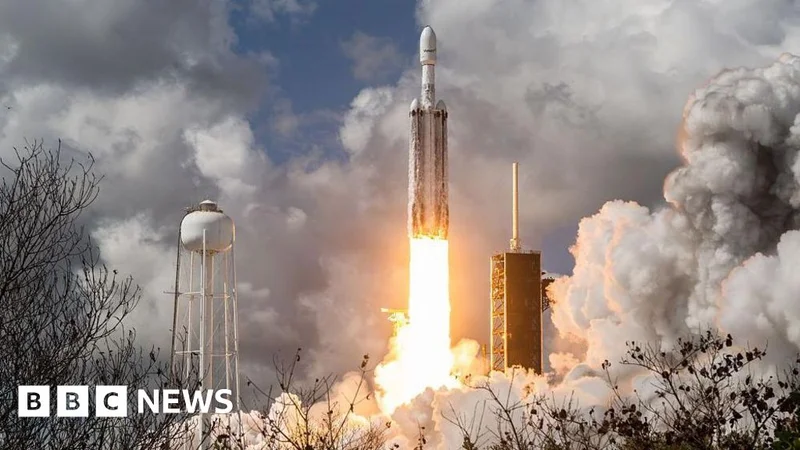
Image: Bbc
Main Takeaway
SpaceX shares dipped below their $135 IPO price on Wednesday, closing at $135.27, as the stock's steady post-debut decline tests investor confidence ahead.
Jump to Key PointsSummary
The slide back to the IPO price
SpaceX shares spent much of Wednesday trading below the $135 mark the company set for its historic June 12 initial public offering. The stock dipped under $133 per share at one point before recovering to close at $135.27, according to CNN and Yahoo Finance market data. That closing price represented a 0.60% drop on the day, with after-hours trading showing a modest 0.24% uptick to $135.59.
The intraday breach of the IPO price is a psychological milestone for a stock that has been steadily retreating from its post-debut highs. TechCrunch reports the shares have been sliding for roughly a month since the IPO, which raised nearly $86 billion and briefly made CEO Elon Musk the world's first trillionaire. The decline signals that the euphoria surrounding the largest public offering in history is giving way to a more sober assessment of the company's near-term prospects.
What the historic IPO delivered
SpaceX's June 12 debut shattered records. The company raised roughly $75 billion to nearly $86 billion, depending on the source, making it the largest IPO ever completed. NPR affiliate WUSF reported the stock gained 19% on its first day of trading, vaulting SpaceX into the ranks of the world's most valuable companies and pushing Elon Musk's net worth past the trillion-dollar threshold.
The IPO opened direct ownership to everyday investors for the first time in SpaceX's two-decade history, as Smartasset notes. Before going public, the rocket and satellite company had built its launch business and Starlink broadband network entirely outside public markets. The offering listed on Nasdaq under the ticker SPCX, with SpaceX filing its SEC prospectus in May and setting the $135 target price ahead of the listing, according to CNBC and the BBC.
The gap between ambition and market reality
The post-IPO slide reflects a market that is recalibrating expectations against the sweeping promises laid out in SpaceX's prospectus. CNBC reported in May that SpaceX identified a total addressable market of $28.5 trillion, with the vast majority sitting outside its existing businesses. The filing cited an $870 billion market for Starlink broadband and pointed to a repeatable business model built on creating trillion-dollar opportunities.
TechCrunch characterizes the stock's decline as evidence that markets are sobering up to those projections. While the $1.75 trillion valuation implied by the IPO pricing, cited by the BBC, made SpaceX one of the biggest companies on the planet, sustaining that valuation requires execution on timelines and revenue targets that remain unproven in public markets. The steady descent toward and now below the $135 level suggests investors are weighing the gap between the addressable market narrative and the company's current financial trajectory.
Starship as the next catalyst
The stock's wobble arrives with a major technical milestone on the horizon: an upcoming Starship launch. SpaceX's fully reusable super heavy-lift vehicle is central to the company's long-term growth story, designed to carry crew and cargo to the Moon, Mars, and beyond. Wikipedia's Starship entry details the vehicle's function as the cornerstone of SpaceX's interplanetary ambitions.
A successful Starship flight could reignite investor enthusiasm by demonstrating progress on the hardware that underpins the most ambitious segments of that $28.5 trillion addressable market. Conversely, any delay or failure would likely add pressure to a stock already testing its IPO floor. The timing creates a high-stakes backdrop: the shares are hovering at their debut price just as the company prepares to showcase the technology that justifies its trillion-dollar valuation narrative.
What the financial data shows
Trading data from multiple platforms paints a consistent picture of a stock under gentle but persistent pressure. Morningstar, Yahoo Finance, and CNN all recorded the July 15 close at $135.27, down $0.81 on the session. The after-hours quote edged up to between $135.59 and $135.70 across sources, a fractional recovery that did little to offset the intraday dip below $133.
Notice.co's pricing data shows a higher figure of $160.42, though this appears to reflect a different snapshot or methodology and sits well above the real-time market quotes from major financial data providers. The broader trend since the June IPO has been unmistakably downward, with the initial first-day pop of 19% gradually eroding over the subsequent month of trading.
Musk's stake and the trillionaire threshold
The stock's trajectory has direct implications for Elon Musk's personal wealth. WUSF and Forbes reported that the IPO briefly made Musk the world's first trillionaire, a status tied directly to his massive ownership stake in the company. CNBC's pre-IPO coverage highlighted Musk's dominant equity position as a central feature of the offering.
With shares now trading at the IPO price, the paper gains that pushed Musk into trillionaire territory have contracted. The fluctuation underscores how tightly Musk's fortune is linked to SpaceX's market performance, adding a layer of personal stakes to a story that already carries enormous weight for retail and institutional investors who bought into the debut at $135.
Where things go from here
The immediate question is whether the $135 level holds as a floor or becomes a ceiling. TechCrunch notes the stock occasionally hovered above the IPO price after dipping below it, suggesting buyers are stepping in at that threshold, but without enough conviction to drive a meaningful rebound. The upcoming Starship launch represents the nearest event capable of shifting the narrative.
Longer term, SpaceX's ability to convert its addressable market projections into reported revenue and profit will determine whether the IPO price looks cheap or expensive in retrospect. For now, the market is signaling that the post-IPO honeymoon is over, and the company must deliver operational milestones to earn the valuation it commanded on day one.
Key Points
SpaceX shares fell below their $135 IPO price intraday on July 15 before closing at $135.27.
The stock has declined steadily since the record June 12 IPO that raised nearly $86 billion.
Elon Musk briefly became the world's first trillionaire after the debut, a status now eroded by the slide.
An upcoming Starship launch is the next major catalyst that could reverse or deepen the stock's decline.
SpaceX's prospectus cited a $28.5 trillion addressable market, a projection markets now appear to be scrutinizing.
Questions Answered
SpaceX stock closed at $135.27 on July 15, 2026, down 0.60% on the day. The IPO price was set at $135 per share, meaning the stock has essentially returned to its debut level after initially gaining 19% on its first day of trading.
The stock has been sliding for roughly a month as markets reassess the ambitious projections in SpaceX's prospectus, which cited a $28.5 trillion addressable market. Investor enthusiasm from the historic debut is giving way to a more cautious evaluation of near-term execution and revenue timelines.
SpaceX raised between $75 billion and nearly $86 billion in its June 12, 2026 IPO, making it the largest public offering in history. The company was valued at approximately $1.75 trillion at the $135 per share IPO price, according to the BBC.
The Starship launch is the nearest major technical milestone that could shift investor sentiment. A successful flight would demonstrate progress on the hardware central to SpaceX's interplanetary ambitions and could reignite buying interest, while a failure or delay would likely add downward pressure to a stock already testing its IPO floor.
The IPO briefly made Musk the world's first trillionaire due to his massive ownership stake in SpaceX. As the stock has retreated to the $135 IPO price, those paper gains have contracted, directly reducing his net worth from its post-debut peak.
SpaceX trades on the Nasdaq under the ticker SPCX, with the full company name listed as Space Exploration Technologies Corp. Class A.
Source Reliability
50% of sources are highly trusted · Avg reliability: 76
Go deeper with Organic Intel
Simple AI systems for your life, work, and business. Each one includes copyable prompts, guides, and downloadable resources.
Explore Systems