SK Hynix Prices Record $26.5 Billion US Share Offering at $149, Oversubscribed Sevenfold
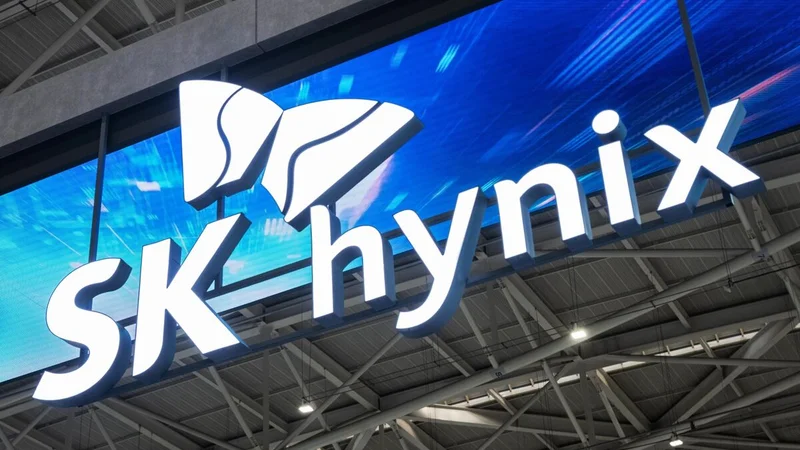
Image: Bloomberg AI
Main Takeaway
SK Hynix priced its US ADR offering at $149 per share, a 3.1% premium over its Korea close, with the $26.5 billion listing oversubscribed more than seven times.
Jump to Key PointsSummary
The pricing mechanics and premium over Seoul
SK Hynix priced its American depositary receipt offering at $149 per share, according to a person familiar with the matter who spoke to Bloomberg on condition of anonymity. That figure represents a 3.1% premium over the company's closing price on the Korea Exchange, Yahoo Finance reports. The pricing decision landed on July 9, setting the stage for what CNBC describes as a $29 billion Nasdaq ADR listing, though Bloomberg and other sources consistently peg the offering size at $26.5 billion. Each ADR represents a fraction of the underlying common stock traded in Seoul, giving US investors direct exposure to the world's second largest memory chipmaker without navigating the Korean market.
The premium pricing signals strong underwriter confidence. Rather than discounting to attract buyers, SK Hynix and its bankers pushed the price above the home market close, a move that typically requires deep institutional demand to absorb. That demand materialized in dramatic fashion.
Oversubscription reveals the scale of investor appetite
The US listing was oversubscribed by more than seven times, a source told Investing.com. That level of excess demand reshaped the allocation process. Bloomberg reports that key investors who expected large blocks of ADRs received smaller allocations than initially anticipated, as other buyers aggressively snapped up available shares. The scramble for allocation underscores how badly global funds wanted exposure to a pure-play AI memory leader at a moment when high-bandwidth memory supply remains severely constrained.
Seven times oversubscription on a $26.5 billion deal is extraordinary by any measure. It places SK Hynix's listing among the most sought-after equity offerings in recent history and reflects the market's conviction that AI-driven memory demand has years of growth ahead. The allocation squeeze on cornerstone investors suggests the bookrunners prioritized broadening the shareholder base over rewarding existing relationships.
What this means for arbitrage traders
Arbitrage traders watching the listing faced one unresolved question that kept them on edge: the ADR-to-common-stock conversion ratio. Yahoo Finance notes that without clarity on exactly how many Korean common shares each ADR represents, arb desks could not lock in the precise spread between the New York listing and the Seoul-traded shares. The 3.1% headline premium only tells part of the story; the conversion ratio determines whether that premium is real, illusory, or actually a discount once the math settles.
This uncertainty created a waiting game. Traders who normally pounce on cross-listing dislocations had to stand aside or take directional bets without the usual hedging precision. Once the ratio is confirmed, a wave of arbitrage activity will likely hit both markets simultaneously, potentially compressing or widening the spread depending on how the ratio lands relative to expectations.
Why SK Hynix chose a US listing now
SK Hynix dominates the high-bandwidth memory market alongside Samsung, supplying the advanced DRAM stacks that power Nvidia's AI accelerators. A Nasdaq listing gives the company access to deeper capital pools and a valuation multiple that US tech investors typically award to AI infrastructure plays. CNBC frames the move as strategic: listing on Nasdaq places SK Hynix in the same arena as the American chip giants it supplies and competes with, raising its profile among institutional investors who benchmark against US indices.
The timing capitalizes on AI euphoria that has not yet peaked. Memory makers sit at the bottom of the AI stack, but their products are as essential as the GPUs they feed. SK Hynix's HBM3E chips are sold out through 2026, and the company is racing to expand capacity. A $26.5 billion war chest accelerates that expansion while signaling to customers that supply will grow to meet their roadmaps.
The allocation shakeup and who got squeezed
Bloomberg's reporting on scaled-back allocations to key investors reveals tension inside the bookbuilding process. When demand runs seven times the available shares, bankers face a choice: reward long-standing relationships with generous allotments, or spread shares widely to create a liquid, diversified shareholder registry. The sources indicate the latter won out. Large institutional investors who anticipated anchor roles received fewer ADRs than promised, while a broader set of buyers, likely including US tech-focused funds and sovereign wealth pools, took larger slices.
This allocation strategy reduces concentration risk but risks alienating the very investors SK Hynix may need for future capital raises. It also suggests the underwriters believe aftermarket demand will be strong enough that slighted cornerstone investors will buy in the open market anyway, supporting the stock price post-listing.
What happens next for the stock and the sector
The ADRs are set to begin trading on Nasdaq under the ticker SKHYV, according to Investing.com data. The first days of trading will test whether the $149 pricing holds or whether the seven-times oversubscription spills into a first-day pop. A strong debut would validate the premium pricing and could trigger a rerating of Korean semiconductor stocks more broadly, as global investors reassess the discount at which Seoul-listed chipmakers trade relative to US peers.
For the memory sector, SK Hynix's listing raises the competitive stakes. Samsung, which also produces HBM but has struggled with qualification timelines at Nvidia, now faces a rival armed with fresh capital and heightened US investor attention. Micron, the third major HBM player, watches from the sidelines as a Korean competitor plants a flag on its home exchange. The listing does not change the supply-demand fundamentals overnight, but it shifts the financial geography of the AI memory race decisively westward.
The broader signal for Asian tech listings
SK Hynix's Nasdaq debut is the largest Asian tech listing on a US exchange in years and may open the door for other Korean and Taiwanese chip firms to follow. The seven-times oversubscription sends an unmistakable message: US capital markets will reward AI infrastructure companies with massive checks, even at premium valuations, when the underlying demand story is compelling. That could accelerate a pipeline of cross-listings from Asian semiconductor and hardware companies that have historically traded at valuation discounts to their US counterparts.
The success of this offering also strengthens Nasdaq's position against Hong Kong and Shanghai as the venue of choice for tech giants seeking global investor bases. If SK Hynix trades well, the gravitational pull of US exchanges on Asian chipmakers intensifies.
Key Points
SK Hynix priced its US ADR offering at $149 per share, a 3.1% premium above its Korea Exchange closing price.
The $26.5 billion Nasdaq listing was oversubscribed by more than seven times, forcing scaled-back allocations to key investors.
Arbitrage traders await the ADR-to-common-stock conversion ratio before they can trade the cross-market spread precisely.
The listing gives SK Hynix access to deeper US capital pools and higher valuation multiples typical of AI infrastructure stocks.
The oversubscription signals strong global demand for AI memory exposure and may accelerate other Asian chipmaker cross-listings.
Questions Answered
SK Hynix priced its American depositary receipts at $149 each, according to a person familiar with the matter. That price represents a 3.1% premium over the company's closing price on the Korea Exchange.
The offering was oversubscribed by more than seven times, a source told Investing.com. This extreme demand led underwriters to scale back allocations to key cornerstone investors.
Arbitrage traders need clarity on the ADR-to-common-stock conversion ratio before they can calculate the exact spread between the New York ADRs and the Seoul-traded shares. Without that ratio, the 3.1% headline premium cannot be confirmed as a real arbitrage opportunity.
SK Hynix ADRs will trade on Nasdaq under the ticker symbol SKHYV, according to Investing.com data. The listing gives US investors direct access to the Korean memory chipmaker without navigating the Korea Exchange.
The listing arms SK Hynix with fresh capital and heightened visibility among US investors, intensifying competitive pressure on Samsung and Micron in the high-bandwidth memory market. Samsung faces a rival with strengthened financial resources, while Micron contends with a Korean competitor now listed on its home US exchange.
Source Reliability
67% of sources are highly trusted · Avg reliability: 79
Go deeper with Organic Intel
Simple AI systems for your life, work, and business. Each one includes copyable prompts, guides, and downloadable resources.
Explore Systems