Bank of America Reverses Course, Extends $520 Million Credit Line to OpenAI Ahead of IPO
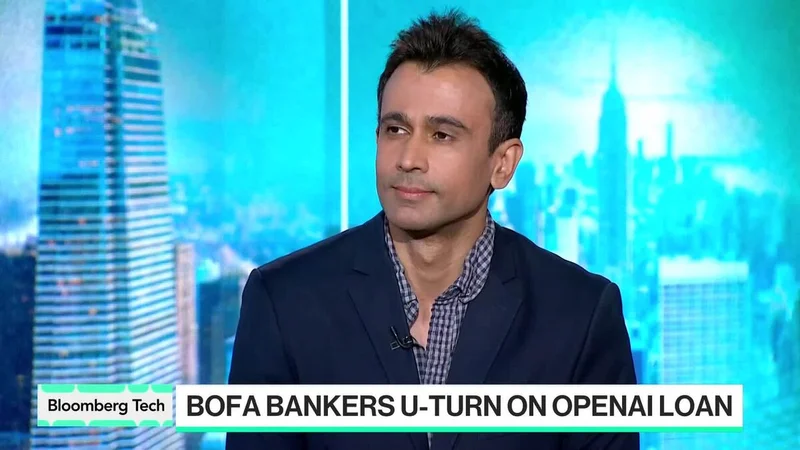
Image: Bloomberg AI
Main Takeaway
Bank of America handed OpenAI a $520 million credit line after initially rejecting the AI company, positioning itself for advisory roles in upcoming tech IPOs.
Jump to Key PointsSummary
The reversal that shocked Wall Street
Bank of America has executed a dramatic about-face on OpenAI, extending a $520 million credit line to the artificial intelligence company just weeks after initially turning down its lending request. The decision, confirmed by multiple people with knowledge of the matter, marks BofA's first loan to OpenAI and instantly places the bank among the AI giant's largest lenders. Bloomberg's Liana Baker reported the U-turn on "Bloomberg Deals," noting the speed with which the bank reversed its earlier stance.
The credit facility arrives as OpenAI prepares for a U.S. initial public offering that could target a valuation north of $1 trillion. According to a person familiar with the matter cited by Tradersunion, the financing serves dual purposes: providing OpenAI with working capital and cementing BofA's relationship with one of the most anticipated listings in tech history. The loan structure and terms remain undisclosed, but the size alone signals the bank's conviction that OpenAI's revenue trajectory justifies the exposure.
Why BofA said no the first time
Bank of America's initial rejection wasn't about OpenAI's technology or market position. It reflected a conservative credit culture that has historically made the bank cautious about lending to high-burn, pre-profit companies, even ones with stratospheric valuations. OpenAI's business model, dominated by massive compute costs and an expensive talent war, didn't fit neatly into traditional underwriting models.
The calculus shifted rapidly. As AI listings gathered momentum on Wall Street, the competitive pressure to secure advisory mandates intensified. Banks that lend early often win the lucrative underwriting and advisory roles when the IPO actually launches. BofA's credit committee apparently concluded that the risk of missing out on OpenAI's IPO fee pool outweighed the credit risk of the loan itself. The bank reported rising profits in its latest disclosures, giving it additional balance-sheet confidence to make the move.
The IPO land grab intensifies
OpenAI's march toward a public listing has triggered a fierce competition among Wall Street's biggest names. BofA isn't just chasing OpenAI. Tradersunion reports the bank is simultaneously positioning itself to secure advisory roles in the IPO of Anthropic, OpenAI's chief rival, creating a two-track strategy that hedges its bets across the AI foundation-model space.
The stakes are enormous. An OpenAI IPO at a $1 trillion-plus valuation would generate hundreds of millions in underwriting fees alone, not counting ongoing corporate banking relationships. JPMorgan, Goldman Sachs, and Morgan Stanley are all vying for top roles. BofA's credit line functions as a down payment on that relationship, a tactic banks have used for decades with promising private companies approaching public markets. The difference here is the sheer scale: a $520 million credit line for a company that hasn't yet filed its S-1.
OpenAI's financial architecture before the public debut
The credit line adds another layer to OpenAI's increasingly complex capital structure. The company has already raised tens of billions in equity from investors including Microsoft and Thrive Capital. A revolving credit facility of this size provides liquidity without further diluting existing shareholders, a critical consideration when every equity round resets valuation benchmarks that will be scrutinized during IPO roadshows.
For OpenAI, the loan also serves as a signal. Borrowing from a top-tier U.S. bank implies a level of due diligence and creditworthiness that private tech companies rarely achieve before going public. It tells prospective public-market investors that a notoriously conservative lender has examined the books and found them solid enough to write a nine-figure check. Phemex notes the financing is expected to bolster OpenAI's resources as it gears up for a public market debut, though the exact use of funds, whether for compute infrastructure, talent retention, or general corporate purposes, hasn't been specified.
BofA's own AI transformation provides context
The bank extending this credit line is itself in the middle of an AI overhaul. Bank of America's newsroom reports that AI-driven solutions fueled approximately 30 billion client interactions last year, a 14 percent year-over-year increase. Its virtual assistant Erica has handled over 3.2 billion interactions, while Zelle adoption reached 25 million users and CashPro mobile payment approvals hit a record $1.2 trillion.
This internal AI fluency likely informed the credit decision. BofA's leadership understands the technology's trajectory from direct operational experience, not just analyst reports. When a bank's own CEO can point to AI-driven cost savings and revenue growth in quarterly earnings calls, lending to the company that catalyzed the generative AI boom becomes easier to justify to a risk-averse credit committee. The bank's digital engagement metrics provide a tangible reference point for what AI adoption looks like at scale.
What happens next for OpenAI's path to public markets
The credit line clears one hurdle but leaves many ahead. OpenAI still needs to file its S-1 registration statement, navigate SEC review, and convince public-market investors that its economics work at a trillion-dollar valuation. The company's burn rate, competitive dynamics with Anthropic and Google, and dependence on Microsoft's cloud infrastructure will all face intense scrutiny during the roadshow.
BofA's loan doesn't guarantee an IPO mandate, but it dramatically improves the bank's odds. The relationship banking model runs on reciprocity: companies tend to reward the lenders who supported them before they became obvious winners. If OpenAI's IPO succeeds, BofA's initial rejection will be remembered as a footnote. If it stumbles, the credit line becomes a case study in FOMO-driven lending. The next milestone to watch is whether other banks follow with their own credit facilities, turning BofA's solo move into a syndicated wave.
Key Points
Bank of America reversed its initial rejection and extended a $520 million credit line to OpenAI ahead of its planned IPO.
The loan positions BofA to compete for lucrative underwriting and advisory roles in OpenAI's public offering targeting a $1 trillion-plus valuation.
BofA is simultaneously pursuing advisory mandates for Anthropic's IPO, hedging across the AI foundation-model sector.
The credit facility provides OpenAI with non-dilutive capital while signaling creditworthiness to public-market investors.
BofA's own AI-driven digital engagement, including 30 billion annual client interactions, informed its willingness to lend to an AI leader.
Questions Answered
Bank of America's conservative credit culture made it cautious about lending to high-burn, pre-profit companies, even ones with massive valuations. OpenAI's heavy compute costs and expensive talent competition didn't fit traditional underwriting models at first glance.
The credit line provides working capital without diluting existing shareholders, which is critical when equity rounds set valuation benchmarks that will be scrutinized during IPO roadshows. It also signals to public-market investors that a conservative lender has vetted OpenAI's finances and found them solid.
Yes. According to Tradersunion, BofA is simultaneously positioning itself to secure advisory roles in Anthropic's IPO, creating a two-track strategy that hedges its bets across the AI foundation-model space.
Multiple sources indicate OpenAI is targeting a valuation exceeding $1 trillion for its U.S. initial public offering, which would make it one of the largest tech listings in history.
BofA's internal AI transformation, including its Erica virtual assistant handling over 3.2 billion interactions and AI-driven tools fueling 30 billion annual client engagements, gave its leadership direct operational understanding of AI's trajectory, making the loan easier to justify to a risk-averse credit committee.
Source Reliability
25% of sources are highly trusted · Avg reliability: 59
Go deeper with Organic Intel
Simple AI systems for your life, work, and business. Each one includes copyable prompts, guides, and downloadable resources.
Explore Systems