Microsoft Cuts 4,800 Jobs as Xbox Sheds 3,200 Roles and Five Studios in Major Overhaul
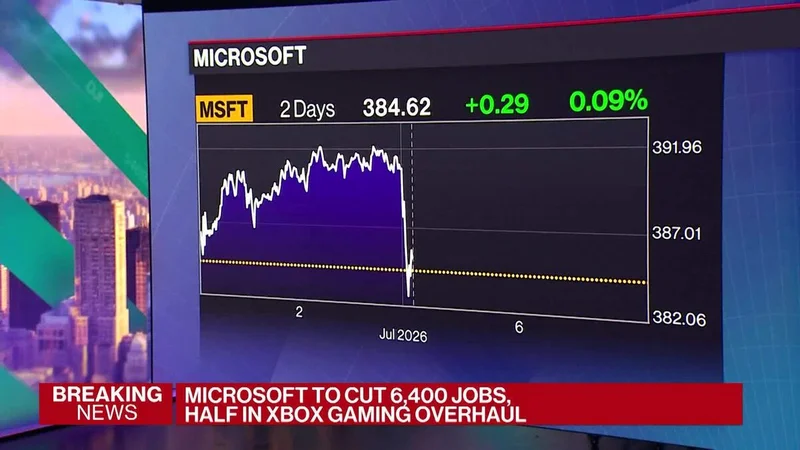
Image: Bloomberg AI
Main Takeaway
Microsoft eliminated 4,800 positions, with Xbox absorbing 3,200 cuts and divesting five studios in its biggest restructuring ever.
Jump to Key PointsSummary
Why Microsoft is shrinking its workforce now
Microsoft eliminated approximately 4,800 positions on July 6, 2026, equal to 2.1% of its global workforce of roughly 228,000 employees. Chief People Officer Amy Coleman told staff that AI is reshaping how work gets done and that some everyday tasks can now be automated, according to internal memos reviewed by multiple outlets. The cuts arrived on the first day of Microsoft's fiscal 2027, continuing a pattern of mid-year workforce reductions that included 9,100 job losses in July 2025.
The timing reflects pressure to improve margins while maintaining heavy capital spending on AI infrastructure. Microsoft has committed tens of billions of dollars to datacenter expansion and GPU acquisition, creating tension with investors who want faster returns. Coleman framed the cuts as necessary adaptation rather than crisis response, though the scale, 4,800 jobs in a single announcement, signals strategic urgency rather than routine optimization.
How Xbox became the epicenter of cuts
Xbox alone accounts for 3,200 of the eliminated positions, with 1,600 workers departing immediately and the remainder phased through fiscal 2027. New Xbox CEO Asha Sharma called this the most significant restructure in Xbox history in a memo titled resetting Xbox, warning staff that our business today is not healthy, according to The Hollywood Reporter and Bloomberg. The gaming division will shrink its workforce by roughly 20% over the coming year.
The cuts extend beyond headcount. Xbox is divesting five studios. Double Fine Productions and Compulsion Games will return to independence with runway funding to begin new projects while seeking additional financing. Ninja Theory and Undead Labs will be sold outright. Arkane Studios will also be sold or spun out. Bloomberg reports that the divested studios will retain their intellectual property and back catalogs, a concession that may soften the blow for developers but does little for the 3,200 people losing jobs.
What happens to commercial sales and consulting
Outside Xbox, the remaining 1,600 cuts fall heavily on Microsoft's commercial sales and consulting organizations. These roles, which help enterprises adopt and expand Microsoft cloud services, have been central to the company's revenue growth for a decade. Coleman's memo explicitly tied their reduction to AI-driven automation of tasks previously handled by human workers, according to TechCrunch and The Verge.
The sales and consulting trims expose a tension in Microsoft's AI strategy. The company sells Copilot and Azure AI services by promising productivity gains, yet those same tools now justify eliminating the people who once sold and implemented them. This creates a credibility challenge. Customers may hesitate to buy automation from a vendor whose own workforce reductions demonstrate the technology's human cost. For remaining employees, the message is clear: even customer-facing roles once considered safe from automation are now expendable.
Where this fits in the broader tech layoff pattern
Microsoft's cuts arrive amid a sustained wave of tech industry reductions that have eliminated tens of thousands of jobs in 2026 alone. The company itself cut 10,000 workers in 2023 and has conducted smaller rounds since. LinkedIn, Microsoft's professional networking subsidiary, shed 5% of its workforce in May 2026, approximately 850 people, as reported by Bloomberg and MyNorthwest. The cumulative effect has eroded the sector's reputation for job security.
What distinguishes this round is the explicit AI justification. Where previous layoffs were attributed to overhiring, economic uncertainty, or strategic pivots, Coleman directly connected these cuts to automated task replacement. This candor, while refreshing, may intensify regulatory and political scrutiny of AI's labor market impact. Lawmakers in the European Union and United States have already proposed disclosure requirements for AI-driven workforce changes. Microsoft's prominence makes it a natural target for such scrutiny, regardless of whether its competitors acknowledge similar motivations.
What comes next for Microsoft and gaming
The immediate fallout includes operational disruption at five departing studios and morale damage across Xbox, where Sharma's not healthy assessment leaves little room for reassurance. Microsoft must now demonstrate that a smaller Xbox can deliver compelling hardware and exclusive content while competing with Sony's PlayStation and Nintendo's Switch successor. The studio divestitures reduce internal development capacity at a moment when quality exclusive titles matter more than ever.
For the broader industry, Microsoft's move validates a model of gaming consolidation followed by aggressive rationalization. Having spent $69 billion to acquire Activision Blizzard in 2023, Microsoft is now shrinking the very creative infrastructure it assembled. Competitors including Sony, Nintendo, and emerging cloud gaming services from Amazon and Netflix will watch closely. If Xbox stabilizes with fewer employees and independent studios, the industry may shift further toward a publisher-agnostic, platform-agnostic future where Microsoft sells games and Game Pass subscriptions rather than controlling production end-to-end.
Key Points
Microsoft eliminated 4,800 positions, 2.1% of its workforce, on July 6, 2026.
Xbox accounts for 3,200 cuts and divests five studios in its largest restructuring ever.
Chief People Officer Amy Coleman explicitly attributed job losses to AI automation.
Double Fine, Compulsion, Ninja Theory, Undead Labs, and Arkane Studios are affected by divestiture.
The cuts continue a pattern of Microsoft workforce reductions spanning 2023 to 2026.
Questions Answered
Microsoft laid off approximately 4,800 employees, equal to 2.1% of its global workforce. The cuts were announced on the first day of the company's fiscal 2027.
Chief People Officer Amy Coleman told employees that AI is changing how work gets done and some everyday tasks can now be automated. This explicit AI justification differs from previous Microsoft layoffs attributed to overhiring or economic conditions.
Microsoft is divesting five studios. Double Fine Productions and Compulsion Games will become independent with runway funding. Ninja Theory and Undead Labs will be sold. Arkane Studios will be sold or spun out.
No, Xbox is not shutting down. It is cutting 20% of its workforce, approximately 3,200 jobs, in what CEO Asha Sharma called the most significant restructure in Xbox history. The division continues operating with reduced internal development capacity.
About 1,600 Xbox employees were laid off immediately on July 6, 2026. The remaining cuts will be phased through fiscal 2027, which runs through June 2027.
Source Reliability
42% of sources are highly trusted · Avg reliability: 72
Go deeper with Organic Intel
Simple AI systems for your life, work, and business. Each one includes copyable prompts, guides, and downloadable resources.
Explore Systems