SK Hynix Weighs 0.5% Bank Fee for Record $29 Billion US ADR Listing
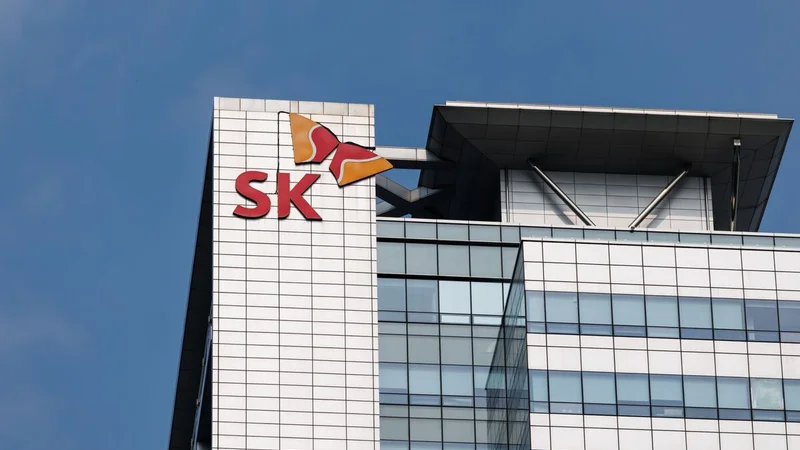
Image: Bloomberg AI
Main Takeaway
SK Hynix plans a $29 billion US ADR sale, potentially the largest ever, with 0.5% fees for banks and major currency impacts for South Korea.
Jump to Key PointsSummary
What makes this ADR sale historic
SK Hynix Inc. is preparing to raise up to $29 billion through an American depositary receipt listing on Nasdaq, which would make it the largest ADR offering in history. The South Korean memory chip giant, already a critical supplier to Nvidia and other AI infrastructure builders, is moving fast. Reuters reports the company confirmed plans to raise up to $29 billion, while MLQ and other outlets indicate the filing could happen as soon as July 10. The scale dwarfs typical tech listings and signals how aggressively semiconductor firms are tapping US capital markets to fund capacity expansion for the AI boom.
The timing matters. SK Hynix dominates high-bandwidth memory production, a bottleneck component for AI training clusters. Its balance sheet needs heavy investment to maintain that lead. A US listing gives access to deeper liquidity pools than Seoul alone provides, especially for a company whose fortunes are now tied to American tech demand.
How the 0.5% fee stacks up against Wall Street norms
Bloomberg reports that SK Hynix is considering paying banks roughly 0.5% of proceeds for managing the deal. For a $29 billion transaction, that implies about $145 million in fees split among underwriters. That is notably slim by traditional IPO standards, where 7% was once common for smaller deals, but in line with recent mega-listings where scale compresses percentages. Large Chinese tech ADRs and major sovereign sales have seen similar compression.
The fee structure reflects both bargaining power and market conditions. SK Hynix needs top-tier distribution for a block this size, but banks are hungry for marquee mandates in a lean issuance year. A half-percent on $29 billion still moves the needle for any syndicate member. The question is whether that rate accounts for the complexity of cross-border regulatory navigation and currency hedging that Korean officials are already preparing to manage.
Why South Korea's central bank is on alert
South Korean officials are preparing for significant currency flows tied to the ADR launch, with Bloomberg and The Edge Markets noting won volatility ahead of the expected Friday pricing. A $29 billion inflow, even partially hedged, represents a substantial shock to the Korean foreign exchange market. The won jumped on early reports, suggesting traders are positioning for dollar-selling pressure as proceeds convert.
The Bank of Korea and finance ministry face a delicate balancing act. They want smooth execution without signaling panic intervention. Currency turbulence around major equity events can disrupt broader market stability, especially when retail participation in Korean stock markets remains high and sentiment-sensitive. Officials are reportedly modeling scenarios to absorb the flow without excessive won appreciation that would hurt exporters beyond SK Hynix itself.
What this means for AI chip supply chains
SK Hynix's fundraising directly feeds the AI hardware arms race. The company supplies HBM3E and emerging HBM4 stacks to Nvidia, and demand outstrips supply through at least 2026. Capital from this ADR will likely accelerate fab expansion and advanced packaging capacity. Ajupress notes SK Hynix confirmed its US ADR plan while pushing back on some local reporting, underscoring corporate urgency to control narrative around such a sensitive capital raise.
The listing also tightens financial ties between Seoul's chip policy and Washington's AI industrial base. As US export controls reshape semiconductor geography, SK Hynix's dollar fundraising and implied US investor base create stakeholder alignment that political actors on both sides will notice. Competitors Samsung and Micron are watching closely. Samsung lacks SK Hynix's HBM market share lead, while Micron sees its own US production investments competing for investor attention and policy support.
What happens next for investors and markets
The July 10 target for Korean regulatory filing, reported by MLQ and Yahoo Finance, sets a compressed timeline. After domestic approval, SK Hynix must secure SEC clearance and build a US book of institutional demand. Given the size, cornerstone investors, likely including strategic technology funds and sovereign wealth vehicles, will need to anchor early.
Market reception will test appetite for mega-cap semiconductor exposure at a moment when AI infrastructure spending faces scrutiny. If priced aggressively, the deal could absorb liquidity from other tech offerings and set a benchmark for Samsung's own potential US capital markets strategy. For Korean retail investors, the ADR structure means indirect participation unless local regulators create parallel access. The won's path over the next fortnight will offer real-time signals on whether officials can contain volatility without choking the deal's execution.
Key Points
SK Hynix plans record $29 billion Nasdaq ADR offering, largest in history.
Banks may receive 0.5% fee, below traditional IPO percentages but significant in absolute terms.
South Korean officials preparing currency interventions to manage expected capital flow impacts.
Proceeds likely directed toward HBM capacity expansion for AI chip supply chains.
Compressed July timeline requires rapid Korean and US regulatory approvals.
Questions Answered
SK Hynix plans to raise up to $29 billion through American depositary receipts on Nasdaq, which would be the largest ADR offering ever. Reuters confirmed the $29 billion target, while multiple outlets indicate the filing could occur as soon as July 10.
South Korean officials anticipate significant foreign exchange market impact from converting $29 billion in proceeds. Bloomberg and The Edge Markets report the won has already moved on expectations, prompting central bank planning to manage volatility without disrupting broader export competitiveness.
Banks working on the transaction may receive approximately 0.5% of proceeds, according to Bloomberg sources. On a $29 billion offering, that implies roughly $145 million in total fees, reflecting compressed mega-deal rates rather traditional IPO percentages.
While not explicitly detailed, industry context and SK Hynix's market position indicate proceeds will fund high-bandwidth memory capacity expansion. The company is the dominant HBM supplier for AI training chips and faces supply constraints through at least 2026.
MLQ and Yahoo Finance report Korean regulatory filing could happen as soon as July 10, with US SEC review and marketing to follow. The timeline suggests pricing within weeks if regulatory processes proceed smoothly.
Source Reliability
38% of sources are trusted · Avg reliability: 65
Go deeper with Organic Intel
Simple AI systems for your life, work, and business. Each one includes copyable prompts, guides, and downloadable resources.
Explore Systems