Record Beef Prices Push Some Americans Toward Chicken as Washington Targets Supply Pressures
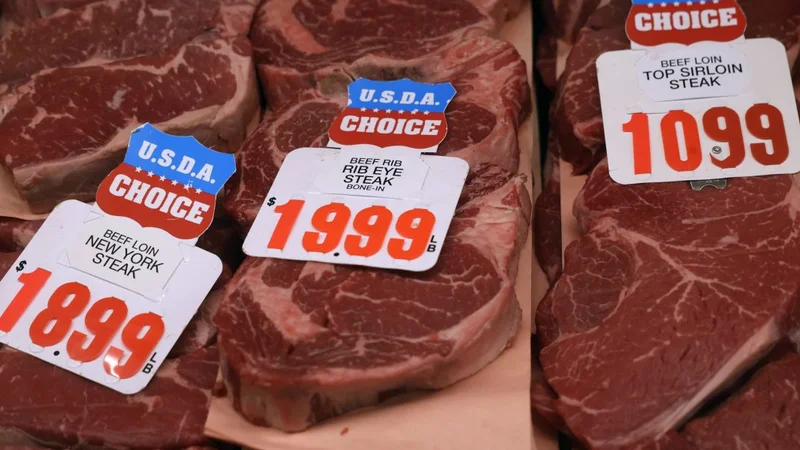
Image: Fortune AI
Main Takeaway
U.S. beef sales volumes fell 0.3% over a key 13-week period as $8 ground beef and record prices pushed some shoppers toward cheaper proteins.
Jump to Key PointsSummary
Beef reaches the household budget
U.S. beef prices are pushing some shoppers to change what they buy, with ground beef reaching $8 a pound in parts of Manhattan and sales volumes slipping during the summer grilling season. Beef sales fell 0.3% in the 13 weeks ending in mid-July compared with the same period a year earlier, a period that included Memorial Day and July Fourth.
The shift is visible in ordinary grocery decisions. Aaron Kaufman, a 32-year-old New Yorker who once relied on ground beef to meet a high daily protein target, switched toward chicken after moving from Brooklyn to Manhattan and finding beef roughly $2 more expensive per pound. The change reflects a broader pressure point: shoppers still value beef, but rising prices are forcing some households to ration it, trade down or leave it behind.
Demand remains stronger than sales
The decline in beef volume doesn't mean Americans have abandoned steak. Consumers continue to buy beef for restaurant meals, celebrations and grilling occasions, even as grocery shoppers become more selective. CNBC's account frames the market as one where demand for steak remains firm despite elevated prices, while the reported sales decline indicates that high prices are limiting the amount purchased.
That distinction matters for retailers, ranchers and restaurant operators. A household can preserve a favorite meal by buying smaller portions, choosing ground beef instead of premium cuts, or visiting a steakhouse less often. Restaurants face the same arithmetic from the other side of the counter: higher wholesale costs must be absorbed, passed to customers or managed through smaller servings and menu changes. The result is pressure on spending without a clean collapse in appetite.
Why cattle supply is tightening
The price surge is rooted in a constrained U.S. cattle supply, with industry conditions limiting how quickly beef production can expand. Lower herd numbers reduce the animals available for slaughter, while rebuilding herds takes time, feed and substantial capital. Those constraints keep prices elevated even when consumers begin trimming purchases.
The distribution of the money is disputed. The Coalition for a Prosperous America places much of the blame on meatpackers and argues that processing concentration has weakened ranchers' bargaining position. Other accounts focus on the broader cattle shortage and the cost structure running from ranches through feedlots, processors, wholesalers and retailers. The shared consequence is clear: supply cannot respond quickly, so ordinary price competition has less room to soften supermarket bills.
Washington enters the beef fight
The administration has made affordable beef a political issue as higher prices reach consumers. A White House initiative titled “Ensuring Affordable Beef for the American Consumer” places federal attention on the relationship between cattle supplies, meat processing and retail prices.
Political intervention adds pressure to an industry already dealing with long production cycles. Measures aimed at increasing competition or expanding supply would take time to affect store shelves, while actions that change imports, processing rules or market oversight could affect different parts of the chain unevenly. Food Ingredients First describes the price increase as a supply crisis that has triggered government action; Prosperous America argues that packer behavior deserves greater scrutiny. The debate therefore centers on both how much beef is available and how prices are formed after cattle leave the ranch.
What shoppers are doing now
Consumers are responding through substitution and portion control. Chicken offers a lower-cost protein option for shoppers focused on meeting nutrition goals, while ground beef, steak and restaurant meals become more occasional purchases. The change is gradual rather than universal because household budgets, regional prices and eating habits differ.
Price tracking remains central to the outlook. NerdWallet's June review points to renewed heat in beef prices, while the USDA Economic Research Service maintains a broader food-price outlook for households and businesses. Beef Research's discussion of consumer trends adds a longer-term concern: repeated price shocks can influence future consumption habits, especially among younger shoppers who build routines around cheaper proteins. A brief switch at the meat counter can become a durable change in demand if high prices persist.
The next test for the market
The next phase depends on whether supply improves faster than consumers lose purchasing power. Herd rebuilding would ease pressure over time, but cattle production cannot be expanded immediately. Until supplies recover, retailers and restaurants will keep balancing firm interest in beef against customers' limits at the checkout and on the menu.
The market's warning sign is the combination of stubborn demand and falling volume. Americans still want steak, but some are buying less of it, switching proteins or shifting meals away from restaurants. If prices continue rising, the political debate over packers, imports and competition will intensify, while producers and retailers face pressure to show where each dollar is going.
Key Points
U.S. beef sales volumes fell 0.3% as high prices pushed some shoppers toward cheaper proteins.
Ground beef reached $8 per pound in a Manhattan grocery example, compared with $6 in Brooklyn.
Steak demand remains firm even as households trim quantities and substitute chicken for beef.
Cattle supply constraints are keeping prices elevated because herd rebuilding requires years.
Packers, ranchers and policymakers dispute how responsibility for beef inflation should be divided.
Questions Answered
U.S. beef prices are high because cattle supplies are constrained and production cannot expand quickly. Industry groups also dispute the role of meatpackers, processing concentration and costs across the supply chain.
Americans are still buying steak, but some are reducing quantities, buying less often or shifting to cheaper proteins. CNBC's coverage describes steak demand as resilient even as overall beef sales volume declines.
Beef sales volumes fell 0.3% during the 13 weeks ending in mid-July compared with a year earlier. The period included Memorial Day and July Fourth, two major grilling occasions.
The White House is addressing beef prices because supply pressures have made affordability a political issue. Its initiative focuses on ensuring affordable beef for American consumers while the industry debates supply and processing competition.
Some shoppers are replacing beef with chicken and other cheaper protein options. The switch is driven by grocery prices, including a reported $8-per-pound price for ground beef in Manhattan.
Source Reliability
36% of sources are highly trusted · Avg reliability: 77
Go deeper with Organic Intel
Simple AI systems for your life, work, and business. Each one includes copyable prompts, guides, and downloadable resources.
Explore Systems