Google's July 4th Ad Imagining Founding Fathers Using AI Draws Widespread Backlash
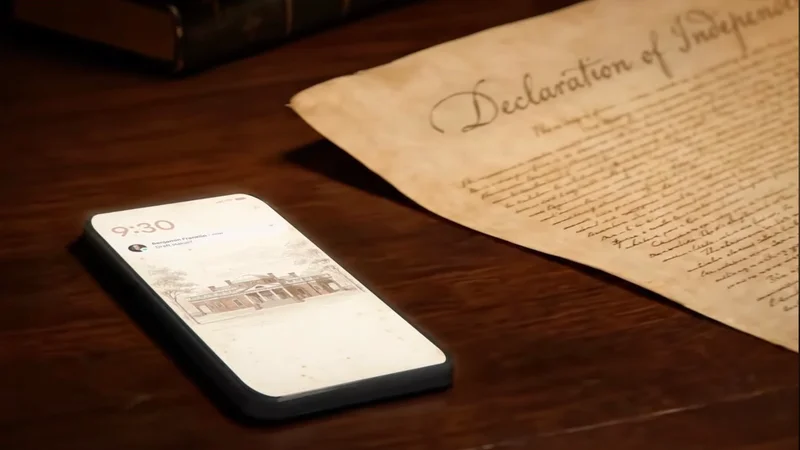
Image: TechCrunch AI
Main Takeaway
Google's new commercial depicts Thomas Jefferson using Gemini AI and Google Workspace to draft the Declaration of Independence, sparking viral criticism.
Jump to Key PointsSummary
Why the ad angered viewers
Google released a 65-second commercial imagining the Founding Fathers drafting the Declaration of Independence using Google Workspace tools and Gemini AI. The ad, tagged "Group project, but make it 1776," shows Ben Franklin texting Thomas Jefferson, edits suggested in Google Docs, meetings scheduled in Google Calendar, and collaboration conducted remotely via Google Meet. Sundar Pichai shared the video on X, praising its "creative spin" on American history. The timing aligned with the nation's 250th anniversary celebrations on July 4, 2026.
The Verge's weekend editor Terrence O'Brien called the commercial "infuriating" and wrote that "it should make Americans of every political stripe want to hurl their devices against a wall." The criticism wasn't limited to one political perspective. O'Brien, who has covered tech for over 18 years, found the clip increasingly "cringier" as it progressed. The ad's central premise, that AI could have improved or facilitated one of history's most significant human-authored documents, struck many as tone-deaf.
How AI features appeared in historical context
The commercial discreetly showcases several AI capabilities within the historical reimagining. Google's "help me visualize" feature and the Gemini chatbot assist in the drafting process, blending modern technology with the 1776 setting. The ad presents these tools as natural extensions of collaborative work, even across centuries. Viewers see AI-generated suggestions and automated scheduling presented as seamless parts of the creative process.
This integration strategy mirrors Google's broader marketing push to normalize AI in everyday workflows. The company has consistently positioned Gemini as a collaborative partner rather than a replacement for human creativity. However, applying this framing to the Declaration of Independence, a document celebrated for its singular human authorship and rhetorical power, created immediate dissonance. Critics noted the irony of suggesting AI could improve a text that has endured for 250 years precisely because of its human craft.
Where the ad found supporters
Despite the backlash, the commercial received mostly positive feedback on YouTube and Instagram according to multiple reports. Google's own channels and Pichai's personal promotion amplified its reach to millions. The playful concept of historical figures using modern technology has proven commercially viable in previous campaigns. The visual humor of 18th-century figures with cameras off during video calls provided accessible comedy for general audiences less engaged with AI debates.
Marketing analysts note that Google's America 250 theme positioned the brand within a national moment, similar to how companies leverage Olympics or Super Bowl visibility. Pichai's specific praise for "version history" as a historical pun showed executive investment in the concept. For Google's core business audience, Workspace users already embedded in the ecosystem, the ad functioned as feature demonstration rather than provocative statement. The company bet that platform familiarity would override historical sensitivities for its target demographic.
What this recalls from Google's past missteps
The controversy echoes Google's 2024 Olympics ad, which showed a father using AI to write a fan letter for his daughter to track star Sydney McLaughlin-Levrone. That commercial went viral for similar reasons, with critics arguing it demonstrated Big Tech's disconnection from genuine human experience. The pattern suggests recurring blind spots in Google's marketing approach to AI storytelling. Both ads frame AI as improving or replacing emotionally meaningful human communication.
The Olympics ad drew criticism that AI was being positioned to eliminate authentic expression, like a child writing to a hero. The July 4th ad elevates the stakes by applying this framing to democratic founding documents. Media literacy advocates have pointed to both campaigns as examples of how tech companies struggle to articulate AI's value without diminishing human contribution. Google's marketing team appears caught between demonstrating product utility and acknowledging cultural touchstones that resist technological intervention.
What this signals about AI marketing trends
The commercial arrives amid broader industry experimentation with AI-generated historical figures. MediaPET.ai, an ad testing firm, released a 2025 Black Friday commercial featuring photorealistic recreations of Washington, Jefferson, and Franklin shopping for deals. This parallel suggests a trend of using AI to animate historical figures for commercial purposes, raising questions about consent, dignity, and appropriate boundaries. Google's execution differs in scale and brand recognition, but participates in the same cultural movement.
The backlash indicates growing audience sophistication about when AI insertion feels forced or inappropriate. Marketing teams now face heightened scrutiny for AI claims, particularly around creative and historical domains. Google's choice of the Declaration of Independence, specifically, may have backfired because the document represents collective human deliberation rather than individual productivity. The ad's critics on Bluesky and other platforms focused on this mismatch between AI's solitary assistance model and the collaborative, contested reality of historical founding.
Where Google goes from here
Google has not withdrawn the commercial or issued statements addressing the criticism as of July 5, 2026. The company's silence follows a pattern of weathering marketing controversies without direct engagement. Workspace competitor Microsoft has notably avoided similar historical framings in its AI advertising, focusing instead on present-tense workplace scenarios. This competitive differentiation may influence Google's future campaign choices.
The episode highlights the challenge of marketing general-purpose AI tools without triggering specific cultural landmines. Google's next quarterly earnings call may address whether the controversy affects brand perception metrics or Workspace adoption. For now, the ad continues circulating as a case study in how technology companies miscalibrate cultural resonance. The 250th anniversary opportunity that seemed clever in planning became, for many viewers, evidence of institutional detachment from values the anniversary was meant to celebrate.
Key Points
Google's July 4th ad shows Founding Fathers using Gemini AI and Workspace to draft the Declaration of Independence.
Sundar Pichai personally promoted the commercial on X, praising its creative historical reimagining.
The Verge led criticism, calling the ad infuriating and cringeworthy across political perspectives.
The ad mirrors Google's poorly received 2024 Olympics commercial about AI writing a child's fan letter.
AI-generated historical figures are emerging as a broader advertising trend beyond Google alone.
Questions Answered
Google's 65-second commercial imagines Thomas Jefferson, Ben Franklin, and other Founding Fathers using Google Workspace tools and Gemini AI to collaboratively draft the Declaration of Independence. The ad depicts Jefferson receiving texts from Franklin, making edits in Google Docs, scheduling meetings in Calendar, and using Meet with cameras off, all with AI assistance.
Critics find the ad tone-deaf for suggesting AI could improve or facilitate the Declaration of Independence, a document celebrated for its singular human authorship. The Verge called it infuriating and cringeworthy, arguing it should alienate Americans across political perspectives. Many viewers see it as diminishing human creativity by inserting technology into a historically significant collaborative human achievement.
Yes, Sundar Pichai shared the commercial on X and praised its creative spin on American history. He specifically highlighted the tagline about 250 years of revolutionary ideas and joked that the ad puts the history in version history, referring to Google Docs feature.
Google's 2024 Olympics ad showed a father using AI to write a fan letter for his daughter, which went viral for negative reasons. While not historical, that ad similarly framed AI as replacing meaningful human communication. A separate company, MediaPET.ai, released a 2025 Black Friday ad with AI-generated Founding Fathers shopping, indicating broader industry experimentation.
Reactions have been polarized by platform. The ad received mostly positive feedback on YouTube and Instagram according to multiple reports, while facing significant criticism on Bluesky and from tech media like The Verge. This split suggests general audiences found the humor accessible while more AI-engaged viewers found the premise problematic.
Google has not withdrawn the commercial or issued statements addressing criticism as of July 5, 2026. The company typically weathers marketing controversies without direct engagement. Competitive positioning against Microsoft, which avoids similar historical framings, and potential brand perception impacts may influence future campaign choices.
Source Reliability
36% of sources are established · Avg reliability: 61
Go deeper with Organic Intel
Simple AI systems for your life, work, and business. Each one includes copyable prompts, guides, and downloadable resources.
Explore Systems