Meta Plans Cloud Business to Sell Excess AI Compute, Challenging Amazon and Google
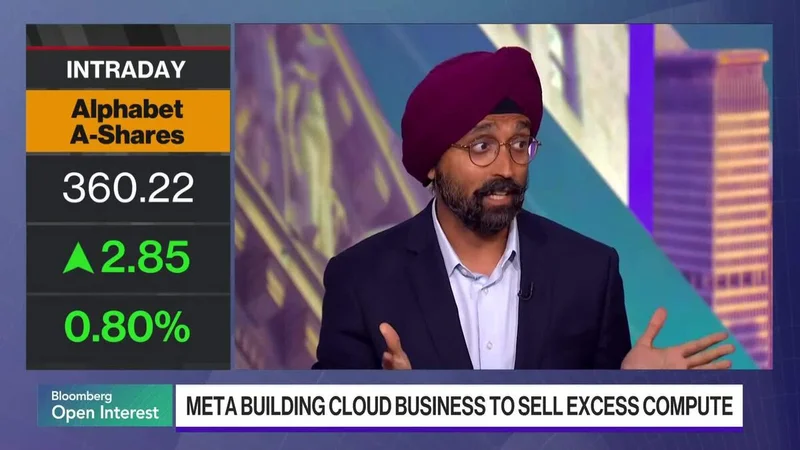
Image: Bloomberg AI
Main Takeaway
Meta is building a cloud infrastructure business to sell AI compute power and models, directly challenging AWS, Google Cloud, and Microsoft Azure.
Jump to Key PointsSummary
Why Meta is entering cloud computing
Meta Platforms is developing plans to launch a cloud infrastructure business that would sell access to its AI computing power and models, according to Bloomberg. The move represents a strategic pivot for a company that has spent billions building data centers primarily to power its own social media platforms and AI research. By monetizing excess capacity, Meta aims to transform a massive cost center into a revenue engine.
The timing follows a similar pattern to SpaceX's xAI, which recently began selling excess compute capacity. Meta's infrastructure includes some of the world's largest AI training clusters, giving it raw computational scale comparable to established cloud providers. The question is whether it can package that infrastructure into services enterprises actually want to buy.
How this threatens the cloud giants
Amazon Web Services, Google Cloud, and Microsoft Azure have dominated enterprise cloud computing for over a decade, collectively capturing more than 60% of global market share. Meta's entry would introduce a fourth hyperscaler with fundamentally different economics, since its infrastructure was built for internal AI workloads rather than traditional cloud services.
The competitive threat is real but uneven. AWS and Google Cloud have spent years building enterprise sales teams, compliance certifications, and managed services that go far beyond raw compute. Meta would need to bolt on these capabilities quickly or find niche markets where its AI-specific infrastructure offers unique value. According to TechCrunch, Meta's initial offering would focus specifically on AI compute and models, suggesting a narrower entry point than general-purpose cloud.
What triggered the market reaction
Meta's stock jumped on the news, with CNBC and Seeking Alpha both reporting investor enthusiasm for the cloud pivot. The market is reading this as a sign that Meta's massive capital expenditures, projected at over $60 billion for 2025 and 2026 combined, could finally generate direct returns beyond advertising revenue.
The stock move also reflects relief. Investors have questioned whether Meta's AI spending was producing commensurate value. A cloud business provides a tangible monetization path for infrastructure that otherwise sits underutilized between training runs. Yahoo Finance noted that CEO Mark Zuckerberg had previously called a cloud computing business "definitely on the table," suggesting the idea has been internally debated for some time.
The technical and business hurdles ahead
Building a cloud business requires more than unused servers. Meta would need to develop billing systems, customer support organizations, security certifications, and sales channels that look nothing like its existing consumer-facing operations. These are not trivial additions; they are fundamentally different competencies.
Enterprise customers also demand multi-year roadmaps and contractual stability. Meta's history of abrupt strategic pivots, most notably its metaverse spending reductions in 2022 and 2023, could make cautious buyers hesitant. The company would need to demonstrate sustained commitment to earn trust from Fortune 500 CIOs who already have established vendor relationships with AWS, Azure, and Google Cloud.
What happens next for Meta's cloud ambitions
The immediate next step is likely a limited beta or pilot program targeting AI-native startups and research institutions who value access to Meta's Llama models and training infrastructure over traditional cloud features. These customers would tolerate rougher edges in exchange for cutting-edge capabilities and potentially lower prices.
Longer term, success depends on whether Meta builds a standalone cloud division with its own P&L and leadership, or treats this as a side project. Bloomberg's reporting suggests formal planning is underway, but no product launch timeline has been disclosed. Wall Street analysts quoted by 247wallst are modeling this as a multi-year build that could eventually contribute billions in annual revenue, though near-term contributions will be minimal. Zuckerberg's prior comments that the business is "on the table" suggest final approval may still be pending.
Key Points
Meta plans to sell excess AI compute and models through a new cloud business
The move would challenge AWS, Google Cloud, and Microsoft Azure directly
CEO Mark Zuckerberg previously called a cloud business 'definitely on the table'
Meta's stock rose on the news as investors welcomed revenue diversification
The company faces hurdles building enterprise sales and support capabilities
Questions Answered
Yes, Meta is developing plans for a cloud infrastructure business that would sell AI compute power and models, according to Bloomberg reporting. The company has not announced a launch date, but formal planning is underway to monetize excess data center capacity built for internal AI training.
Meta's stock jumped because investors see cloud revenue as a way to generate returns on massive AI infrastructure spending. The company has projected over $60 billion in capital expenditures for 2025 and 2026, and Wall Street has questioned whether this spending produces enough value; a cloud business provides a direct monetization path.
Meta would initially focus on AI-specific compute and model access rather than general-purpose cloud services. This narrower scope plays to its strengths in AI training infrastructure and the Llama model family, but lacks the breadth of managed services that enterprises currently rely on from established providers.
Meta must build enterprise sales teams, customer support organizations, security compliance certifications, and billing systems that it does not currently operate at scale. The company also faces trust challenges from potential customers wary of its history of abrupt strategic pivots and its primarily consumer-focused business culture.
No launch timeline has been disclosed. Industry observers expect a phased approach beginning with limited beta access for AI-native startups and researchers, followed by a gradual expansion if early traction justifies further investment. CEO Mark Zuckerberg's prior comments suggest the plan remains under internal consideration.
Source Reliability
33% of sources are highly trusted · Avg reliability: 64
Go deeper with Organic Intel
Simple AI systems for your life, work, and business. Each one includes copyable prompts, guides, and downloadable resources.
Explore Systems