Waze Gets an AI Makeover: Gemini Powers Conversational Reporting, Motorcycle Mode, and a Less Chatty Navigation Experience
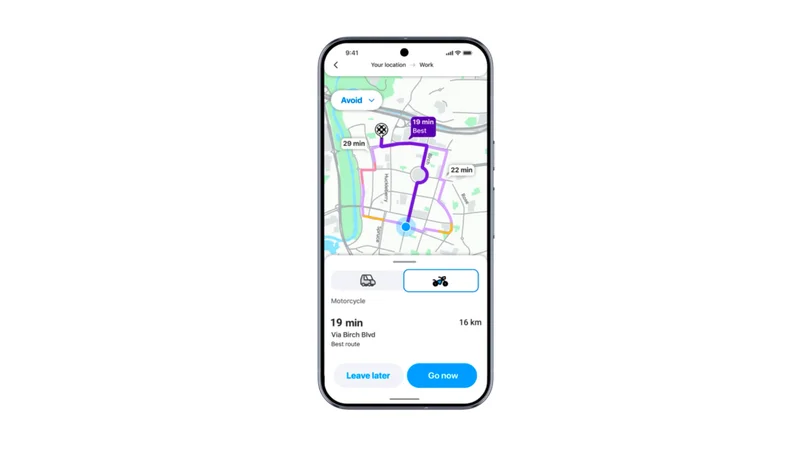
Image: Google AI Blog
Main Takeaway
Google is rolling out a suite of Gemini-powered features for Waze, including conversational map updates, a dedicated Motorcycle mode, and a 'Less Chatty'.
Jump to Key PointsSummary
What the new Gemini-powered features actually do
Waze is embedding Google's Gemini AI assistant deeper into the driving experience, moving beyond traffic incident reporting to let users suggest map edits conversationally. According to The Verge, users can now say things like "The road is closed here" to report closures or outdated addresses, and Gemini parses the natural language into structured map updates. TechCrunch notes this reflects Google's broader push to integrate Gemini across its products while positioning Waze more competitively against Apple Maps and other navigation rivals.
Macrumors confirms Conversational Reporting already used Gemini for traffic slowdowns, but the expansion to map editing is new. The system doesn't require specific syntax, making hands-free reporting more intuitive. Engadget reports the feature set includes a "Less Chatty" mode that reduces the frequency of voice prompts, addressing a long-standing user complaint about overly verbose turn-by-turn directions. The AI determines when prompts are redundant and suppresses them, keeping drivers focused on the road.
Motorcycle mode and vehicle-specific routing
One of the more distinctive additions is Motorcycle mode, which uses AI to tailor navigation for two-wheeled vehicles. Engadget explains the feature considers shortcuts only accessible to motorcycles and hazards that are uniquely dangerous for riders, such as uneven road surfaces or specific weather exposure. The routing engine now differentiates between vehicle types rather than applying a one-size-fits-all car-centric model.
Pcmag reports that alongside Motorcycle mode, Waze finally delivered features first promised in March 2024, including warnings for speed bumps, sharp turns, and emergency vehicles. These alerts, now rolling out almost two years later, use community-reported data processed through AI to surface relevant hazards in real time. The delay highlights the complexity of validating crowd-sourced safety data before pushing it to millions of drivers. Mashable notes the broader trend from Waze toward making drivers feel like locals, with advanced roundabout guidance and speed limit change alerts forming part of the same 2024 feature suite that's now reaching users.
The timeline from announcement to delivery
Waze's feature rollout cadence has been notably stretched. Pcmag points out the company announced several features in March 2024 that users only received in January 2026, nearly two years later. An email to Waze users, spotted by 9to5Google, confirmed the delayed delivery of speed bump warnings, sharp turn alerts, emergency vehicle notifications, and improved roundabout navigation.
Infopackets reports Conversational Reporting itself took roughly one year from its October 2024 announcement to its October 2025 rollout. The pattern suggests Waze tests AI features extensively before wide deployment, likely due to safety implications of navigation errors. Google AI Blog posts from October 2024 and July 2026 frame the updates as part of a continuous improvement cycle, with Waze VP Gai Berkovich emphasizing the community-powered mapping model as the foundation for AI enhancements.
How the AI integration strategy fits Google's bigger picture
TechCrunch frames the Waze updates as a direct reflection of Google's strategy to weave Gemini into every product surface. The same AI assistant powers features in Google Maps, Gmail, and Workspace, and Waze now joins that portfolio. The Verge's transportation editor Andrew Hawkins describes the makeover as letting users personalize trips more, though only two of the four new updates are explicitly labeled AI-powered by Google.
Directionsmag contextualizes the shift by noting navigation apps in 2026 have become intelligent mobility platforms rather than simple digital maps. Waze's AI integration puts it in competition not just with Google Maps but with a broader ecosystem of AI-native routing tools. The Waze community team held Office Hours in April 2026 specifically on AI and automation, showcasing internal tools like Map Mate and the AI helper used within the Waze Map Editor, indicating the AI push extends beyond consumer-facing features to the backend mapping infrastructure.
What users can control and what's still missing
The customization angle is central to this update. Macrumors details how users can toggle the Less Chatty mode to reduce interruptions, while Motorcycle mode is an opt-in vehicle profile. The conversational map editing feature lets drivers contribute to Waze's community-sourced map accuracy without typing or navigating menus.
A user-submitted proposal on Waze's feedback platform, highlighted by Waze.uservoice, pitches an AI-powered "StealthDrive" mode that would let drivers avoid highways, traffic cameras, or specific zones based on personal preferences. While not part of the official update, the proposal signals demand for deeper AI-driven personalization. Smartocto draws a parallel between Waze's user-centered AI approach and what journalism tools can learn from it, quoting their CEO on how Waze succeeds because it puts the end user at the center of every AI functionality decision.
What happens next for Waze and AI navigation
The July 2026 updates establish a baseline for Gemini integration, but Google's AI blog hints at more to come. The conversational reporting expansion from traffic to map edits suggests a trajectory toward fully voice-driven navigation input. TechCrunch notes the competitive pressure from Apple Maps, which has been adding its own AI features, will likely accelerate Waze's Gemini roadmap.
Pcmag's reporting on the two-year feature gap indicates users should expect announcements to precede delivery by significant margins. The Waze community Office Hours series, with its April 2026 focus on AI and automation, points to ongoing development of backend AI tools that will eventually surface in the consumer app. For now, the immediate changes are practical: fewer interruptions, motorcycle-aware routing, and the ability to fix map errors by simply speaking.
Key Points
Waze expands Gemini-powered Conversational Reporting to accept natural language map edits like road closures and address updates.
A new Motorcycle mode uses AI to optimize routing specifically for two-wheeled vehicles, factoring in shortcuts and rider-specific hazards.
The Less Chatty mode reduces voice prompt frequency by having Gemini suppress redundant turn-by-turn directions.
Features first announced in March 2024, including speed bump and sharp turn warnings, reached users nearly two years later in early 2026.
The AI integration reflects Google's strategy to embed Gemini across its product ecosystem, from Maps to Gmail to Waze.
Questions Answered
Waze is getting four major updates: expanded Conversational Reporting that lets users suggest map edits by voice, a Motorcycle mode for two-wheeled routing, a Less Chatty mode that reduces voice prompts, and Gemini-powered personalization across the app. Only two of the four are explicitly labeled AI-powered by Google.
Conversational Reporting uses Google's Gemini AI to parse natural speech into structured reports. Previously limited to traffic incidents like slowdowns, it now accepts map updates such as road closures or outdated addresses without requiring specific command syntax.
Motorcycle mode uses AI to tailor navigation for two-wheeled vehicles by considering shortcuts only accessible to motorcycles and hazards uniquely dangerous for riders, such as uneven road surfaces. It's an opt-in vehicle profile that differentiates routing from the default car-centric model.
Features like speed bump warnings, sharp turn alerts, and emergency vehicle notifications were announced in March 2024 but only reached users in January 2026. The nearly two-year delay likely reflects extensive safety validation and testing required before pushing crowd-sourced AI-processed data to millions of drivers.
Less Chatty mode uses Gemini to determine when turn-by-turn voice prompts are redundant and suppresses them, reducing the frequency of interruptions. It addresses a long-standing user complaint about overly verbose navigation directions without eliminating essential alerts.
Yes, Waze uses AI internally through tools like Map Mate and an AI helper within the Waze Map Editor. The company held Office Hours in April 2026 focused on AI and automation, showcasing how AI assists the community mapping volunteers who maintain Waze's map data.
Source Reliability
42% of sources are established · Avg reliability: 73
Go deeper with Organic Intel
Simple AI systems for your life, work, and business. Each one includes copyable prompts, guides, and downloadable resources.
Explore Systems