OpenAI Kills Its Atlas Browser After Less Than a Year, Folds Features Into ChatGPT Work Agent
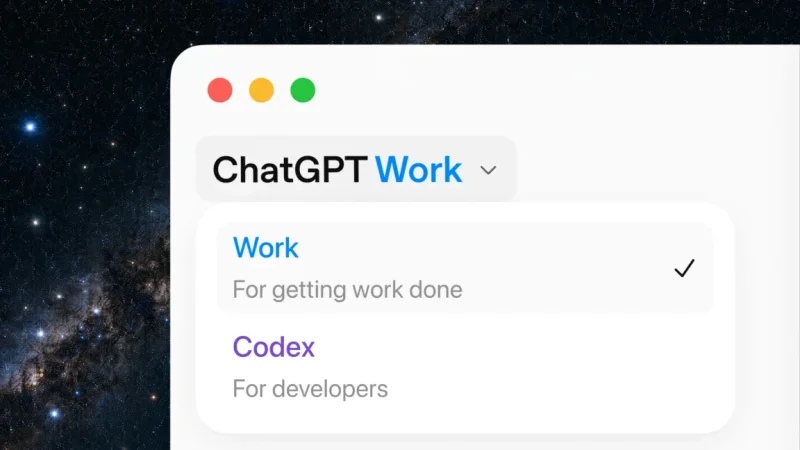
Image: Ars Technica AI
Main Takeaway
OpenAI is shutting down its AI-powered Atlas browser less than a year after launch, redistributing its agentic browsing capabilities into a new ChatGPT.
Jump to Key PointsSummary
The short, quiet life of ChatGPT Atlas
OpenAI is pulling the plug on Atlas, its dedicated AI browser, less than a year after it was announced in October 2025. The Verge reports the shutdown came as part of a broader wave of product announcements on July 9, 2026, confirming the browser simply didn't last. TechCrunch notes that OpenAI's CEO of applications Fidji Simo had already signaled a strategic pivot months earlier, hinting the company was rethinking how to deliver agentic browsing without a standalone browser product.
The decision to sunset Atlas isn't a retreat from AI-powered web interaction. Instead, OpenAI is cannibalizing its own experiment and redistributing the parts that worked. The agentic browsing features tested in Atlas are being moved into the ChatGPT desktop app and a new Google Chrome extension, according to TechCrunch. Ars Technica's earlier hands-on testing with Atlas's Agent Mode found that automated tasks tended to stop after a few minutes, limiting usefulness for sustained work. That limitation, combined with the overhead of maintaining a separate browser, made Atlas an expensive prototype rather than a viable product.
What ChatGPT Work promises to do differently
The successor to Atlas's ambitions is ChatGPT Work, a new agent OpenAI unveiled the same day it announced Atlas's death. Bloomberg describes it as an AI agent meant to field a wider range of complex tasks for hours at a time, a direct answer to the timeout problem Ars Technica identified in Atlas. OpenAI's own announcement positions ChatGPT Work as a tool that can "stay with a task for hours if needed," rebranding the underlying technology from Codex to something that promises independent workflows.
Ars Technica's earlier critique of Atlas centered on its inability to sustain long-running automated sessions. ChatGPT Work explicitly addresses that gap. The agent is designed to operate across the desktop app and a Chrome extension, giving it access to browser-based tasks without requiring users to abandon their existing workflow tools. TechCrunch frames this as OpenAI recognizing that people don't want a new browser, they want AI to work inside the tools they already use.
Why a standalone AI browser failed
The Atlas shutdown reveals a hard truth about AI product design: users resist switching core infrastructure like browsers. The Verge's Jay Peters, who covered the original Atlas launch, frames the shutdown as a predictable outcome for a product that asked too much behavioral change. People have years of muscle memory, bookmarks, and extensions tied to Chrome or Safari. A new browser, even one with ChatGPT baked in, couldn't overcome that inertia.
TechCrunch adds that OpenAI's own leadership acknowledged this tension. Simo's earlier comments suggested the company was learning that agentic features work better as a layer on top of existing browsing habits rather than as a walled garden. The Chrome extension strategy confirms this: instead of fighting for browser market share, OpenAI is embedding its agent where users already live. The desktop app integration serves the same purpose for application-based workflows, letting the agent operate across both web and native software contexts.
The competitive landscape shifts
OpenAI's pivot carries implications for the broader AI agent market. Google, which dominates the browser market with Chrome, now faces an OpenAI agent operating as an extension within its own ecosystem. That's a different competitive dynamic than a head-to-head browser war. Microsoft, a major OpenAI backer, stands to benefit if ChatGPT Work integrates deeply with Edge or Office workflows, though no such integration was announced.
Anthropic and other agent-focused startups also get a signal: standalone AI browsers are a dead end. The market is converging on agents that work inside existing applications. Bloomberg notes that OpenAI is explicitly targeting business professionals with ChatGPT Work, putting it in direct competition with enterprise automation tools from UiPath, ServiceNow, and Microsoft's own Copilot ecosystem. The hours-long task persistence is the key differentiator OpenAI is betting on.
What early testers are saying
Early hands-on impressions of the ChatGPT Work agent are mixed. Understanding AI, a technical analysis site, evaluated the new agent and concluded it represents a significant improvement over Atlas but still falls short of practical usefulness for many real-world tasks. The core issue isn't capability, it's reliability. Agents that work 80 percent of the time create more cleanup work than they save when they fail on the remaining 20 percent.
Ars Technica's original Atlas testing documented similar frustration: the agent would start tasks confidently but stall on edge cases, requiring human intervention that erased the time savings. ChatGPT Work's extended runtime capability solves one dimension of that problem but doesn't address the brittleness. OpenAI hasn't published reliability benchmarks for the new agent, and the Understanding AI review suggests the technology is still in the "impressive demo, unreliable production" phase that characterizes much of the current agent landscape.
What happens next
OpenAI is betting that distribution through Chrome extensions and the desktop app will give ChatGPT Work the user base Atlas never built. The company hasn't announced a timeline for phasing out Atlas access, but TechCrunch reports the shutdown is already underway. Existing Atlas users will be directed toward the desktop app and extension as replacements.
The broader question is whether hours-long agent persistence changes the utility equation enough to drive adoption. Bloomberg reports OpenAI is positioning ChatGPT Work as a tool for business professionals, suggesting enterprise pricing or bundling with ChatGPT's existing subscription tiers is likely. If the agent can reliably complete multi-hour research, data entry, or monitoring tasks, it could carve out a niche among knowledge workers. If reliability stays at demo-level, it risks becoming another Atlas: a promising idea that couldn't cross the gap from prototype to daily driver.
Key Points
OpenAI shut down its Atlas AI browser less than a year after its October 2025 launch.
Agentic browsing features from Atlas are moving to the ChatGPT desktop app and a Chrome extension.
The new ChatGPT Work agent can run tasks autonomously for hours, fixing Atlas's timeout limitation.
Users resisted switching browsers for AI, pushing OpenAI toward extension and desktop app integration.
Early reviews say ChatGPT Work is improved but still unreliable for real-world professional tasks.
Questions Answered
OpenAI shut down Atlas because users resisted switching to a new browser, even one with integrated AI. The company found that agentic browsing features work better as a layer on top of existing tools like Chrome and desktop apps rather than as a standalone product requiring behavioral change.
ChatGPT Work is a new AI agent from OpenAI that operates through the ChatGPT desktop app and a Chrome extension. Unlike Atlas, which stopped automated tasks after a few minutes, ChatGPT Work is designed to run tasks independently for hours, addressing the primary technical limitation of the discontinued browser.
No, OpenAI is not abandoning AI-powered browsing. It is shutting down the standalone Atlas browser but redistributing its agentic browsing capabilities across the ChatGPT desktop app and a Chrome extension, betting that users prefer AI assistance inside their existing tools rather than in a separate browser.
OpenAI launched Atlas in October 2025 and announced its shutdown on July 9, 2026, meaning the product lasted less than a year. The shutdown was confirmed as part of the same announcement wave that introduced ChatGPT Work.
Early reviews from Understanding AI describe ChatGPT Work as a significant improvement over Atlas but still not very useful for many real-world tasks. The agent suffers from reliability issues where failures on edge cases can create more cleanup work than the automation saves, keeping it in the demo phase rather than production-ready.
Source Reliability
63% of sources are highly trusted · Avg reliability: 64
Go deeper with Organic Intel
Simple AI systems for your life, work, and business. Each one includes copyable prompts, guides, and downloadable resources.
Explore Systems