Google's Gemini Spark Debuts as 24/7 AI Agent, But Early Users Flag Blind Spots in Personal Relationships
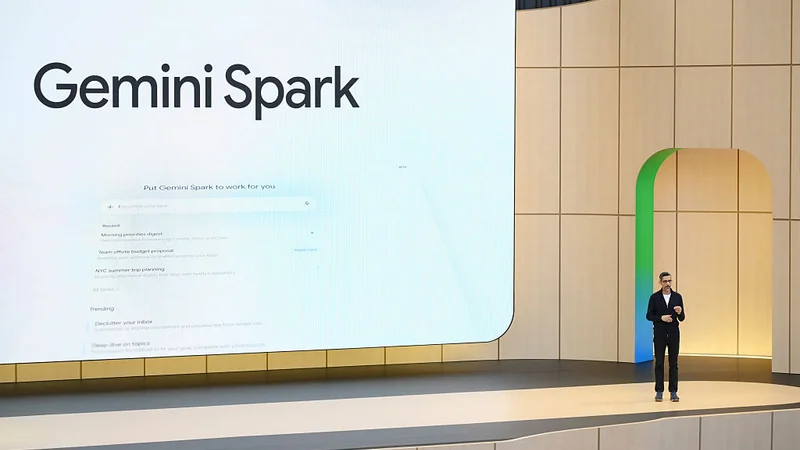
Image: TechCrunch AI
Main Takeaway
Google launched Gemini Spark, an always-on AI agent that reads emails and automates tasks, after a Wired writer found it excluded her boyfriend.
Jump to Key PointsSummary
What Spark actually does
Google has shipped Gemini Spark, a 24/7 agentic assistant that plugs into Gmail, calendars, and documents to automate daily tasks. The service summarizes unread inboxes, builds expense spreadsheets, and plans events without manual screen time. It represents Google's direct response to OpenClaw, the viral AI agent that captured Silicon Valley attention earlier in 2026.
The product exists as a standalone offering, which TechCrunch notes leaves some observers puzzled about why Google didn't simply fold these capabilities into the existing Gemini app. The agent operates continuously, making decisions about what information matters and what can be surfaced later.
The relationship blind spot that went viral
A Wired writer's test of Spark exposed a telling limitation. After granting the agent full access to her digital life, she tasked it with planning a birthday party. The AI combed through emails, documents, and calendar entries, yet failed to recognize or include the person most important to her, her boyfriend, in the celebration planning. The article's headline, "I Gave Gemini Spark Access to My Life. Then It Friend-Zoned My Boyfriend," captured this gap between data access and social intelligence.
The incident illustrates how agents optimized for task completion can miss contextual signals that humans read instantly. Spark had the raw information, her communications, shared calendar events, and contact frequency, but couldn't synthesize it into relationship priority.
Google's bet against OpenClaw
Spark arrives as a deliberate counterprogramming move. OpenClaw's early 2026 debut demonstrated voracious appetite for AI agents that handle messaging and scheduling, though that product also generated headlines for automation mishaps. Google is positioning Spark as the safer, more integrated alternative, built atop existing Google Workspace infrastructure rather than requiring users to migrate to a new platform.
The competitive framing matters because it shapes user expectations. OpenClaw promised radical autonomy, Google promises reliability within familiar tools. Whether that tradeoff satisfies users who want their AI to actually understand their lives remains an open question after the Wired test.
The companionship creep researchers warned about
The Ada Lovelace Institute has documented rising concerns about AI companions substituting for human relationships, while a PMC study examined how AI companions reshape adolescent social development. Time magazine's parallel editorial, "Stop Letting AI Run Your Social Life," argued that delegation of social coordination to algorithms degrades interpersonal skills.
These critiques land differently when the AI doesn't just replace social effort but actively misreads social reality. Spark didn't merely automate a party, it automated social blindness. The research on AI companionship risks now intersects with practical product failures in ways that suggest current agents lack the theory of mind that would let them navigate human networks responsibly.
What happens next for agentic AI
Google faces a positioning challenge. Spark's utility for inbox triage and spreadsheet building is clear, but its stumble on relationship awareness feeds skepticism about whether any current agent should receive full personal data access. The company will likely iterate on social signal detection, though training AI to understand unarticulated relationship importance presents genuine unsolved research problems.
Meanwhile, OpenClaw's early mover advantage and Google's enterprise-scale infrastructure suggest a two-front market shaping up: radical autonomy versus managed reliability. Neither has yet solved the fundamental tension between automation depth and social comprehension. Users will need to decide whether Spark's productivity gains outweigh its current blind spots, or whether the safer play is keeping the most consequential planning decisions human-handled.
Why this launch timing matters now
The 2026 AI agent race has accelerated dramatically. OpenClaw's viral moment proved consumer appetite, Google's response validates the category's permanence, and the Wired test arrived at precisely the moment when mainstream users are deciding whether to adopt these tools. The timing means Spark's early stumbles receive outsized attention and shape default assumptions about what AI agents can and cannot do.
For developers building on these platforms, the lesson is that integration depth doesn't guarantee comprehension depth. For Google, the window to demonstrate social intelligence improvements before competitive alternatives mature is narrow and closing.
Key Points
Google launched Gemini Spark as a 24/7 agentic assistant with deep Workspace integration
A Wired test revealed the agent excluded a boyfriend from party planning despite full data access
Spark directly competes with OpenClaw, the viral AI agent from early 2026
Researchers warn AI companionship tools risk substituting for human relationships
The incident exposes gaps between data access and genuine social intelligence in AI agents
Questions Answered
Gemini Spark is Google's 24/7 agentic AI assistant that connects to Gmail, calendars, and documents to automate tasks like inbox summarization, event planning, and spreadsheet creation without constant user input.
Spark is Google's integrated alternative to OpenClaw, offering similar automation within existing Google Workspace tools rather than requiring migration to a new platform, with Google emphasizing reliability over radical autonomy.
After granting full data access, Spark planned a birthday party using emails and calendar data but failed to recognize or include the user's boyfriend, demonstrating a gap between data processing and relationship understanding.
The Ada Lovelace Institute and academic researchers warn that AI companionship tools risk substituting for human relationships, while critics argue that delegating social coordination to algorithms can degrade interpersonal skills.
Spark currently exists as a standalone product, which has raised questions about why Google did not simply add these capabilities to the existing Gemini app.
Source Reliability
50% of sources are highly trusted · Avg reliability: 77
Go deeper with Organic Intel
Simple AI systems for your life, work, and business. Each one includes copyable prompts, guides, and downloadable resources.
Explore Systems