Anthropic's Claude Cowork Expands to Mobile and Web for Max Subscribers
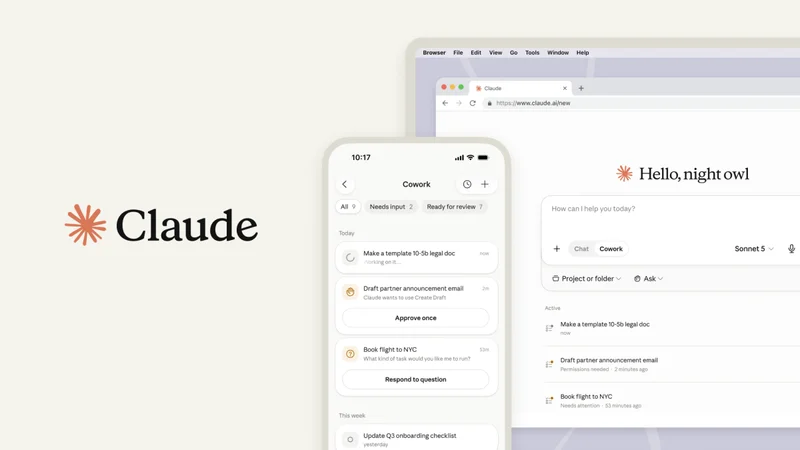
Image: TechCrunch AI
Main Takeaway
Anthropic expanded Claude Cowork to web and mobile for Max subscribers, letting users start tasks on desktop and monitor progress from phones.
Jump to Key PointsSummary
What changed with Claude Cowork
Anthropic rolled out Claude Cowork to web and mobile platforms on Tuesday, breaking the tool free from its desktop-only origins. The expansion lets Max subscribers start tasks from a laptop, receive status updates on their phone, and collect finished work later, even with the laptop closed. This cross-device continuity marks a deliberate shift in how Anthropic positions the product.
The company launched Cowork as a desktop application in January 2026. Until now, users needed to keep their computers awake and the desktop app running for tasks to complete. The mobile and web expansion removes that tether, though with an important distinction: cloud sessions run on Anthropic's servers and continue with the computer off, while dispatch-based tasks still require the desktop app to stay open. According to TechCrunch, this expansion signals Anthropic's ambition to make Cowork feel less like a coding utility and more like an agentic administrative coworker that operates across devices and requests human input when needed.
How Cowork differs from regular chat
Claude Cowork departs from the standard chat experience that most users associate with Claude. In chat mode, users type questions, receive answers, and the conversation ends when the app closes. Cowork instead accepts delegated tasks: organizing files by project, converting receipt photos into expense spreadsheets, or drafting reports from scattered notes. Users walk away and return to completed work.
This architecture mirrors Claude Code, the developer tool that lets AI agents read codebases, write code, and execute commands. Cowork applies the same agentic approach to general knowledge work without requiring terminal access. As one Medium analysis described it, there are now two kinds of Claude users: those who chat, and those who delegate. Anthropic's bet is that the second category will grow as workers grow comfortable handing off multi-step tasks to autonomous systems.
What the mobile experience actually looks like
The mobile and web interfaces are not full replacements for the desktop application. Users access Cowork through the existing Claude smartphone app or a web browser, selecting "Cowork" from the message box rather than "Chat." From there, they describe tasks and receive updates on progress. The interface shares a home with regular chat, making the switch between conversational and agentic modes a single tap.
However, the technical implementation has limits that matter for users. According to Anthropic's own support documentation, tasks dispatched from mobile run on the desktop computer, using local files, connectors, plugins, and apps. This means the computer must remain awake and the desktop app open for those particular tasks to finish. True cloud sessions, which continue regardless of device status, represent a separate tier of functionality. The distinction matters for users expecting fully device-independent operation.
Enterprise connectors and the broader platform push
This expansion follows a February 2026 update that added enterprise connectors and plugins for Cowork. Companies can now link the tool to Google Drive, Gmail, DocuSign, and other workplace software. CNBC reported at the time that these integrations were designed to "turbo charge" the tool's capabilities for knowledge workers.
The connector strategy positions Cowork as an integration layer rather than a standalone application. Rather than replacing existing tools, it orchestrates across them. This approach reduces switching costs for enterprises already invested in particular software ecosystems. It also creates dependency: the more systems Cowork touches, the harder it becomes to remove from workflow. Anthropic CEO Dario Amodei has emphasized the company's focus on practical workplace applications, and these incremental expansions, desktop to web to mobile, follow a familiar enterprise software playbook of deepening engagement through broader access.
Competitive positioning against rival agents
The multi-device expansion arrives as the AI agent market intensifies. OpenAI's Operator, Google's Project Mariner, and various startup offerings are racing to own the "agent that does your work" category. Anthropic's differentiation rests partly on its Claude Code pedigree, the developer tool that earned credibility for handling complex, long-horizon tasks without constant supervision.
Coworkerai's marketing materials highlight Claude Opus 4.8 as the underlying model, citing a 1 million context window and built-in self-verification. These technical specifications matter less to most users than the practical experience of delegation and retrieval. Anthropic's challenge is converting that technical reputation into mainstream adoption among non-technical workers who have never used a terminal. The mobile and web expansion lowers the barrier, presenting Cowork as something you check on your phone rather than something you install and monitor on your computer.
What remains unclear about pricing and limits
Several questions about Cowork's availability and constraints lack clear answers in the current documentation. The tool is available for paid plans including Pro, Max, Team, and Enterprise tiers, but specific usage limits, task duration caps, and pricing differentials between tiers are not detailed in the materials reviewed. The Max subscription requirement for mobile and web access suggests Anthropic is using this expansion as a tier differentiator rather than making it universally available.
The February enterprise connector launch and July multi-device expansion, occurring within five months, indicate an accelerated product cadence. Whether this reflects competitive pressure or genuine product maturity is difficult to assess from external signals. What is observable: Anthropic is building Cowork as a platform, not a feature, with each expansion adding surfaces, integrations, or autonomy. The next likely frontier would be scheduled or triggered tasks that initiate without human intervention, moving from delegated work to truly autonomous operation.
Key Points
Anthropic expanded Claude Cowork to web and mobile for Max plan subscribers in July 2026.
Users can now start tasks on desktop and receive updates or finished work on their phones.
Cloud sessions continue with computers off, while dispatch tasks still require active desktop app.
Enterprise connectors added in February 2026 link Cowork to Google Drive, Gmail, and DocuSign.
The tool applies Claude Code's agentic architecture to general knowledge work without terminal use.
Questions Answered
Claude Cowork is Anthropic's agentic AI tool that handles multi-step tasks autonomously rather than responding to individual prompts. Unlike regular Claude chat, where conversations end when the app closes, Cowork accepts delegated tasks like organizing files or drafting reports and completes them while users are away.
No, Claude Cowork is restricted to paid plans including Pro, Max, Team, and Enterprise tiers. The new mobile and web features specifically require a Max subscription or higher.
It depends on the task type. Cloud sessions run on Anthropic's servers and continue even with your computer off. However, dispatch tasks initiated from mobile still require your desktop computer to stay awake with the Claude Desktop app open.
As of February 2026, Claude Cowork offers connectors for Google Drive, Gmail, DocuSign, and other workplace applications. Anthropic has indicated plans to expand these integrations for enterprise customers.
All three are autonomous AI agents for general task completion, but Cowork inherits credibility from Claude Code's developer tool success with complex, long-horizon tasks. Anthropic emphasizes cross-device continuity and enterprise integrations as differentiators.
Source Reliability
43% of sources are highly trusted · Avg reliability: 60
Go deeper with Organic Intel
Simple AI systems for your life, work, and business. Each one includes copyable prompts, guides, and downloadable resources.
Explore Systems