Shift Offers Free Home Cleanings in NYC, Records Everything to Train Household Robots
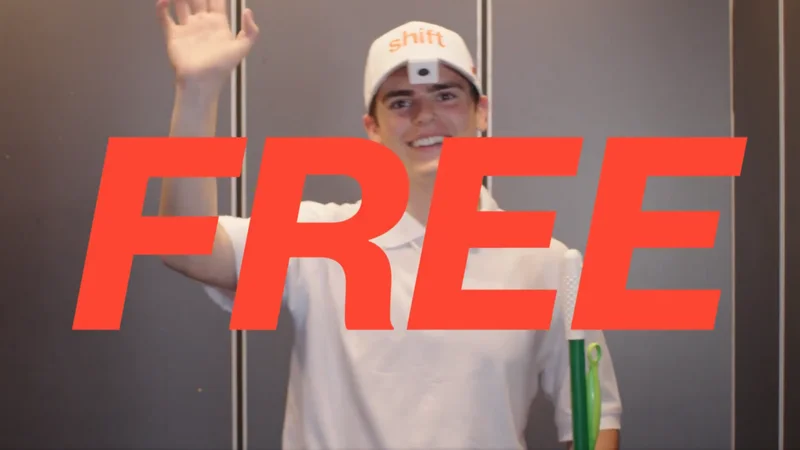
Image: Ars Technica AI
Main Takeaway
AI startup Shift launched free NYC home cleanings with head-mounted cameras, attracting thousands of bookings to gather training data for household robots.
Jump to Key PointsSummary
How the free cleaning program works
Shift, an AI training startup spun out of Germany-based Microagi, began offering free home cleanings in New York City on May 29. Cleaners wear hat-mounted cameras to record every scrub, wipe, and mop. The company has already received demand for thousands of bookings, US General Manager Harry Kilberg told Semafor. Shift plans to expand to London and other cities.
The value proposition is blunt: customers get a spotless apartment, Shift gets first-person video data to train humanoid robots. Microagi already runs data collection operations in multiple countries and sells anonymized footage to AI labs while using some for its internal research. Kilberg framed the model as an effort to democratize the AI economy by letting everyday people participate in building the training datasets that typically require massive corporate resources.
What customers actually agree to
Despite Shift's website claiming there is no catch, the terms contain several catches. Booking requires payment information, and customers face charges if they cancel with less than 24 hours notice or miss their appointment window, Ars Technica reports. The terms of service also absolve Shift of responsibility for property damage, theft, or personal injury during cleanings.
The Verge notes the promotional materials show cleaners in crisp white uniforms with conspicuous headgear, normalizing the surveillance aspect as just another uniform component. The footage captures not just the cleaning itself but the full environment: personal items, family photos, medication cabinets, the particular chaos of private life. What happens to this data beyond robot training remains largely opaque to participants.
The broader rush for domestic training data
Shift is not alone in this space. Komando reported in March that hundreds of people are already getting paid $20 per hour to strap cameras to their heads and perform household chores for AI companies. The practice has attracted professionals from actors to lawyers seeking flexible side income. The demand for real-world physical task data has created a small gig economy of human data donors.
This reflects a fundamental challenge in robotics. Unlike chatbots trained on text scraped from the internet, robots need embodied intelligence: the muscle-memory understanding of how to grip a plate, how much pressure to apply scrubbing a pan, how to navigate cluttered spaces. Simulations help but cannot replicate the infinite variation of real homes. Companies from startups to major labs are desperate for this data and willing to fund creative collection schemes to get it.
What this means for the robotics race
The household robot market represents one of the largest untapped opportunities in consumer technology. Brain Corp, which powers autonomous commercial floor cleaners, has already demonstrated demand for robotic cleaning in institutional settings. The leap to homes requires solving far more complex environments with unpredictable layouts, delicate objects, and social norms about privacy and intrusion.
Shift's approach sidesteps the capital intensity of building robots first by amassing the training data that any successful household robot will need. If the model works, it creates a flywheel: more cleanings generate more data, which trains better robots, which eventually replace the human cleaners currently generating the data. The workers capturing footage today may be training their own replacements, though Kilberg's democratization framing suggests participants would see this as participation rather than exploitation.
Privacy risks and unanswered questions
The privacy implications remain largely unaddressed. While Shift says data is anonymized, video of someone's home is inherently identifying. The head-mounted cameras capture not just the cleaning task but the full domestic environment: layouts, possessions, family members, pets, and routines. Once recorded, this data could theoretically be used for purposes beyond robot training, including home insurance risk assessment, consumer profiling, or law enforcement requests.
The terms of service shift substantial risk to customers while giving Shift broad latitude. The requirement for payment information upfront, cancellation penalties, and liability disclaimers suggest a company optimizing for data collection efficiency rather than customer protection. As The Verge observed, the catch is always there, even when the website insists otherwise. Whether regulators in New York or planned expansion cities will scrutinize these practices remains to be seen.
What happens next for Shift and competitors
Shift's launch has generated significant attention, which serves its recruitment goals even if it converts only a fraction of interest into actual bookings. The company must now prove it can deliver quality cleanings while managing the logistics of camera equipment, data storage, and cleaner recruitment at scale. Its German parent Microagi provides some operational backbone, but rapid expansion strains any organization.
Competitors are watching closely. If Shift demonstrates that free cleanings are a cost-effective data acquisition strategy, expect copycat programs from better-funded rivals. The $20-per-hour paid model Komando described may give way to Shift's free model, or hybrid approaches. The ultimate test is whether this data produces robots capable enough to justify the investment. Until then, thousands of New Yorkers will get clean apartments, and Shift will get the footage it believes is worth more than the mop and bucket.
Key Points
Shift offers free NYC home cleanings using camera-wearing cleaners to train household robots
Thousands of bookings poured in within days of the May 29 launch
Customers face cancellation fees and liability waivers despite free service claims
The model reflects industry-wide desperation for real-world embodied intelligence data
Privacy risks include recording of full home environments with unclear secondary uses
Questions Answered
The cleaning service itself has no charge, but bookings require payment information, and customers face fees for late cancellations or missed appointments.
Shift uses the footage to train humanoid robots to perform household chores, and also sells anonymized data to AI labs through its parent company Microagi.
The source articles do not mention opt-out options for specific areas, suggesting cleaners record the full cleaning process throughout the home.
No, multiple AI companies already pay people $20 per hour to wear cameras while doing chores, making this an emerging gig economy category.
Shift claims data is anonymized, but the terms of service largely absolve the company of liability, and the articles note limited transparency about data retention and secondary uses.
Source Reliability
43% of sources are established · Avg reliability: 71
Go deeper with Organic Intel
Simple AI systems for your life, work, and business. Each one includes copyable prompts, guides, and downloadable resources.
Explore Systems