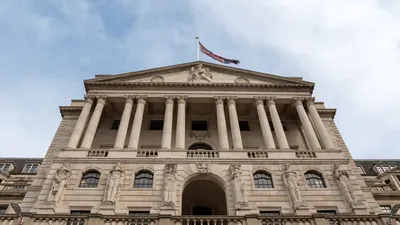
Wall Street's AI Whisperers: How Two Former SoftBank Investors Are Commanding $25,000 a Day to Teach Banks the Agentic Future
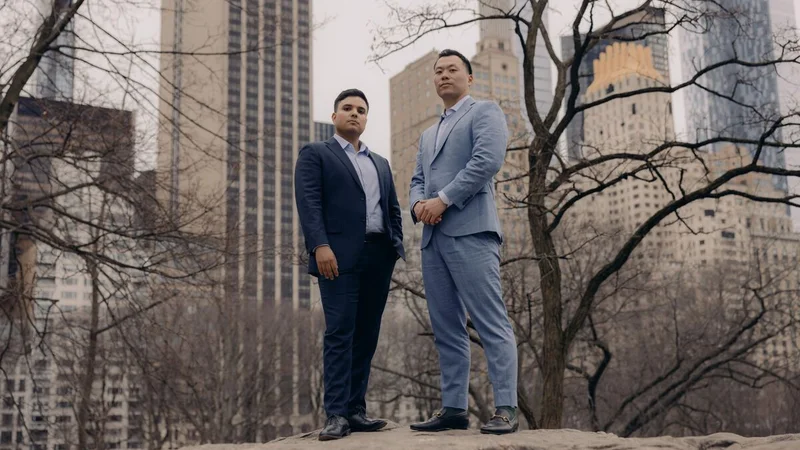
Image: Bloomberg AI
Main Takeaway
Former SoftBank investors Felipe Sinisterra and Dave Wang are charging global banks $25,000 per day for AI workshops, signaling a frantic shift from pilot.
Jump to Key PointsSummary
The $25,000-a-day duo and what they actually sell
Felipe Sinisterra and Dave Wang are not selling software. The two former SoftBank investors are selling a bridge between the promise of artificial intelligence and the glacial reality of bank compliance departments. According to Bloomberg, the pair command up to $25,000 for a single day of training, and their calendar is booked two months out. The sessions are not theoretical. India Today reports they teach bankers, fund managers, and analysts how to use tools like ChatGPT, Claude, and Gemini to analyze companies faster and build workflows that actually ship.
The demand is not coming from the IT department. It is coming from the front office. Startup Fortune notes that the premium reflects how badly institutions need people who understand both advanced AI systems and financial services risk. Banks have spent billions on AI infrastructure, but the bottleneck is human. Sinisterra and Wang fill that gap by showing teams how to move from reading about agentic AI to deploying it on a trading floor.
Why banks are paying a premium for practical knowledge
Wall Street has a long history of overpaying for scarce assets. This time the scarce asset is practical AI fluency. According to Bloomberg, global banks are pouring billions into artificial intelligence yet struggling to automate workflows. The problem is not the technology. The problem is that most senior bankers do not know how to prompt an agentic system to produce a reliable discounted cash flow model without hallucinating.
McKinsey estimated that generative AI could generate between $200 billion and $340 billion in annual value for the banking sector, a figure cited by multiple outlets covering this story. That number hangs over every training session. A managing director who can shave 10 hours off a deal process by using AI correctly pays for the $25,000 workshop in a single afternoon. Startup Fortune frames it bluntly: Wall Street has found another scarce asset to overpay for, people who can turn AI promises into systems a bank can actually use.
The agentic shift moving from pilots to production
The phrase that keeps surfacing across coverage is "agentic AI." This is not about chatbots summarizing earnings calls. It is about AI systems that can execute multi-step workflows: pulling data from a terminal, building a model, drafting a committee memo, and flagging compliance risks, all with minimal human intervention. Bloomberg Intelligence analyst Matthew Bloxham described the trainers as telling bankers what is missing from their AI plans.
Metodoviral reports that the training focuses on behavioral analysis for investment decisions, not just technical prompting. The shift is cultural as much as technological. Banks have run AI pilots for years. What Sinisterra and Wang are selling is the playbook for production. The training sessions are booked solid because institutions have realized that running a pilot and running a business on AI are two different disciplines entirely.
The parallel universe of AI training at scale
While Sinisterra and Wang command premium day rates, a quieter but equally telling trend is unfolding. AI Street reports that OpenAI has hired over 100 former investment bankers at $150 an hour to train its models on how to build financial models. The direction of travel is clear: AI companies need Wall Street expertise to make their models useful, and Wall Street needs AI expertise to stay competitive.
The Crunchbase guest commentary from Farsight CEO Samir Dutta argues that AI is supercharging front-office professionals rather than replacing them. The very best bankers, he writes, are about to become more valuable than ever. This frames the $25,000 daily rate not as a cost but as leverage. A banker augmented by AI can produce at a level that justifies compensation multiples far beyond the training fee.
What this means for the talent arms race
The Wall Street Journal reports that banks are blowing past bubble worries to supercharge AI spending. That spending is increasingly directed at human capital rather than just infrastructure. The two-month waiting list for Sinisterra and Wang is a leading indicator. When the bottleneck shifts from compute to competence, the market value of people who can teach competence explodes.
India Today captured the symbolic weight of the moment by noting that Wall Street's newest stars are not investment bankers, hedge fund managers, or traders. They are AI gurus. The hierarchy is shifting. A decade ago, the most valuable person on a trading floor was the quant with the best model. Today it might be the trainer who can teach a hundred quants how to build better models with AI in a single afternoon.
How long the premium window stays open
The $25,000 day rate is unlikely to last forever. Markets correct. As more former bankers and technologists enter the training space, rates will compress. But the underlying signal persists: financial institutions have crossed a threshold where AI is no longer optional infrastructure, it is core to competitive strategy. Startup Fortune notes that the adoption is moving from pilots into core banking work.
Firstpost frames the broader context as a global race. Banks across the United States, Europe, and Asia are competing for the same small pool of trainers who can speak both Python and prime brokerage. The scarcity is real and structural. Until business schools and internal training programs catch up, the Sinisterras and Wangs of the world will continue to name their price.
Key Points
Felipe Sinisterra and Dave Wang charge banks $25,000 daily for AI workshops booked two months in advance.
The training focuses on practical use of ChatGPT, Claude, and Gemini for financial analysis and agentic workflows.
McKinsey estimates generative AI could unlock $200 billion to $340 billion in annual banking sector value.
OpenAI has separately hired over 100 former investment bankers at $150 per hour to train its financial models.
The bottleneck has shifted from AI infrastructure spending to human expertise in deploying AI in production environments.
Questions Answered
Felipe Sinisterra and Dave Wang, two former SoftBank investors, are commanding up to $25,000 per day to train bankers, fund managers, and analysts on using AI tools like ChatGPT, Claude, and Gemini in financial workflows.
The sessions teach practical skills including building agentic AI workflows, using large language models for company analysis, automating deal processes, and applying behavioral analysis to investment decisions.
Banks have invested billions in AI infrastructure but lack internal expertise to move from pilot programs to production. The training pays for itself quickly when senior bankers can save hours on deal processes.
OpenAI has hired over 100 former investment bankers at $150 an hour to train its models on building financial models, creating a parallel talent flow between Wall Street and AI companies.
According to Bloomberg, Sinisterra and Wang's training sessions are booked out two months in advance, reflecting intense demand across global financial institutions.
McKinsey estimates that generative AI could produce between $200 billion and $340 billion in annual value for the banking sector, a figure that drives urgency in adoption efforts.
Source Reliability
30% of sources are trusted · Avg reliability: 64
Go deeper with Organic Intel
Simple AI systems for your life, work, and business. Each one includes copyable prompts, guides, and downloadable resources.
Explore Systems