Wall Street Discovers Why Oil Doomsday Hasn't Arrived: China Is the Missing Piece
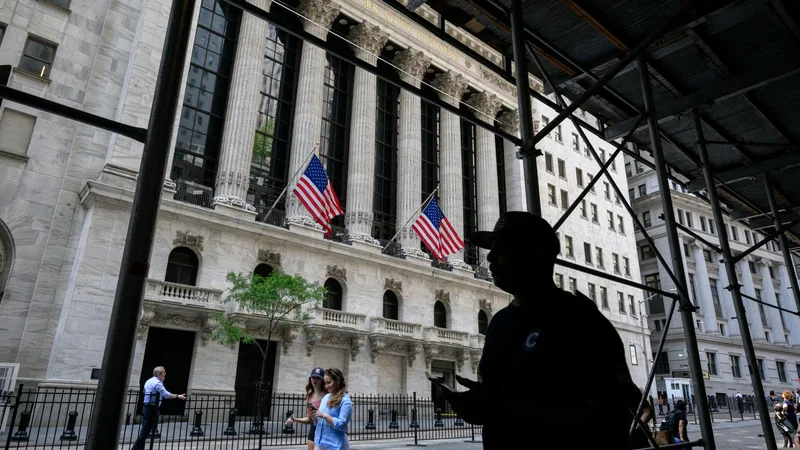
Image: Lemonde
Main Takeaway
China has quietly emerged as the global oil market's stealthy swing consumer, delaying predicted price spikes despite the Strait of Hormuz closure.
Jump to Key PointsSummary
Why oil prices stayed lower than feared
For months, investors puzzled over a nagging mystery: why didn't oil prices explode to worst-case scenarios when a fifth of global supply sat trapped behind the closed Strait of Hormuz? The answer, according to Fortune, lies in an unexpected actor. China has quietly positioned itself as the market's stealthy swing consumer, absorbing supply shifts and buffering the shock that many predicted would crash the global economy.
This revelation upends the doomsday narrative pushed by major oil executives. While Exxon and Chevron executives warned at the Bernstein conference that Brent crude could hit $150-$160 per barrel within weeks, the market has remained more resilient than those projections suggested. The disconnect between executive warnings and market reality points to structural factors that Wall Street is only now fully appreciating.
The inventory countdown executives fear most
Exxon Senior Vice President Neil Chapman delivered one of the most pointed warnings at the Bernstein 42nd Annual Strategic Decisions Conference. "We're approaching unheard of inventory levels," he said, predicting critical lows within "two to three weeks" that would trigger price spikes. Chevron executives echoed similar concerns about the depletion trajectory.
The mechanics are straightforward but unforgiving. Top oil-consuming countries have been draining strategic reserves to keep crude prices manageable while the Strait of Hormuz remains effectively closed. Saudi Arabia has diverted exports to bypass the chokepoint, Asian economies imposed rationing, and coordinated reserve releases bought time. But Chapman emphasized that drawdowns cannot continue indefinitely. Once inventories hit what he described as "really, really low levels," the buffer disappears and prices shoot upward with little resistance.
Why supply can't simply ramp up overnight
The obvious question, why not just drill more, has a complicated answer that CNN Business explored in depth. Oil producers are already operating at maximum output. Refineries are at or near capacity. And critically, exploration and new drilling require years to yield production, not weeks, making them irrelevant to the immediate crisis.
The physical constraints are compounded by a trillion-dollar reality: you cannot print molecules. As Yahoo Finance reported, the global oil market has already lost roughly 1 billion barrels of transit since Iran began disrupting the Strait of Hormuz following the US and Israeli airstrike campaign in late February. That loss represents real barrels that cannot be conjured through policy or wishful thinking. The market is running out of options precisely when it needs them most.
What sustained high prices would actually break
The downstream consequences of a sustained price spike extend far beyond gasoline pumps. As Chron reported, Exxon executives specifically warned that Middle East supply disruptions would ripple through diesel, food, plastics, and shipping, a cascade that threatens broader economic stability.
AOL's analysis put it bluntly: surging oil prices could cause demand destruction and a global economic slowdown. The International Energy Agency and other global agencies have joined the chorus of warnings. Yet markets have shown puzzling calm. The S&P 500 has continued setting records, with stocks of fuel-intensive companies actually helping lead gains as oil prices briefly eased. This disconnect between commodity market warnings and equity market performance suggests either profound complacency or, as Fortune posited, hidden mechanisms like China's demand absorption that are temporarily insulating the system from its own fragility.
The shadow market of suspicious transactions
Beneath the official market dynamics, Le Monde's New York correspondent Nicolas Chapuis reported a darker pattern. Insider trading linked to oil sales connected to the Iran situation has become commonplace on the New York Stock Exchange, with profits estimated in the hundreds of millions of dollars. "On Wall Street, this sense of impunity is clearly widespread," the column stated.
This revelation complicates any clean narrative about market efficiency. If privileged actors are extracting profits from geopolitical volatility, the price signals that ordinary investors and consumers rely upon may be distorted by manipulation as much as by genuine supply and demand. The opacity of who benefits from crisis creates its own instability, separate from the physical constraints of barrels and inventories.
What happens when the buffer finally runs out
The trillion-dollar question remains timing. Optimism about a US-Iran peace deal reopening the Strait of Hormuz has periodically cooled prices, with Brent recently hovering around $90 per barrel. But diplomatic hopes have flickered before, and the physical inventory clock keeps ticking.
TradeSmith's veteran trader Jonathan Rose identified the specific market signals he watches during energy stress periods, suggesting that volatility indicators may already be flashing warnings that mainstream narratives miss. The core vulnerability is this: China's absorption capacity, Saudi rerouting, and strategic reserve releases are all finite measures. When they exhaust, and if Hormuz remains closed, the doomsday scenarios that executives warn about could arrive with shocking speed. Wall Street's new understanding of China's role explains the past. It does not guarantee the future.
Key Points
China has unexpectedly buffered oil markets by acting as a stealthy swing consumer amid Hormuz closure
Exxon and Chevron executives warn inventories will hit critical lows within two to three weeks
Global oil transit has lost roughly 1 billion barrels since February 2026
Supply cannot ramp quickly due to maxed drilling output, refinery limits, and multi-year exploration timelines
Sustained high prices threaten diesel, food, plastics, shipping, and global economic growth
Questions Answered
China has acted as an unexpected swing consumer, absorbing supply shifts and buffering the market from the shock that many predicted.
Exxon Senior Vice President Neil Chapman warned at the Bernstein conference that critical lows could arrive within two to three weeks.
Producers are already at maximum output, refineries are near capacity, and new drilling takes years to yield production, making it irrelevant to the immediate crisis.
Executives at Exxon and Chevron have warned that Brent crude could reach $150-$160 per barrel within weeks if inventories hit critical lows.
Beyond gasoline, disruptions would ripple through diesel, food, plastics, and shipping, potentially causing demand destruction and global economic slowdown.
Source Reliability
45% of sources are established · Avg reliability: 70
Go deeper with Organic Intel
Simple AI systems for your life, work, and business. Each one includes copyable prompts, guides, and downloadable resources.
Explore Systems