SpaceX-Tesla Merger Would Create $3.4 Trillion Giant That Loses Money From Day One
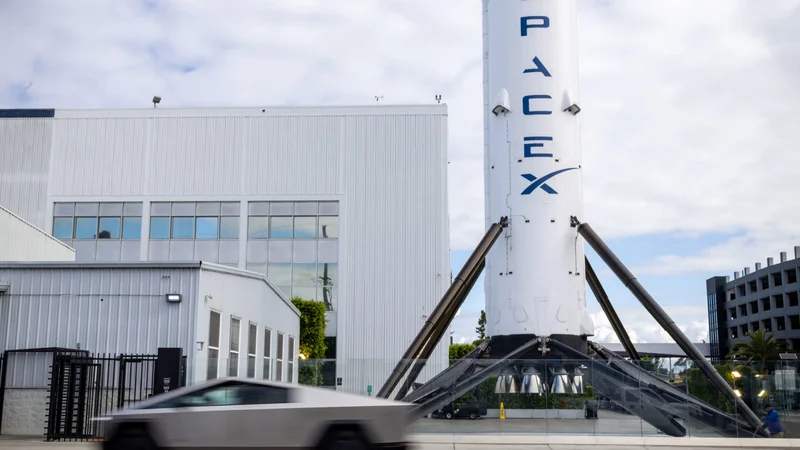
Image: Cnbc
Main Takeaway
Elon Musk's potential SpaceX-Tesla merger would form a $3.4 trillion entity with no combined profits, analysts warn.
Jump to Key PointsSummary
The largest merger in history, with no profit to show
A combined SpaceX-Tesla entity would carry an unprecedented $3.4 trillion valuation, yet would not generate a single dollar of profit. According to Fortune's analysis, Tesla sits at roughly $1.65 trillion while SpaceX's anticipated IPO targets $1.75 trillion. The two companies are about equal in market value, but both burn through cash at rates that make immediate profitability impossible. Wedbush Securities analyst Dan Ives placed the odds of a merger at 80%, suggesting operational fusion plans are already in motion. The sheer scale would dwarf every previous corporate combination in history.
The financial structure presents a fundamental paradox. SpaceX would need to issue additional shares to absorb Tesla, diluting existing stakeholders and complicating an already complex ownership web. Neither company produces consistent profits independently, making the combined proposition even more precarious for investors expecting returns.
Why the IPO timing drives merger speculation
SpaceX is racing toward a mid-2026 Nasdaq debut that could raise $50 billion and surpass Saudi Aramco's 2019 record as the largest IPO ever. CNBC reports that the rocket company obtained a private market valuation of $1.25 trillion earlier this year, with public trading expected within weeks. This public listing creates the market-to-market valuation necessary for any Tesla combination.
The strategic calculus extends beyond simple capital raising. Riffon notes that establishing a public price for SpaceX minimizes shareholder lawsuit risks and governance complications that would plague a private-to-public merger structure. Without this verified valuation anchor, Elon Musk would face insurmountable legal challenges from minority investors in both companies. The IPO functions as a prerequisite financial infrastructure, not merely a funding event.
What Tesla shareholders actually stand to lose
Tesla investors face particular vulnerability in any merger structure. Yahoo Finance and multiple analysts highlight that Tesla's established public market presence and relatively stable cash flows would effectively subsidize SpaceX's capital-intensive rocket programs and satellite constellation builds. The EV maker's shareholders would see their risk profiles transformed without corresponding upside guarantees.
Cross-company transactions already total billions of dollars annually, with overlapping workforces and shared executive leadership blurring operational boundaries. AOL reports that Wall Street has fixated on this convergence precisely because the two entities already function as intertwined enterprises. A formal merger would merely legalize existing informality, but at potentially devastating cost to Tesla's standalone valuation. Early SpaceX investor Peter Diamandis framed the combination as inevitable, though investor enthusiasm has already cooled, with Tesla stock slipping overnight as retail traders turned cautious on merger hype.
The valuation math that does not add up
Stratechery analyst Ben Thompson labeled SpaceX's $28.5 trillion total addressable market projection absurd, directly challenging the AI-heavy assumptions underpinning its valuation. This skepticism matters because any Tesla merger would transfer these inflated expectations onto combined financial statements. The $3.4 trillion headline figure rests on optimistic projections rather than demonstrated earnings power.
Betting markets currently assign roughly 15% odds to a Tesla deal completing, according to Wiss, suggesting significant disconnect between analyst enthusiasm and actual market conviction. The gap between speculative valuation and operational reality represents the central tension in merger discussions. Investors celebrating trillion-dollar headlines may miss that valuation without profit is merely a larger house of cards.
What happens if the merger proceeds
Regulatory and legal obstacles would multiply immediately upon announcement. Both companies operate under intense government scrutiny, SpaceX through defense contracts and FCC satellite licensing, Tesla through NHTSA safety oversight and SEC disclosure requirements. A combination would trigger unprecedented antitrust review despite minimal product overlap, simply due to concentrated economic power.
The governance structure presents additional complications. Musk already splits attention across multiple CEO roles, and a combined entity would demand even more fractured leadership. TradingKey notes that investors must decide whether to celebrate or exit early, a choice that hinges on whether Musk's track record of defying conventional financial wisdom can extend to sustaining a $3.4 trillion money-losing enterprise. The historical answer, that no company sustains such scale without eventual profitability, suggests caution. Yet Musk's entire career has been built on proving conventional wisdom wrong, leaving the ultimate outcome genuinely uncertain.
Key Points
Combined SpaceX-Tesla entity would reach $3.4 trillion valuation without profit
SpaceX IPO planned for mid-2026 targeting record $50 billion raise
Tesla shareholders risk subsidizing SpaceX capital-intensive operations
Analysts question SpaceX's $28.5 trillion market projection assumptions
Public valuation from IPO simplifies merger mechanics and reduces lawsuits
Questions Answered
Approximately $3.4 trillion, with Tesla at $1.65 trillion and SpaceX's anticipated IPO at $1.75 trillion.
No, according to Fortune's analysis, the combined entity would not generate profits from day one.
The IPO establishes a public market valuation, which simplifies merger mechanics and reduces shareholder lawsuit risks.
Wedbush analyst Dan Ives estimates 80% probability, while betting markets assign roughly 15% odds.
Tesla's stable EV cash flows would effectively subsidize SpaceX's capital-intensive rocket and satellite programs without guaranteed upside.
SpaceX is targeting a mid-2026 Nasdaq debut, potentially within weeks based on current timeline reports.
Source Reliability
33% of sources are trusted · Avg reliability: 64
Go deeper with Organic Intel
Simple AI systems for your life, work, and business. Each one includes copyable prompts, guides, and downloadable resources.
Explore Systems