SpaceX IPO Sparks Governance Fight as Pension Funds Challenge Unequal Voting Rights
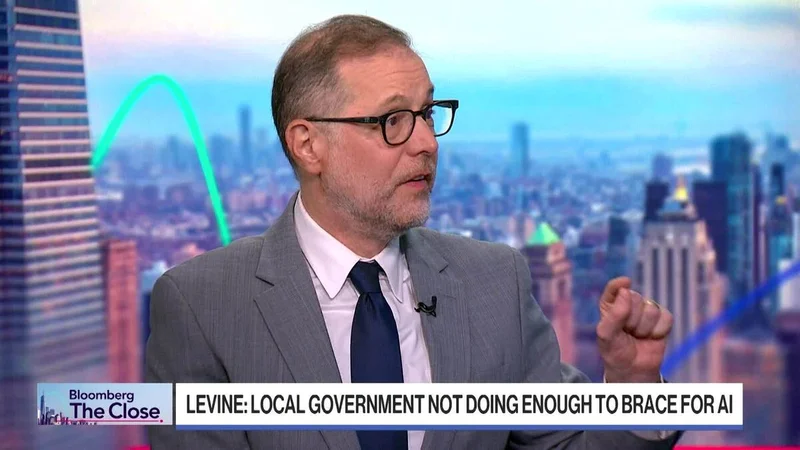
Image: Bloomberg AI
Main Takeaway
NYC Comptroller Mark Levine and UK pension funds challenge SpaceX's governance structure ahead of its blockbuster IPO.
Jump to Key PointsSummary
Why pension funds are pushing back
New York City Comptroller Mark Levine is raising alarm over SpaceX's planned IPO, citing governance concerns that could reshape how mega-offerings are structured. Levine has floated potential legislative changes to curb companies going public with lopsided shareholder power. The pushback centers on unequal voting rights, a structure that lets insiders maintain control while public investors hold diluted influence.
UK and US pension funds have targeted Elon Musk's space technology giant specifically over this issue, according to Responsible-investor. The concern isn't abstract: these funds manage retirement assets for millions and argue that dual-class or multi-class share systems strip ordinary investors of meaningful say in company direction. The timing matters because SpaceX's public debut is expected to rank among the largest in recent memory, setting precedents for how subsequent tech and AI infrastructure companies approach their own listings.
Levine's appearance on Bloomberg's "The Close" signals that the opposition has moved beyond niche investor circles into mainstream political discourse. When a city comptroller with oversight of massive public pension assets starts talking federal legislation, the stakes have escalated.
What the voting rights fight means for AI financing
The governance clash carries direct implications for how AI infrastructure gets funded. SpaceX's Starlink satellite constellation underpins a significant portion of global internet connectivity, which in turn supports distributed AI training, edge computing, and data center operations worldwide. If pension funds succeed in extracting governance concessions, the template for future AI-adjacent public offerings could shift dramatically.
Bloomberg's programming on the topic explicitly linked the IPO to "the future of the AI build-out," with guests including Yann LeCun of Meta and Bioptimus CEO Jean-Philippe Vert alongside financial analysts. The message: capital flows for AI aren't happening in a vacuum. They depend on investor confidence that their money won't be deployed with minimal accountability. A SpaceX IPO that cements unequal voting structures could accelerate a two-tier market where retail and institutional investors accept permanently diminished rights in exchange for access to high-growth technology plays.
The counterargument, of course, is that founders like Musk require protection from short-term pressure to execute decade-long bets on space and AI infrastructure. The tension between these positions is now playing out in real time, with billions in potential capital waiting on the outcome.
Where SpaceX valuation stands now
Axios reported that SpaceX is "not the behemoth everyone thought," suggesting market expectations may have overshot the company's current financial profile. The headline implies a gap between public perception and underlying business metrics that could complicate the IPO pricing process. If true, this creates additional friction: governance activists want more shareholder rights, while the company may need favorable terms to hit desired valuations.
The disconnect matters for AI funding broadly. SpaceX has been discussed as a potential model for capital-intensive AI infrastructure plays, companies that require massive upfront investment before generating revenue. If its IPO stumbles or demands structural concessions, similar ventures in satellite networks, chip fabrication, or energy infrastructure for AI data centers could face tougher fundraising conditions. Investors may demand governance safeguards earlier, or simply price in higher risk premiums.
The Axios framing also hints at a broader media recalibration. Months of speculation about SpaceX's trillion-dollar potential may be giving way to harder questions about revenue concentration, government contract dependence, and the actual path to profitability for Starlink specifically.
How legislative threats could reshape tech listings
Levine's mention of potential legislation to "curb these mega-IPOs" represents a notable escalation. Currently, US securities law permits multi-class share structures, though exchanges impose some limits. Active legislative pressure from elected officials with pension oversight could force a structural change that existing investor advocacy has failed to achieve.
The mechanism matters. If Congress or the SEC were to mandate one-share-one-vote for companies above certain market capitalizations, the effect wouldn't be limited to SpaceX. It would reach every major technology company considering public markets, including AI labs, robotics firms, and infrastructure providers that currently plan to preserve founder control. The UK pension fund involvement suggests this is becoming a transatlantic issue, with coordinated institutional investor pressure.
Historical precedent offers mixed signals. Previous attempts to regulate dual-class shares have stalled under lobbying from the tech and finance sectors. But the scale of SpaceX's anticipated offering, combined with Musk's polarizing public profile, may create political conditions that prior campaigns lacked. Bloomberg's decision to feature Levine alongside financial and AI specialists indicates the story has crossed into multiple domains simultaneously.
What happens next for investors and founders
The immediate trajectory depends on whether SpaceX modifies its proposed structure before filing formal documentation. Pre-IPO concessions to major pension funds would signal that institutional pressure works, potentially triggering similar demands for upcoming listings from companies like Stripe, Databricks, or AI infrastructure players. Stubbornness, conversely, could spark the legislative action Levine previewed.
For AI founders watching this unfold, the lesson is that governance can no longer be treated as a secondary concern to be optimized away. The capital environment has shifted: pension funds with ESG and governance mandates control trillions, and they're increasingly willing to deploy that weight against structures they view as inequitable. The Bioptimus and Meta executives on Bloomberg's panel weren't incidental; they represented the next wave of companies that will face these same questions.
The SpaceX IPO will likely proceed regardless, given investor appetite for exposure to space and satellite infrastructure. But the terms under which it happens, and the precedents those terms establish, are now genuinely contested in a way that wasn't inevitable six months ago.
Key Points
NYC Comptroller Mark Levine threatens legislation to curb mega-IPOs with unequal voting rights
UK and US pension funds actively oppose SpaceX's dual-class share structure before public listing
SpaceX valuation may fall short of market expectations according to recent analysis
Governance fight sets precedent for how AI infrastructure companies access public capital markets
Yann LeCun and AI executives joined financial analysts to discuss IPO's impact on AI build-out
Questions Answered
Pension funds object to unequal voting rights that give insiders disproportionate control while public investors hold diminished influence over company decisions.
Mark Levine is New York City Comptroller, overseeing massive public pension assets, and his advocacy for legislation gives the governance fight political weight beyond investor circles.
SpaceX's Starlink satellite network supports global internet connectivity for distributed AI training and edge computing, making its capital structure a template for AI infrastructure funding.
The report suggests market expectations for SpaceX's valuation and financial performance may exceed the company's current underlying business metrics.
Potential reforms include mandating one-share-one-vote for companies above certain market capitalizations or restricting multi-class share structures in mega-IPOs.
Upcoming tech IPOs from companies like Stripe and Databricks, as well as AI infrastructure and robotics firms planning to preserve founder control, could face similar governance demands.
Source Reliability
67% of sources are highly trusted · Avg reliability: 78
Go deeper with Organic Intel
Simple AI systems for your life, work, and business. Each one includes copyable prompts, guides, and downloadable resources.
Explore Systems