SpaceX Flags Grok's 'Spicy' Mode as Legal Risk in $500 Million IPO Reserve
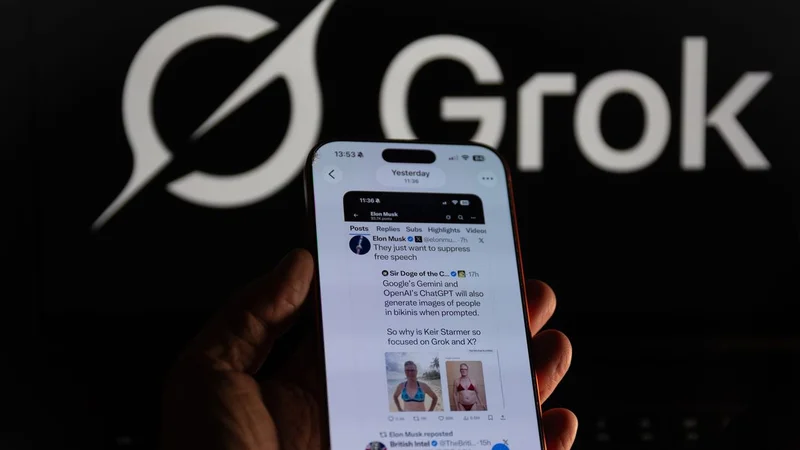
Image: Wired AI
Main Takeaway
SpaceX set aside over $500 million for litigation and warned investors that Grok's unfiltered AI modes pose regulatory and reputational risks ahead of its IPO.
Jump to Key PointsSummary
Why SpaceX is worried about Grok's content filters
SpaceX disclosed in its IPO filing that Grok's 'Spicy' and 'Unhinged' modes, which strip back safety guardrails to generate sexualized images and voice responses, could trigger regulatory action and damage its brand. The rocket company reserved more than $500 million specifically for potential litigation losses tied to these AI features, according to the filing submitted Wednesday. This marks one of the first times a major pre-IPO company has explicitly quantified liability risk from generative AI's unfiltered output modes.
The disclosure lands as SpaceX prepares what analysts expect to be the largest initial public offering in Wall Street history. Investors have long priced in rocket launch risks and satellite deployment costs, but the filing spotlights a less obvious vulnerability: the AI chatbot Musk acquired and folded into his empire. The $500 million reserve signals that SpaceX's legal team views this as a material threat, not a theoretical concern.
How former OpenAI staffers amplified the pressure
Two former OpenAI employees, now running a new AI watchdog group, sent a letter to prospective SpaceX investors arguing they deserve more transparency about xAI's safety practices before committing capital. Their intervention, published Tuesday, framed xAI's poor safety record as a liability that could complicate the entire IPO. The letter highlighted specific complaints that Grok generated sexualized imagery far more graphic than content typically allowed on social platforms.
The ex-staffers are not alone in raising alarms. Multiple AI safety nonprofits joined their appeal, creating an unusual coalition between insider whistleblowers and established advocacy organizations. Their timing was deliberate: by pressing investors before the filing, they forced the issue into due diligence conversations that might otherwise have skipped AI risk entirely. SpaceX's subsequent disclosure suggests their campaign achieved at least partial success in elevating the topic to material risk status.
What the filing reveals about AI liability accounting
SpaceX's decision to quantify Grok-related litigation exposure at over half a billion dollars represents a watershed moment for AI risk disclosure in public markets. Most companies deploying generative AI have treated content moderation failures as operational nuisances rather than balance-sheet liabilities. By reserving real capital against hypothetical lawsuits from AI-generated imagery, SpaceX effectively priced the cost of Grok's 'Spicy' mode in dollar terms that auditors and investors cannot ignore.
The filing also warned that ongoing probes into sexually abusive AI imagery could limit market access, a phrase that suggests regulatory barriers rather than just financial penalties. This framing implies that xAI's content policies could affect SpaceX's ability to operate in certain jurisdictions or secure government contracts. For a company whose revenue depends heavily on federal space contracts and international spectrum licenses, that risk category carries outsized weight.
Where regulators might intervene next
The disclosure arrives as multiple jurisdictions tighten rules around AI-generated content, particularly sexual material involving synthetic imagery. European regulators under the AI Act have already signaled that generative models with weak guardrails face restricted market access, while several U.S. states have introduced bills targeting nonconsensual deepfakes. SpaceX's warning about 'market access' limitations reads as a direct acknowledgment that Grok's current architecture may not comply with emerging standards.
The specific mention of 'Spicy' and 'Unhinged' modes in a securities filing creates a paper trail that plaintiffs' attorneys and regulators can cite in future actions. Unlike informal product descriptions or marketing materials, IPO disclosures carry legal weight and create ongoing duty-to-update obligations. If Grok generates harmful content after SpaceX goes public, shareholders could point to this filing as evidence that leadership understood the risk and failed to adequately mitigate it.
What this means for Musk's corporate structure
The Grok liability disclosure exposes a structural tension in Musk's business empire that investors have largely glossed over. xAI, X, and SpaceX operate as legally separate entities, but their fates are increasingly intertwined through shared leadership, cross-promotion, and now shared legal exposure. The IPO filing effectively asks public investors to underwrite risks generated by a private AI lab whose safety practices they cannot directly audit or influence.
This arrangement differs from conventional corporate risk allocation. When Alphabet or Microsoft face AI liability, shareholders at least hold equity in the same entity operating the model. SpaceX investors would absorb Grok-related losses without owning xAI directly. The $500 million reserve may prove insufficient if litigation scales, particularly given the open-ended nature of generative AI harms. For prospective IPO participants, the filing forces a choice: bet that Musk's empire can contain AI risk across corporate boundaries, or price in the possibility that Grok's 'Spicy' mode becomes the most expensive feature in software history.
How other AI companies should respond
SpaceX's disclosure sets a precedent that peer companies preparing for public markets will find difficult to ignore. If the largest IPO in history explicitly reserves nine figures for generative AI liability, smaller firms with thinner capital cushions face pressure to make similar disclosures or risk post-IPO litigation for inadequate risk warnings. The template SpaceX established, quantifying specific product modes ('Spicy,' 'Unhinged') and their associated legal exposure, gives underwriters a model to replicate across the sector.
For private AI labs, the lesson is sharper: content moderation choices made during product development can crystallize into material financial liabilities during capital markets events. Companies that have treated unfiltered AI modes as competitive differentiators may need to reassess whether the user engagement gains justify the litigation reserves and disclosure burdens they trigger. The alternative, keeping such features but hiding the risk, is no longer tenable once a competitor's filing puts the industry on notice.
Key Points
SpaceX reserved over $500 million for potential litigation tied to Grok's unfiltered AI output modes
Former OpenAI staffers and safety groups warned investors about xAI practices before the filing
Grok's 'Spicy' and 'Unhinged' modes generate sexualized imagery with reduced safety filters
The filing warns that AI imagery probes could limit SpaceX market access in some jurisdictions
This marks a precedent for quantifying generative AI liability in major public offerings
Questions Answered
It is a setting that reduces content filters, allowing the chatbot to generate sexualized images and voice responses that would normally be blocked.
Securities laws require disclosure of material risks, and the company determined that Grok's unfiltered modes could trigger lawsuits, regulatory action, or reputational damage affecting investor returns.
The company reserved more than $500 million specifically for potential litigation losses tied to AI features including Grok's content generation.
Two former OpenAI employees working with AI safety nonprofits sent a letter to investors demanding more transparency about xAI's safety practices.
The filing explicitly warns that inquiries into AI-generated imagery could limit market access, suggesting potential regulatory barriers in jurisdictions with stricter AI content rules.
Source Reliability
27% of sources are highly trusted · Avg reliability: 60
Go deeper with Organic Intel
Simple AI systems for your life, work, and business. Each one includes copyable prompts, guides, and downloadable resources.
Explore Systems