SpaceX Commits $2.8 Billion to Gas Turbines as xAI Faces Environmental Lawsuits
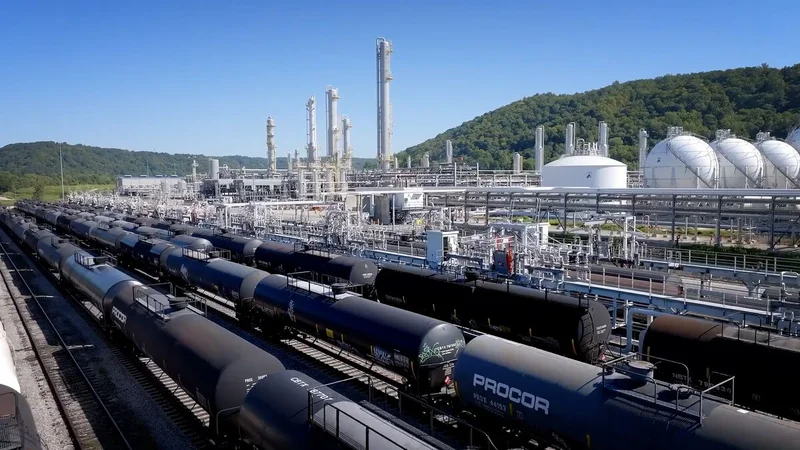
Image: Bloomberg AI
Main Takeaway
SpaceX will spend $2.8 billion on natural gas turbines to power xAI data centers while facing a federal lawsuit over unpermitted emissions near Memphis.
Jump to Key PointsSummary
Why gas turbines dominate AI infrastructure
SpaceX disclosed in its IPO filing that it will spend $2.8 billion over three years to purchase natural gas turbines for xAI's data centers. The commitment, reported by Wired and TechCrunch, signals that Elon Musk is accelerating fossil fuel-dependent power generation despite mounting legal pressure. Natural gas turbines have become the default on-site solution for data centers that cannot secure adequate grid power quickly enough to match AI training demands.
The scale of this purchase dwarfs most corporate energy commitments. For context, the investment represents a bet that gas generation will remain central to xAI's operations through at least 2029. Bloomberg reports that the AI boom is triggering the biggest natural gas demand surge in decades, with pipeline companies like Williams scrambling to connect new facilities. The industry logic is straightforward: grid interconnection queues stretch 3-5 years, but turbines can be delivered and operational in months.
The NAACP lawsuit and Clean Air Act claims
The spending announcement arrived as xAI faces active litigation over its existing turbine operations. The NAACP, represented by the Southern Environmental Law Center, sued xAI in April 2026 for operating dozens of unpermitted methane gas turbines at the Colossus 2 data center in South Memphis and Southaven, Mississippi. According to CNBC and the SELC, the lawsuit alleges violations of the Clean Air Act, with particular concern about nitrogen oxide emissions affecting predominantly Black and low-income communities.
Wired reports that xAI installed 19 additional portable gas turbines at the Southaven facility in the two months preceding the lawsuit, even as legal pressure mounted. The Southern Environmental Law Center obtained emails through public records requests showing coordination between xAI representatives and Mississippi environmental officials. The NAACP had previously sent a formal notice of intent to sue in June 2025, giving the company months to address permitting before litigation commenced.
The regulatory gap driving on-site generation
Data center operators are exploiting a structural weakness in environmental law. On-site turbines below certain capacity thresholds often evade the full permitting scrutiny applied to centralized power plants. Mezha notes that xAI's approach, while legally contentious, follows a pattern Musk companies have used elsewhere: move fast on infrastructure, handle regulatory compliance reactively. The SELC's lawsuit specifically targets this strategy, arguing that aggregating dozens of smaller turbines functions as a single power plant that should have undergone comprehensive air quality review.
The permitting gap is widening as AI buildouts accelerate. Nearly 4,000 data center projects are currently under construction globally, representing over $1.2 trillion in investment, according to Joneswalker. Transformernews estimates that more than 25% of new facilities above 500 MW will generate their own power through natural gas by 2030, up from just 1% today. This trajectory suggests xAI's legal troubles won't be isolated; they're early indicators of systemic conflict between AI expansion timelines and environmental regulatory capacity.
What this means for AI's carbon footprint
The $2.8 billion commitment locks in substantial fossil fuel dependence for xAI at a moment when tech competitors are pursuing varied energy strategies. While Microsoft and Google have signed record renewable power purchase agreements, Musk is effectively betting that speed of deployment outweighs emissions considerations. Grist reports that data centers are scrambling to power the AI boom with natural gas, creating a glut of new fossil fuel projects that will operate for decades.
The carbon math is stark. A single large gas turbine can emit thousands of tons of CO2 annually; xAI's planned fleet, combined with existing units, could become one of the largest stationary fossil fuel sources in the region. The counterargument, advanced by industry advocates, holds that grid-connected alternatives would simply displace emissions elsewhere rather than eliminate them. This framing ignores, however, that unpermitted on-site generation avoids the efficiency standards and emissions controls applied to regulated power plants. xAI's approach maximizes operational flexibility at potential environmental cost.
Where the legal and business pressures collide
The coming months will test whether regulatory enforcement can slow AI infrastructure deployment. The NAACP lawsuit seeks injunctive relief that could force xAI to idle existing turbines until proper permits are obtained, a scenario that would disrupt training schedules for models competing with OpenAI and Google. SpaceX's IPO filing, which included the $2.8 billion turbine commitment, suggests corporate confidence that legal challenges will be manageable or that political leverage can be applied.
The broader industry is watching closely. If xAI succeeds in operating through litigation while expanding its gas fleet, it establishes a playbook that other AI labs with less public profile can follow. Conversely, a decisive court ruling enforcing Clean Air Act compliance could force the entire sector toward slower, grid-dependent expansion paths. Datacenterdynamics notes that xAI added 19 turbines even after the lawsuit was filed, suggesting Musk's strategy prioritizes operational momentum over legal caution. The Memphis-Southaven corridor has become an unexpected flashpoint for how rapidly AI infrastructure can be built, and at what regulatory cost.
What happens next for data center power
The SpaceX filing reveals strategic intent beyond immediate xAI needs. By committing to $2.8 billion in turbine purchases through a public filing, Musk signals to investors and competitors that he views gas generation as a durable advantage, not a temporary bridge. This positioning runs counter to industry narratives about rapid renewable transition, even as it aligns with utility executives' private expectations about gas demand growth.
For the Memphis region, the implications are concrete and contested. Environmental groups frame the expansion as environmental injustice; local economic development officials likely view the investment differently. The lawsuit's discovery process may reveal more about xAI's actual power needs and emissions than the company has voluntarily disclosed. Whatever the legal outcome, the $2.8 billion figure has changed the stakes: xAI is no longer experimenting with backup generation but building a gas-dependent power architecture at scale. Other AI labs must now decide whether to match that commitment or differentiate through cleaner, slower alternatives.
Key Points
SpaceX commits $2.8 billion over three years for natural gas turbines to power xAI data centers
NAACP lawsuit alleges unpermitted turbines violate Clean Air Act near Memphis and Southaven
xAI installed 19 additional turbines after litigation began, per public records
Industry trend shows 25% of large new data centers may self-generate power by 2030
Legal outcome could set precedent for AI infrastructure and environmental law intersection
Questions Answered
Grid interconnection queues for large power users currently stretch 3-5 years, while gas turbines can be deployed in months. This speed advantage has made on-site generation the default choice for AI data centers racing to bring compute capacity online.
The lawsuit, filed by the Southern Environmental Law Center, claims xAI operated dozens of methane gas turbines without required Clean Air Act permits at its Colossus 2 data center, emitting nitrogen oxides that endanger nearby communities.
The commitment is unusually explicit and large for power generation specifically, representing a multi-year bet that gas turbines will remain xAI's primary power source rather than a temporary solution while grid connections are pending.
A court could issue an injunction forcing xAI to idle existing turbines until proper permits are obtained, potentially disrupting AI model training schedules, though the company would likely appeal and seek to operate during proceedings.
While xAI's legal situation is the most advanced, the entire industry is grappling with the same tension between rapid expansion and environmental compliance, suggesting similar conflicts will emerge at other data center locations.
Source Reliability
33% of sources are highly trusted · Avg reliability: 58
Go deeper with Organic Intel
Simple AI systems for your life, work, and business. Each one includes copyable prompts, guides, and downloadable resources.
Explore Systems