Semiconductor Stocks Slide as Treasury Yields Spike, Inflation Fears Resurface
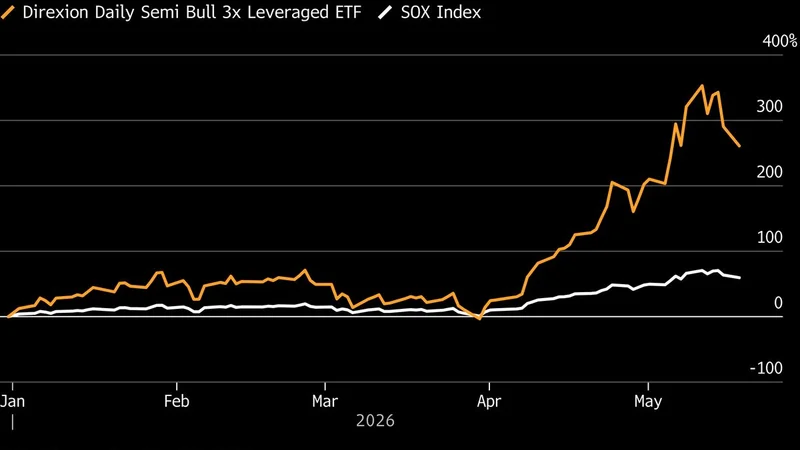
Image: Bloomberg AI
Main Takeaway
US stock futures dropped as 10-year Treasury yields climbed above 4.6%, dragging semiconductor giants Nvidia and Micron lower.
Jump to Key PointsSummary
Why chip stocks are getting hammered
Semiconductor stocks have become the market's most volatile swing factor. The VanEck Semiconductor ETF (SMH) plunged 6.4% in a single week earlier this spring, its worst drop since the Liberation Day tariffs, according to TradeStation analysis. More recently, a gauge of semiconductor firms sank 3% in a single session as inflation data spooked investors. The pattern is stark: when yields rise, chip stocks fall harder than almost any other sector.
The mechanics aren't subtle. Chipmakers like Nvidia and Micron trade at premium valuations that assume years of explosive growth. Higher Treasury yields discount those future cash flows more aggressively, squeezing multiples. Bloomberg reports that major semiconductor stocks extended declines as 10-year yields pushed past 4.6%. The Nasdaq 100 slid nearly 1% in parallel.
How inflation data is driving the bond market
Fresh inflation readings have rattled the fixed-income complex. A faster-than-estimated core consumer price index halted an equity rally and sent the S&P 500 retreating from record highs, per Bloomberg data cited by Swissinfo. Energy disruptions stemming from conflict in Iran amplified price pressures, adding a geopolitical kink to an already tense inflation picture.
The bond market's reaction was immediate and brutal. Yields spiked, prices dropped, and the usual safe-haven bid for Treasuries failed to materialize. On May 14, CNBC reported that the S&P 500 shed 1.24%, the Nasdaq Composite fell 1.54%, and the Dow Jones Industrial Average lost 537 points as yields surged. The move wasn't isolated to tech; banks and other rate-sensitive sectors caught collateral damage.
The Nvidia and Micron-specific pain
Not all semiconductor declines are created equal. Nvidia and Micron have become the poster children for this correction, with both extending losses as yields climbed. These aren't random victims. Nvidia's valuation embeds massive AI infrastructure spending assumptions. Micron's memory cycle is tightly coupled to capital expenditure timing. Both are hyper-sensitive to discount rate changes.
Investopedia noted a separate pressure point: a report that Meta Platforms may use Google's AI chips in their data centers helped drag Nvidia and AMD shares lower in late 2025. This competitive dynamic adds another layer of vulnerability beyond macro factors. When rates rise and competitive threats emerge simultaneously, the selling intensifies.
Why this pattern keeps repeating in 2026
The semiconductor sector has led stocks higher since the AI rally began, but that leadership cuts both ways. TradeStation's David Russell warned in March that chip stocks face new risks as oil prices jump and war creates uncertainty. The prediction proved prescient. Energy cost pressures feed into inflation, inflation forces rates higher, and higher rates crush the most richly valued growth names.
Captrader's semiconductor analysis highlights another structural issue: investors struggle to distinguish which chip manufacturers are genuinely positioned for long-term growth versus those carrying inflated valuations. When the macro tide turns, that differentiation gets resolved through price. The sector's 1,200% five-year returns have attracted momentum capital that exits quickly at the first sign of trouble.
Whether markets can stabilize near term
There are tentative signs of stabilization. On May 18, the S&P 500 and Nasdaq opened higher as semiconductor stocks recovered and the bond market rout cooled, Reuters reported via Yahoo Finance. The Dow still slipped 45 points, but the panic had clearly moderated. The Nasdaq Composite rose 0.25% to 26,289 in early trading.
Whether this holds depends on upcoming inflation prints and Federal Reserve communication. Chip stocks have become a real-time proxy for rate expectations. If yields retreat meaningfully, history suggests semiconductor multiples can expand rapidly. If inflation persists and the 10-year pushes toward 5%, the sector's correction has further to run. For now, traders are caught in a loop of macro data sensitivity that shows no sign of breaking.
What investors should watch next
The immediate catalysts are straightforward: core PCE, Fed speaker guidance, and any escalation in Middle East energy disruptions. Semiconductor earnings from Nvidia and others will test whether AI demand remains robust enough to justify valuations even at higher discount rates. The sector's fate in 2026 hinges on this tension between structural growth and cyclical macro pressure.
Key Points
10-year Treasury yields climbed above 4.6%, pressuring growth stock valuations
Semiconductor ETF suffered its worst weekly drop since spring tariff shocks
Energy disruptions from Iran conflict amplified inflation data surprises
Nvidia and Micron face dual pressure from rates and competitive chip dynamics
Brief stabilization emerged as yields retreated and chip stocks bounced
Questions Answered
Chipmakers trade at premium valuations based on future growth. Higher yields discount those future cash flows more aggressively, compressing multiples faster than for value stocks.
A faster-than-estimated core consumer price index reading, amplified by energy disruptions from conflict in Iran that pushed oil prices higher.
Yes, on May 18 the S&P 500 and Nasdaq opened higher as semiconductor stocks recovered and bond market selling cooled from the previous week.
Reports that Meta Platforms may use Google's AI chips in data centers have raised concerns about Nvidia's market share in AI infrastructure.
Core PCE inflation data, Federal Reserve communications, Middle East energy developments, and upcoming semiconductor earnings reports.
Source Reliability
44% of sources are highly trusted · Avg reliability: 78
Go deeper with Organic Intel
Simple AI systems for your life, work, and business. Each one includes copyable prompts, guides, and downloadable resources.
Explore Systems