San Francisco Sellers Now Demand Anthropic Stock Over Cash as AI IPO Frenzy Grips Housing Market
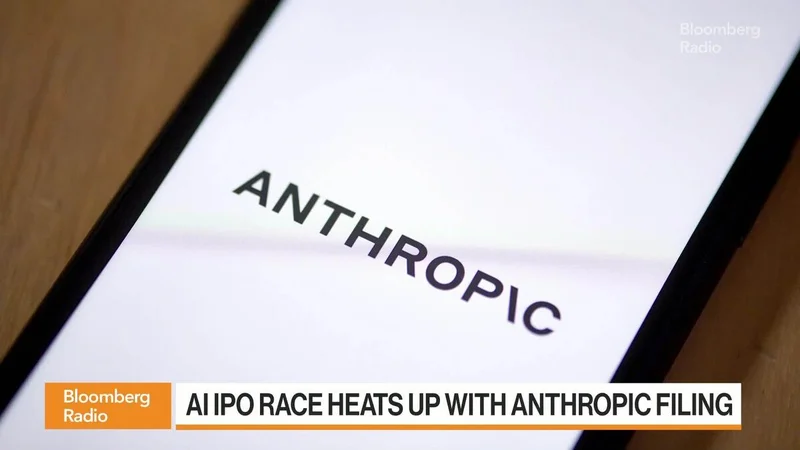
Image: Bloomberg AI
Main Takeaway
Anthropic's $965 billion IPO filing triggers unprecedented real estate deals demanding AI stock instead of cash in San Francisco.
Jump to Key PointsSummary
How AI stock became the new currency
A $2.995 million home at 160 Noe Street in San Francisco's Duboce Triangle neighborhood hit the market in late May with an unusual stipulation: the seller will accept shares of Anthropic or OpenAI as payment. The 119-year-old, 2,495-square-foot residence represents one of the first known instances in the city where private, non-liquid equity substitutes for actual dollars in a residential transaction. According to Fortune, the listing agent called it a landmark moment for homebuying.
The phenomenon isn't isolated. Storm Duncan, a tech investment banker and founder of Ignatious, listed his Mill Valley estate and an adjacent property collectively worth nearly $8 million, explicitly requesting pre-IPO Anthropic shares. Duncan lives primarily in Jackson Hole, Wyoming, and sees the swap as a direct bet on the company's public market debut. NBC Bay Area reported that Duncan wants to dive into artificial intelligence by converting real estate into equity he cannot otherwise access. The message from both sellers is identical: they believe Anthropic stock will appreciate faster than San Francisco real estate, which itself has seen median prices climb above $2 million.
The mechanics of trading houses for private shares
The transactions face substantial legal and practical barriers. Sf.gazetteer noted that a seller cannot simply declare a house sold for a thousand shares of a private company, comparing the attempt to offering a thousand almonds. Private stock lacks the liquidity, standardized valuation, and regulatory protections of cash or publicly traded securities. Buyers holding Anthropic equity typically face transfer restrictions, right of firstioni refusal clauses, and company approval requirements that make casual assignment nearly impossible.
Yet the sellers aren't entirely naive. Duncan's background as an investment banker suggests he understands the friction and may structure the deal through secondary transactions or special purpose vehicles. The 160 Noe Street listing uses softer language, stating the seller will consider stock, which preserves negotiation flexibility without committing to an binding exchange mechanism. Yahoo Finance pointed out that ordinary investors cannot buy Anthropic directly, making these property swaps one of the few ways to gain exposure outside venture rounds or employee grants. The gap between aspiration and execution remains wide, but the signaling value, these sellers believe Anthropic equity is worth more than cash, carries weight on its own.
Anthropic's race to public markets
Anthropic PBC filed a confidential S-1 registration statement with the SEC on Monday, June 1, 2026, according to multiple sources. KTVU reported the San Francisco-based artificial intelligence company filed for a proposed initial public offering expected to generate immense wealth and further fuel rapid AI industry growth. The filing gives Anthropic first-mover advantage over rival OpenAI in the race to Wall Street, though neither company is profitable yet, Fortune noted.
Bloomberg reported that Anthropic selected Morgan Stanley and Goldman Sachs to lead its IPO, citing people familiar with the matter. The $965 billion valuation, confirmed across multiple sources, makes this one of the most anticipated public offerings in technology history. CFO Krishna Rao is steering the process, which began with the confidential submission that prevents public inspection of financial details until closer to the actual listing. TechCrunch observed that San Francisco's housing market has lost its mind, with record sales testing upper limits of what the famously unaffordable city thought possible. The IPO timing accelerates a wealth creation event that will concentrate billions in new paper value among employees and early investors who may then seek to convert it into tangible assets like real estate.
What this reveals about private market liquidity
The housing-for-stock offers expose a critical tension in the current AI boom: enormous paper wealth paired with severely constrained liquidity. Anthropic employees and early investors hold equity in a company valued at nearly $1 trillion, yet they cannot easily sell shares, pledge them as collateral, or use them in everyday transactions. The same restriction applies to OpenAI, which remains private despite comparable scale and public prominence. This liquidity crunch pushes creative solutions into unexpected markets.
Real estate becomes a pressure valve. Sellers who accept stock effectively provide cash-like liquidity to buyers while betting on upside that exceeds property appreciation. The arrangement resembles structured secondary transactions, just wrapped in residential purchase agreements. Bloomberg emphasized that Anthropic and OpenAI are battling for a fundraising edge that will determine who wins the AI platform war, and access to public capital markets provides ammunition for compute, talent, and infrastructure spending. For individual holders, the ability to finally monetize even a portion of their stake, whether through direct sale, swap, or derivative arrangement, represents the difference between theoretical and actual wealth. The housing market is absorbing that desperation and converting it into transaction volume.
Whether this signals a broader trend
The specific deals may prove exceptional, but the underlying pattern has staying power. San Francisco's median home price crossed $2 million in early 2026, according to the Los Angeles Times, with at least seven houses selling for $1 million above asking price in a single month. That frenzy predated the Anthropic IPO filing and reflects deep structural demand from AI industry employees. Wired reported that several real estate listings in the Bay Area are offering to exchange homes for pieces of AI startups, suggesting the 160 Noe Street and Mill Valley properties are early indicators rather than isolated stunts.
The convergence of two illiquid, high-value asset classes, private tech equity and premium real estate, creates natural pairing opportunities. Sellers with conviction in AI growth and buyers with trapped equity find common interest. Whether such transactions proliferate depends on regulatory tolerance, company transfer policies, and the actual timeline for Anthropic's public listing. If the IPO proceeds smoothly and early employees become genuinely liquid, demand for stock-as-payment may actually decrease, the underlying problem gets solved through conventional channels. Until then, the housing market serves as an improvised secondary exchange, with all the risk, opacity, and potential reward that implies. The sellers asking for Anthropic stock are making a market where none officially exists.
Key Points
Anthropic filed confidential S-1 with SEC for proposed IPO at $965 billion valuation
San Francisco home seller accepts Anthropic or OpenAI stock for $2.995 million property
Investment banker lists $8 million Mill Valley estate seeking pre-IPO Anthropic shares
Morgan Stanley and Goldman Sachs selected to lead Anthropic's public offering
Private AI equity liquidity crunch drives creative real estate barter arrangements
Questions Answered
Not easily. Private stock faces transfer restrictions, company approval requirements, and valuation challenges that make direct residential swaps legally complex and practically difficult.
Anthropic filed a confidential S-1 in June 2026 at a $965 billion valuation, with Morgan Stanley and Goldman Sachs leading the offering, though no public trading date is set.
Sellers believe Anthropic stock will appreciate faster than real estate, and they are effectively providing liquidity to equity-rich buyers while betting on AI sector growth.
Anthropic's filing gives it first-mover advantage over OpenAI, which remains private and has not yet submitted registration documents for an IPO.
Analysts have made dotcom bubble comparisons, noting neither Anthropic nor OpenAI is profitable, though the scale and structural demand for AI infrastructure differ from the 2000 era.
Source Reliability
54% of sources are trusted · Avg reliability: 72
Go deeper with Organic Intel
Simple AI systems for your life, work, and business. Each one includes copyable prompts, guides, and downloadable resources.
Explore Systems