Samsung's Non-Chip Workers Block Court as Chip Bonuses Spark Internal Labor War
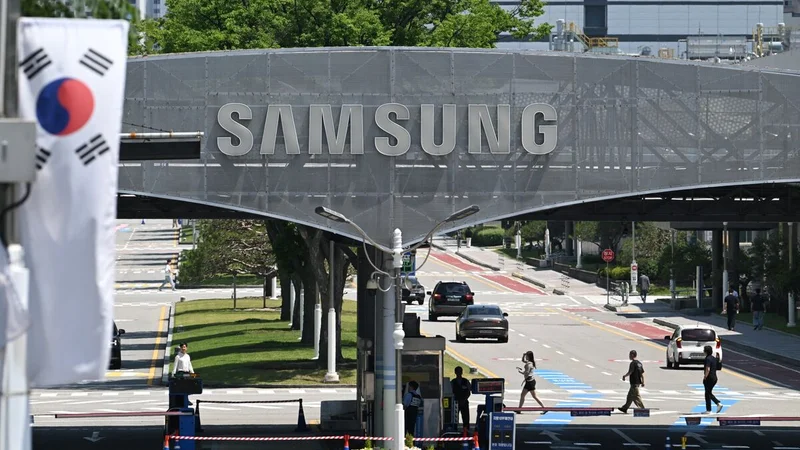
Image: Bloomberg AI
Main Takeaway
Samsung's non-chip union seeks court injunction to halt $26.6 billion chip worker bonus vote, exposing deep pay divides.
Jump to Key PointsSummary
Why non-chip workers went to court
A Samsung Electronics union representing workers outside the semiconductor division filed for a court injunction to block a wage vote on a tentative deal that would award chip workers approximately 40 trillion won ($26.6 billion) in bonuses. The union argues the bonus structure discriminates against non-chip employees who contribute to the company's overall success but stand to receive far less compensation. Samsung's chip division has historically generated the majority of company profits, creating persistent pay gaps between divisions that this bonus deal would widen further.
The legal challenge marks an escalation in internal labor tensions at South Korea's largest conglomerate. Workers in display, mobile, and consumer appliance divisions view the chip-focused payout as undermining the principle of equitable compensation across Samsung's diverse business units. The court petition seeks to halt the ratification process until a more inclusive distribution formula can be negotiated.
What the chip bonus deal contains
Samsung's largest union, representing chip workers, already voted in favor of the compensation package. The deal grants chip division employees an average bonus of about $340,000 per person, a figure that reflects the division's record profitability during the AI-driven semiconductor boom. The total bonus pool represents one of the largest single-worker payouts in Samsung's corporate history and among the most generous in South Korean labor relations.
The agreement emerged after prolonged negotiations between management and the chip workers' union, which had threatened strike action that could have disrupted global chip supply chains already strained by geopolitical tensions and capacity constraints. Samsung Electronics accounts for roughly 20% of global memory chip production, making any labor stoppage a matter of international economic concern. The deal's structure prioritizes retention of specialized chip talent amid fierce competition with SK Hynix and TSMC for semiconductor engineers.
How Samsung's dual-union structure fuels conflict
Samsung operates under a fragmented labor representation model that has become a liability during high-stakes negotiations. Multiple unions represent different divisions and job classifications, each with independent bargaining authority and divergent interests. The chip workers' union commands disproportionate leverage due to the division's profit centrality and the technical scarcity of its members, while non-chip unions lack comparable bargaining power.
This structural asymmetry has produced recurring conflicts over profit distribution. Non-chip workers argue that Samsung's brand value, supply chain integration, and cross-divisional subsidies mean chip profits depend on contributions from throughout the conglomerate. The current bonus vote, they contend, rewards one division while ignoring the collective enterprise that sustains it. Labor law experts note that South Korea's fragmented union landscape at major chaebols often pits worker against worker, weakening overall labor solidarity and allowing management to negotiate favorable terms with individual units.
The global chip labor precedent at stake
The dispute illuminates broader tensions in semiconductor industry compensation as the AI boom concentrates wealth in chip design and manufacturing roles. TSMC and Intel have faced similar internal pressures over pay disparities between fabs and corporate functions, though neither has seen legal challenges of this magnitude. Samsung's outcome could establish precedent for how diversified electronics conglomerates distribute windfall profits across divisions.
Industry analysts warn that excessive internal pay gaps risk operational friction at a moment when Samsung needs cross-functional coordination to compete in AI chips against Nvidia and custom silicon from Google and Amazon. The company's non-chip divisions, including its struggling mobile and display units, already face morale challenges from years of cost-cutting and restructuring. A visible compensation gulf could accelerate talent flight to competitors or startups offering equity upside unavailable within Samsung's seniority-based pay system.
What happens if the court intervenes
The Seoul court's decision on the injunction request will determine whether the bonus ratification proceeds as scheduled. Legal observers give mixed assessments: South Korean labor courts generally respect negotiated agreements between management and recognized unions, but they have intervened when procedural irregularities or discriminatory effects are demonstrated. If the injunction issues, Samsung faces renegotiation with chip workers who may harden their position, potentially reviving strike threats during a critical production period.
Should the court dismiss the petition, non-chip workers may escalate to broader industrial action or pursue claims through the National Labor Relations Commission. Samsung management confronts a no-win scenario where satisfying one worker constituency alienates another. The company's response, whether through supplementary non-chip benefits or firm insistence on the existing deal, will signal how it balances divisional equity against competitive retention priorities in an era of AI-driven semiconductor stratification.
Key Points
Non-chip Samsung union files court injunction to block $26.6 billion chip worker bonus vote
Chip division deal grants average $340,000 bonuses after strike threat
Samsung's fragmented multi-union structure enables divisional pay conflicts
Case tests South Korean labor court intervention in negotiated agreements
Outcome may set precedent for profit distribution at diversified tech conglomerates
Questions Answered
They argue the $26.6 billion chip worker bonus discriminates against other divisions and violates principles of equitable compensation across Samsung's business units.
The average bonus for chip division employees would be approximately $340,000 per person, based on the 40 trillion won total pool.
Possibly, if South Korean labor courts find procedural irregularities or discriminatory effects, though courts typically respect negotiated management-union agreements.
Unresolved tensions risk operational friction, talent flight to competitors, and potential broader industrial action that could disrupt production during critical demand periods.
Source Reliability
30% of sources are highly trusted · Avg reliability: 66
Go deeper with Organic Intel
Simple AI systems for your life, work, and business. Each one includes copyable prompts, guides, and downloadable resources.
Explore Systems