Qualcomm Wins Amazon AI Chip Deal as Cloud Giant Expands Custom Silicon Strategy
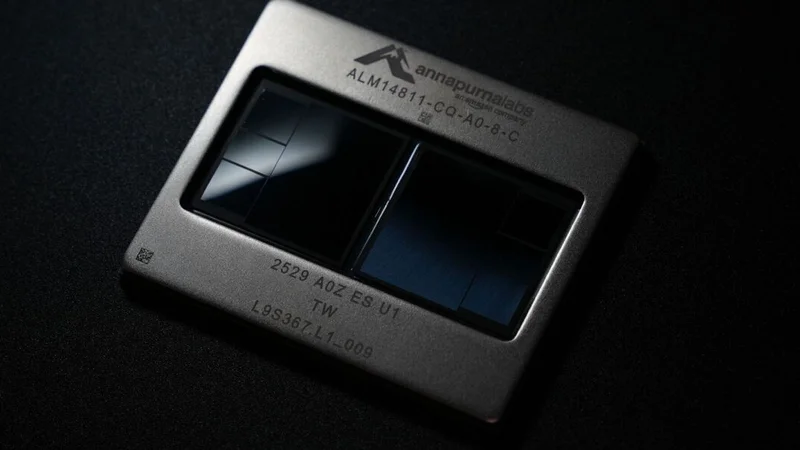
Image: Aboutamazon
Main Takeaway
Qualcomm will supply Amazon with custom data-center AI chips across multiple generations, marking a major expansion of Amazon’s semiconductor strategy beyond its in-house Trainium hardware.
Jump to Key PointsSummary
Qualcomm lands a major customer
Qualcomm has signed Amazon as a customer for custom data-center AI chips in a multigeneration agreement, opening a new front in the chipmaker’s push beyond smartphones. The deal gives Amazon the right to acquire as much as $4 billion in Qualcomm shares, Bloomberg reported. Financial terms for the chip supply agreement were not disclosed.
The arrangement places Qualcomm inside Amazon’s growing hardware stack while giving Amazon another source of AI compute technology alongside its own Trainium and Inferentia processors, Nvidia GPUs, and earlier work with Intel. Qualcomm’s data-center ambitions have centered on custom application-specific chips, an area where hyperscalers increasingly seek control over cost, energy use, and deployment schedules.
Amazon broadens its silicon bet
Amazon already designs custom processors for AWS and consumer hardware, so the Qualcomm deal extends an established strategy rather than creating one from scratch. AWS markets Trainium for AI training and inference and Graviton for general-purpose cloud workloads, while Amazon’s devices organization develops silicon for products including Echo and Fire TV, according to Amazon’s chip overview and comments from devices chief Panos Panay.
The company has also worked with Intel on bespoke AI fabric chips through a multiyear, multibillion-dollar partnership. That mix shows Amazon is combining internal design with outside suppliers, using different processors for different workloads and products. Qualcomm’s role is therefore best understood as an added design and supply relationship, while Amazon retains a broad portfolio of internally developed and externally sourced silicon.
The Nvidia question
The agreement raises competitive pressure across the AI accelerator market, especially for Nvidia, whose GPUs remain central to cloud AI infrastructure. Amazon has historically kept its custom Trainium chips inside AWS and sold access to the resulting compute rather than shipping the processors to outside data centers. A report summarized by Finance Yahoo said Amazon has discussed supplying Trainium accelerators for use in other companies’ facilities, a move that would widen the competition beyond cloud rentals.
Qualcomm’s deal points in the same direction: hyperscalers are treating custom silicon as a strategic asset and are willing to pair internal designs with specialized external engineering. Amazon’s approach can reduce dependence on a single accelerator vendor, while Qualcomm gains a high-profile reference customer for its custom ASIC business. The impact on Nvidia will depend on production scale, software support, and the workloads Amazon ultimately assigns to the chips.
Why the deal matters for chips
Custom AI processors trade some of the flexibility of general-purpose GPUs for tighter optimization around defined workloads. Amazon says its in-house chips are designed alongside teams building frontier AI models, with goals covering price-performance, scale, and efficiency. Qualcomm brings long experience in low-power AI computing and application-specific silicon, giving the partnership a technical rationale beyond simply adding another processor supplier.
The multigeneration structure also matters. AI hardware programs require years of architecture, software, manufacturing, and system planning, so a continuing relationship provides more room to tune chips to Amazon’s services and infrastructure. Qualcomm’s broader ASIC push has been building for some time, according to Jon Peddie, while Amazon’s Intel collaboration demonstrates that the cloud company is comfortable spreading development across multiple semiconductor partners.
Devices and automotive ties add context
Amazon and Qualcomm already have a separate relationship in connected products and vehicles. Qualcomm has announced efforts to pre-integrate Amazon’s Alexa Custom Assistant with Snapdragon Automotive Cockpit platforms, giving automakers and suppliers a way to build customizable in-car assistants through Qualcomm’s platform and Amazon’s automotive software.
That partnership does not establish that the new data-center chips will serve Amazon’s Echo, Fire TV, or automotive products. It does show that the companies have been working together across AI-enabled experiences, edge computing, and software integration. Amazon’s device strategy, described by Panay, includes end-to-end silicon for critical products, while Qualcomm’s business spans high-performance and low-power computing. Their expanding relationship now reaches from embedded systems to cloud infrastructure.
What happens next
The next milestones are chip specifications, deployment timing, manufacturing partners, and software details. Those factors will determine whether the agreement becomes a meaningful alternative to Nvidia-based systems or remains a customer-specific program inside Amazon’s infrastructure. Amazon’s existing Trainium and Inferentia roadmap will also clarify how Qualcomm silicon fits with the company’s internal designs.
For Qualcomm, Amazon provides validation as the company pursues data-center growth beyond its smartphone base. For Amazon, the deal adds bargaining power and another path toward specialized AI capacity. The broader direction is clear: hyperscalers are building their own processors, commissioning custom designs, and testing whether chip ownership can lower the cost of running expanding AI services.
Key Points
Qualcomm secured Amazon as a multigeneration customer for custom data-center AI chips.
Amazon paired Qualcomm’s custom silicon with Trainium, Inferentia, Nvidia GPUs, and Intel partnerships.
Amazon’s agreement includes rights to acquire as much as $4 billion in Qualcomm shares.
The deal expands Qualcomm’s data-center ASIC ambitions beyond its smartphone processor business.
Amazon’s custom-chip strategy could increase competition with Nvidia across AI infrastructure.
Questions Answered
Qualcomm will provide Amazon with custom data-center AI chips across multiple generations. The agreement also gives Amazon the right to acquire as much as $4 billion in Qualcomm shares.
Qualcomm’s chips will add another custom accelerator option alongside Amazon’s Trainium and Inferentia processors. The companies have not disclosed which workloads or systems will use Qualcomm silicon.
The Qualcomm deal increases competitive pressure on Nvidia by giving Amazon another source of specialized AI compute. Its effect will depend on performance, software support, production scale, and deployment across Amazon’s infrastructure.
Amazon has discussed supplying its Trainium accelerators for use in outside data centers, according to coverage summarized by Finance Yahoo. The Qualcomm agreement itself establishes Qualcomm as an Amazon chip customer and does not disclose a broader commercial Trainium launch.
Qualcomm is expanding its custom ASIC business beyond smartphone processors and into large cloud infrastructure deployments. An Amazon program gives Qualcomm a major reference customer for specialized AI silicon.
Qualcomm and Amazon will need to reveal chip specifications, deployment timing, manufacturing arrangements, and software support. Those details will show how significant the program is relative to Amazon’s internal accelerators and Nvidia-based systems.
Source Reliability
50% of sources are highly trusted · Avg reliability: 78
 Aboutamazon
Go deeper with Organic Intel
Simple AI systems for your life, work, and business. Each one includes copyable prompts, guides, and downloadable resources.
Explore Systems