Jensen Huang Pitches Plug-In AI Data Centers as Europe’s Gateway to Industrial AI
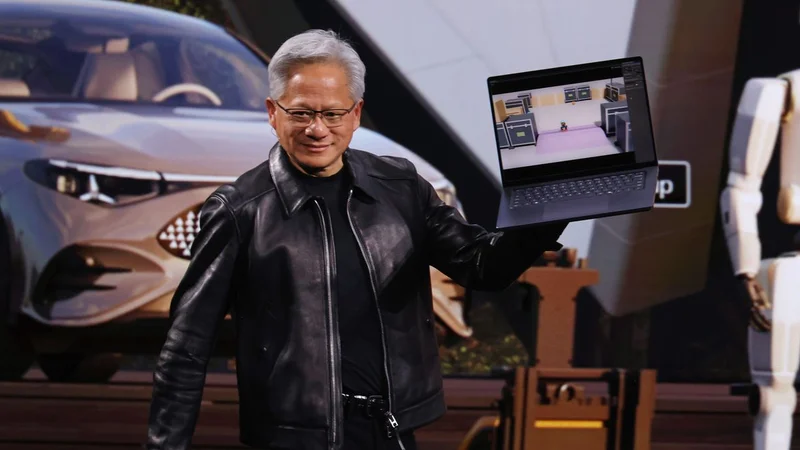
Image: Wired AI
Main Takeaway
Nvidia CEO Jensen Huang presented modular AI data centers, robotics and agentic systems as the foundation for Europe to build its own AI economy at GTC Berlin.
Jump to Key PointsSummary
Huang’s European AI blueprint
Nvidia CEO Jensen Huang used GTC Berlin to frame Europe’s AI strategy around local computing, industrial deployment and robotics. His central argument was that European countries need infrastructure that lets them produce AI services and systems, rather than remain users of platforms built elsewhere. “To be part of this AI economy, you don’t want to just be consuming the AI. You want to be producing the AI,” Huang told an audience of about 4,000 people.
The message placed modular data centers alongside AI agents, physical AI and autonomous humanoid robots. Nvidia’s conference program spans more than 100 sessions across those areas, giving the event a broader focus than chip announcements alone. The keynote’s Berlin setting reinforced Nvidia’s effort to present Europe as an operating base for AI development, manufacturing and deployment.
DSX Pod targets infrastructure gaps
The DSX Pod is the concrete infrastructure centerpiece of Nvidia’s European pitch. The plug-in data center packages accelerated computing capacity into a modular system that can be deployed closer to factories, research centers and other users of AI. Wired AI described the system as Nvidia’s answer to Europe’s infrastructure lag and as a way to shorten the path from hardware delivery to working AI capacity.
That design addresses a practical bottleneck. AI adoption requires power, cooling, networking and specialized computing, not just access to a model through an application. A standardized pod can help organizations add capacity in stages, while giving Nvidia a repeatable way to place its hardware across national and industrial markets. The approach also turns data centers into visible building blocks of economic policy, rather than hidden infrastructure operated only by cloud providers.
Europe seeks production capacity
Huang’s proposal connects infrastructure ownership with economic sovereignty. European businesses and governments can participate more deeply in AI when they have local computing for training, inference and industrial automation. That capacity supports regional data handling, language-specific applications and AI systems designed around European manufacturing, transport, energy and public-sector needs.
The plan also reflects a shift from viewing AI as a software service to treating it as an industrial production system. Data centers supply the compute, agents coordinate tasks, and physical AI carries decisions into warehouses, factories and other real-world settings. Nvidia’s GTC agenda brings those pieces together through sessions on agentic AI, robotics, open models and accelerated computing. The company’s own event coverage presents the combination as the foundation of an AI factory era, while the conference schedule shows how broadly Nvidia is defining that term.
Robotics expands the pitch
Robotics gave Huang’s presentation a consumer-facing and industrial dimension. Nvidia positioned autonomous humanoid machines as part of the same stack as its data center systems, linking simulation, model training and deployment in physical environments. That strategy gives European manufacturers a reason to buy local AI capacity beyond chatbot workloads.
Robotics also raises the infrastructure requirement. Machines that interpret surroundings, plan actions and respond in real time need sustained access to compute, whether processing happens onboard, at the edge or in a nearby facility. Nvidia’s emphasis on physical AI therefore strengthens the case for distributed computing pods. Coverage of the keynote places robotics and AI agents beside the DSX Pod, while Nvidia’s conference materials identify both as major themes of GTC Berlin.
Nvidia’s platform advantage
The European plan expands Nvidia’s role from chip supplier to systems architect. A pod-based deployment model can tie together Nvidia accelerators, networking, software and reference designs, making the company’s technology the default foundation for new regional AI installations. That creates a tighter relationship with governments, cloud operators, manufacturers and research institutions.
The strategy also intensifies competitive pressure across the computing stack. Nvidia’s Blackwell and Vera Rubin platforms remain central to the company’s product narrative, while data center packaging gives those platforms a route into markets that lack the scale or timeline for giant hyperscale campuses. Semiconductor companies, cloud providers and alternative processor vendors will compete over whether customers buy Nvidia’s integrated system or assemble infrastructure from multiple suppliers.
What happens after GTC Berlin
The next test is execution. Europe’s AI buildout depends on electricity, permitting, financing, network access and customers with workloads large enough to justify dedicated capacity. Plug-in systems can simplify deployment, but they still require sites, operators and long-term power contracts. Their value will be measured by how quickly they support useful industrial applications, not by the keynote’s scale.
Nvidia leaves Berlin with a clear commercial narrative: Europe can build AI capacity locally by installing modular computing infrastructure and connecting it to agents, open models and robotics. The company’s event materials and external coverage align on that direction, although detailed deployment commitments and customer timelines remain central questions for the next stage.
Key Points
Nvidia CEO Jensen Huang introduced modular DSX Pod data centers as Europe’s AI infrastructure strategy.
Europe’s AI ambitions depend on local computing capacity for agents, robotics, models and industrial automation.
The DSX Pod packages accelerated computing into deployable infrastructure for regional and industrial workloads.
Nvidia is linking Blackwell, Vera Rubin, networking and software into a full-stack European AI platform.
Robotics and physical AI increase demand for distributed computing near factories and real-world operations.
Questions Answered
Nvidia’s DSX Pod is a modular, plug-in data center designed to deliver accelerated AI computing capacity. The system is intended for deployment near European businesses, research centers and industrial users.
Jensen Huang wants Europe to produce AI services and systems instead of relying only on AI developed elsewhere. Local computing capacity supports regional data handling, industrial automation and European AI applications.
Nvidia’s data centers provide computing for robot simulation, model training, perception and planning. Distributed systems can also place inference capacity closer to factories and other physical environments.
Nvidia emphasized modular data centers, agentic AI, robotics, physical AI, open models and accelerated computing at GTC Berlin 2026. The event also featured the company’s Blackwell and Vera Rubin platform strategy.
Nvidia’s European plan must secure sites, electricity, financing, operators and industrial customers. Its success will depend on whether DSX Pod deployments become operating AI infrastructure rather than conference demonstrations.
Source Reliability
57% of sources are trusted · Avg reliability: 77
Go deeper with Organic Intel
Simple AI systems for your life, work, and business. Each one includes copyable prompts, guides, and downloadable resources.
Explore Systems