Elice Shares Plunge 32% in Korea Debut Despite Record $151 Million AI Infrastructure IPO
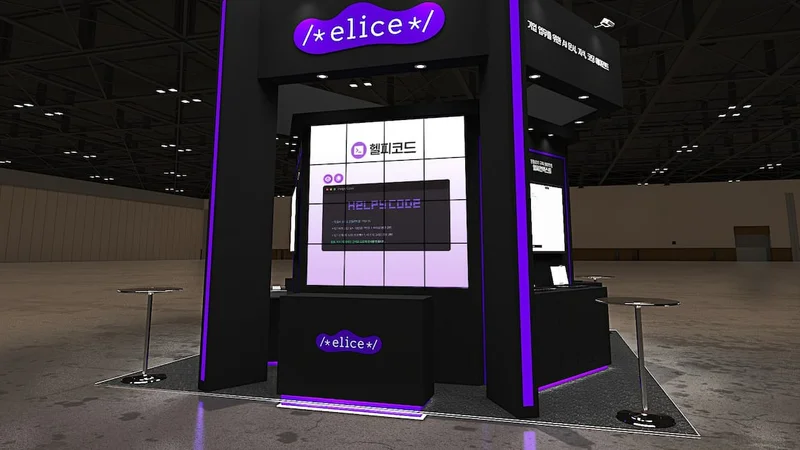
Image: Biz.chosun
Main Takeaway
Elice raised $151 million in South Korea’s largest KOSDAQ IPO of 2026, but shares fell 32% in debut trading as investors questioned AI infrastructure valuations.
Jump to Key PointsSummary
A sharp first-day reversal
Elice shares fell 32% in their KOSDAQ debut on Oct. 20, turning a heavily subscribed AI infrastructure offering into an immediate test of investor confidence. The South Korean data-center company raised 201 billion won, or about $151 million, in the exchange’s largest initial public offering of 2026. Bloomberg reported the decline after the company priced its shares at 90,500 won, the top of an indicative range that began at 74,000 won.
The result marks a stark break from the optimism surrounding Elice’s offering. Institutional demand allowed the company to price at the upper limit, while earlier plans targeted a market value above 1 trillion won. The weak debut also followed the cancellation of peer Firmus’s planned listing, placing Elice at the center of a broader reassessment of AI-related valuations in South Korea.
Why investors pulled back
Elice’s debut exposed the gap between demand for AI infrastructure and investor willingness to pay premium prices for it. The company entered the market with a top-priced offering and a large fundraising target, but public trading introduced immediate pressure on valuation and execution. Its shares’ 32% decline indicates that secondary-market buyers assigned a materially lower value than IPO investors did.
Firmus’s abandoned listing amplified the scrutiny. Elice is raising capital as data-center demand expands, yet the business requires substantial spending on power, equipment, sites and network capacity before growth translates into returns. CBRE Korea said expanding AI demand and constrained data-center supply are improving the investment case for Korean facilities, but those conditions don't remove the risks tied to construction, financing and utilization.
Elice’s infrastructure strategy
Elice is positioning itself as a full-stack AI infrastructure provider rather than solely a cloud software company. Its plan combines internally developed cloud software with modular AI data centers, a model the company says can reduce total costs by 40% compared with conventional facilities. The strategy targets GPU computing, cloud services and regional data-center deployment.
The company has secured 130 megawatts of power capacity across South Korea’s Seoul metropolitan area, southwest and southeast regions, according to Digitaltoday.co. Elice plans to convert that capacity into AI computing resources, improve GPU utilization through software and sell computing capacity domestically and overseas. The company describes this as a Korean-style neocloud approach, while CEO Kim Jae-won said the IPO would support international expansion of its modular data-center business.
A bigger test for Korean AI stocks
Elice’s performance matters beyond its own listing because it provides a live market verdict on Korea’s AI infrastructure enthusiasm. The company’s offering was promoted as a route to a valuation above 1 trillion won and as a bridge from AI coding and services into physical computing infrastructure. The first-day loss shows that a compelling growth narrative still faces a demanding public-market test.
South Korea’s data-center market has structural support from AI workloads, limited power availability and rising demand for facilities able to host advanced computing systems. CBRE Korea described stronger investment appeal and improving exit prospects for prime assets. Those trends support Elice’s expansion case, but the stock reaction places greater weight on revenue conversion, operating margins and the pace at which its secured power capacity becomes productive infrastructure.
What happens next for Elice
Elice now has public-market capital, but it also has a lower share price and a more difficult burden of proof. Management must show that its modular facilities can be deployed efficiently, that its software can lift GPU utilization and that overseas expansion can produce returns rather than simply increase capital requirements.
The company’s offering proceeds give it room to build data-center capacity and develop its cloud platform. Investors will focus on utilization rates, customer commitments, power deployment, capital spending and recurring revenue in upcoming disclosures. The debut also sets a reference point for future Korean AI infrastructure listings: strong institutional book-building can support an IPO price, but sustained investor confidence will depend on operating results after the listing.
Key Points
Elice raised $151 million before shares plunged 32% in its KOSDAQ debut on Oct. 20.
Elice priced its IPO at 90,500 won, the top of its indicated range.
Elice plans to convert 130 megawatts of secured power into AI computing capacity.
Elice’s modular data centers target costs 40% below conventional facility designs.
Firmus’s canceled IPO heightened scrutiny of South Korean AI infrastructure valuations.
Questions Answered
Elice shares fell 32% because public-market investors assigned a lower value than IPO investors did. The decline reflects scrutiny of AI infrastructure valuations, capital requirements and the company’s ability to convert planned capacity into profitable operations.
Elice raised 201 billion won, or about $151 million, in its KOSDAQ IPO. The offering was the exchange’s largest initial public offering of 2026 and priced at 90,500 won per share.
Elice develops cloud software and modular AI data centers for GPU computing and cloud services. The company plans to use 130 megawatts of secured power capacity across South Korea and expand its infrastructure business overseas.
Elice says its modular data centers can reduce total costs by 40% compared with conventional data centers. The company links the savings to its modular design and software aimed at improving GPU utilization.
Firmus’s canceled IPO increased scrutiny around Elice’s listing and South Korean AI valuations. Elice’s weak debut then provided an early public-market test for investor appetite toward AI data-center companies.
Investors will watch Elice’s facility deployment, GPU utilization, customer commitments, recurring revenue and capital spending. Those metrics will show whether the company can turn secured power and IPO proceeds into profitable AI infrastructure.
Source Reliability
60% of sources are established · Avg reliability: 63
Go deeper with Organic Intel
Simple AI systems for your life, work, and business. Each one includes copyable prompts, guides, and downloadable resources.
Explore Systems