NVIDIA Vera Drives Europe’s Push for Sovereign AI Infrastructure and Agentic Computing

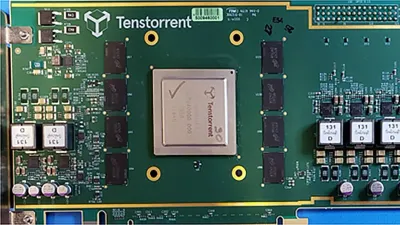
Image: Techpowerup
Main Takeaway
NVIDIA Vera is attracting European cloud providers and Microsoft-backed deployments as the company expands regional infrastructure for agentic AI and sovereign computing.
Jump to Key PointsSummary
Europe’s infrastructure push
European cloud providers are preparing to deploy NVIDIA Vera and Vera Rubin systems as demand grows for regional AI capacity, agentic software and sovereign computing. Nebius, Nscale and Verda are among the providers building around Vera CPUs, while Nscale says it will deploy more than 100,000 GPUs across Europe in 2027.
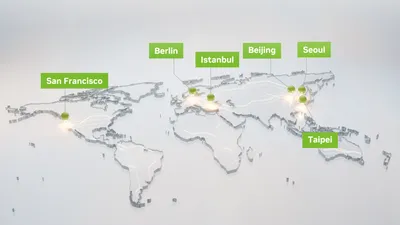
The expansion connects a new processor architecture with a broader effort to keep sensitive data, model development and inference inside European jurisdictions. NVIDIA’s partner network spans Europe, the Nordics, Africa and Central Asia, while earlier initiatives covered France, Germany, the United Kingdom, Italy and Spain.
What Vera is built to do
NVIDIA positions Vera as a CPU designed for agentic AI, reinforcement learning and data processing. Agentic systems repeatedly retrieve information, call software tools, execute code and assess results, creating a workload that depends on rapid CPU coordination as much as accelerator throughput.
The processor is in full production and NVIDIA says it completes tasks 1.8 times faster than x86 CPUs across targeted workloads. The company also describes Vera as more energy efficient and as capable of sustaining performance across thousands of concurrent tasks. NVIDIA’s launch materials place Vera alongside Grace CPUs, which the company says have reached nearly 2.5 million shipments.
Nscale’s 2027 deployment
Nscale plans to become one of the first providers outside Microsoft to deploy NVIDIA’s Vera Rubin platform. The company says its Vera Rubin NVL72 systems will support Microsoft and operate across sites in the United Kingdom, Norway and other locations beginning in 2027.
The planned rollout combines Vera Rubin and Grace Blackwell architectures and will provide more than 100,000 GPUs to customers in Europe. That scale positions Nscale as a major regional supplier for frontier model development, inference and enterprise workloads, while the Microsoft relationship gives the deployment an anchor customer and distribution channel.
Sovereignty and control
The European buildout is designed around more than raw computing capacity. NVIDIA’s cloud partners are marketing local infrastructure as a way for developers to keep data closer to applications, customize open models and establish limits on what AI agents can access and execute.
That approach aligns with government and enterprise programs already tied to Europe’s AI sovereignty agenda. Futurumgroup described 20 planned AI factories across the continent, including a Deutsche Telekom industrial AI cloud in Germany using 10,000 Blackwell GPUs, an 18,000-GPU Grace Blackwell system with Mistral AI in France and major British investment commitments. These projects give Vera a place within a wider infrastructure strategy rather than making it a standalone hardware launch.
The business case for providers
For cloud operators, Vera addresses the CPU bottlenecks created by increasingly complex AI services. A single agent interaction can trigger multiple searches, tool calls, code executions and evaluation steps, leaving providers to manage many short, concurrent tasks alongside GPU-heavy model inference.
Faster task completion can improve responsiveness and allow data centers to serve more workloads from existing capacity. NVIDIA says that performance and efficiency gains can support higher token revenue, while European providers are seeking customers among AI-native companies, developers and research organizations. The commercial test will come when those systems enter production and customers compare cost, latency and availability against global cloud alternatives.
What happens next
The next milestone is the 2027 installation cycle, when Nscale and other providers are expected to turn announced Vera Rubin plans into operating capacity. Deployment across the United Kingdom, Norway and additional European sites will show whether the platform can deliver the regional scale promised by NVIDIA and its partners.
Competition will extend beyond processor specifications. Providers must secure energy, data-center space, networking, software support and customers willing to pay for location-specific compute. Europe’s sovereign AI strategy now has a growing hardware and cloud foundation, but its success will depend on utilization, independent model development and sustained demand from businesses building agents and physical AI systems.
Key Points
NVIDIA Vera is attracting European cloud providers building infrastructure for agentic AI and sovereign computing.
Nscale plans to deploy more than 100,000 NVIDIA GPUs across European sites beginning in 2027.
Vera targets CPU-intensive agent workflows involving retrieval, tools, code execution and result evaluation.
Microsoft will support Nscale’s Vera Rubin deployment across the United Kingdom, Norway and additional sites.
NVIDIA’s European strategy combines Vera hardware with AI factories, regional clouds and government partnerships.
Questions Answered
NVIDIA Vera is designed for agentic AI, reinforcement learning and data-processing workloads. The CPU handles repeated retrieval, tool use, code execution and evaluation tasks that agents perform.
Nscale plans to deploy more than 100,000 GPUs across Europe in 2027. The rollout will include Vera Rubin and Grace Blackwell systems at sites in the United Kingdom, Norway and other locations.
Microsoft will be supported by Nscale’s Vera Rubin NVL72 deployment. Nscale says the partnership makes it the first provider outside Microsoft to deploy NVIDIA’s next-generation platform.
NVIDIA is supporting European demand for sovereign compute, local data processing and customized AI models. Regional infrastructure also gives developers more control over where agents operate and what data they can access.
NVIDIA Vera deployments are scheduled to expand during 2027. Providers will then need to demonstrate reliable performance, competitive pricing, adequate power and sustained customer demand.
Source Reliability
60% of sources are established · Avg reliability: 66
Go deeper with Organic Intel
Simple AI systems for your life, work, and business. Each one includes copyable prompts, guides, and downloadable resources.
Explore Systems