OpenAI Targets September IPO After Musk Lawsuit Dismissal Clears Path
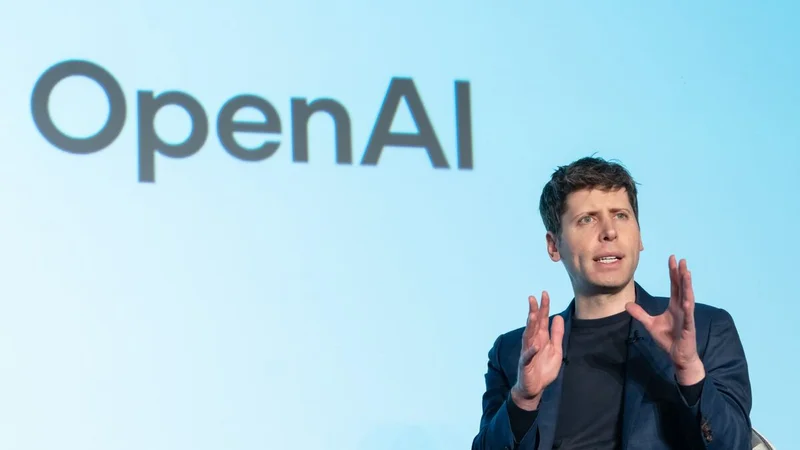
Image: Bloomberg AI
Main Takeaway
OpenAI plans to confidentially file for IPO within days, targeting a September public debut after a California judge dismissed Elon Musk's lawsuit against.
Jump to Key PointsSummary
Why the timing matters now
A California jury dismissed Elon Musk's lawsuit against OpenAI on Monday, removing a two-year legal cloud that had threatened the company's restructuring and IPO plans. The jury found co-founders Sam Altman and Greg Brockman not liable for converting the nonprofit into a for-profit entity, ruling that Musk had filed outside the statute of limitations. Reuters reports that OpenAI is now moving rapidly to file confidential IPO paperwork, with sources telling the Wall Street Journal the filing could come within days.
The speed of the pivot from courtroom victory to public markets underscores how much the litigation had frozen OpenAI's strategic options. Bloomberg notes that the case had hung over the ChatGPT maker's restructuring as a for-profit business and directly undermined its path to going public. With that obstacle cleared, Goldman Sachs and Morgan Stanley are lined up as underwriters for what could become one of the largest tech IPOs in history.
What the September target signals about valuation
OpenAI is reportedly aiming for a September listing, an unusually rapid timeline that suggests both confidence and urgency. Secondary market share prices already value the firm above $900 billion, according to Decrypt, with Reuters reporting the company is laying groundwork for a juggernaut IPO at up to $1 trillion. That would place OpenAI among the most valuable companies ever to go public.
The compressed timeline carries risks. TechCrunch characterized the company as "barreling toward" the IPO, language that hints at the pressure to strike while market conditions remain favorable. Forge Global data shows OpenAI's Series C valuation hit $852 billion in March 2026, meaning the IPO could represent a significant step-up or, if market sentiment shifts, a challenging benchmark to maintain. The September target also gives OpenAI roughly four months to prepare investor materials, roadshow, and pricing, a tight window for a transaction of this scale.
What remains uncertain for investors
Despite the legal victory, Bloomberg's analysis emphasizes that significant IPO unknowns persist. The company's unusual corporate structure, its complex relationship with Microsoft as both partner and potential competitor, and the unresolved questions about how it balances profit motives with its original safety-focused mission all represent disclosure challenges. The for-profit conversion itself remains a live issue for some observers, even if it's no longer a live legal case.
OpenAI's revenue trajectory, while impressive, depends heavily on subscription growth for ChatGPT and API usage by enterprise customers. Competition from Anthropic, Google, and Musk's own xAI is intensifying just as the company prepares to open its books. The S-1 filing will force the first detailed public look at margins, customer concentration, and capital expenditure plans for its massive compute infrastructure. These factors could temper enthusiasm even among investors eager to participate in the AI boom.
How Microsoft factors into the equation
Microsoft remains one of OpenAI's largest backers and its most important commercial partner, a relationship that will receive intense scrutiny during the IPO process. The software giant has invested billions and integrated OpenAI's models throughout its product suite, from Copilot to Azure services. That partnership has been a growth engine, but it also creates dependency risk that public market investors will weigh carefully.
The IPO filing will need to clarify how OpenAI's partnership and licensing agreements with Microsoft are structured, particularly around exclusivity, pricing, and data rights. Any hint that Microsoft has preferential terms or governance influence could raise concerns about OpenAI's strategic independence. Conversely, evidence that OpenAI has successfully diversified its customer base would strengthen the investment narrative. Yahoo Finance notes that Microsoft was named in Musk's original suit, a reminder of how entangled the two companies have become.
What happens to OpenAI's mission after going public
The IPO represents a fundamental inflection point for OpenAI's identity. Founded in 2015 as a nonprofit with a mission to ensure artificial general intelligence benefits all humanity, the company has progressively shifted toward commercial priorities. Going public will install quarterly earnings expectations and shareholder pressure as formal constraints on that mission, not just practical tensions.
Sam Altman has argued that building safe AGI requires enormous capital, and that the for-profit structure is necessary to fund it. The S-1 will test whether investors buy that framing, or whether they expect OpenAI to behave like a conventional high-growth software company. The company's approach to safety research spending, its willingness to delay product launches for safety review, and its stance on open-sourcing models will all face new pressures once public. How OpenAI navigates these tensions in its prospectus language and early investor communications will shape market reception and, ultimately, its post-IPO trajectory.
Key Points
California jury dismissed Musk's lawsuit on statute of limitations grounds Monday
OpenAI targeting confidential IPO filing within days and September public listing
Goldman Sachs and Morgan Stanley named as IPO underwriters for the offering
Secondary market valuation exceeds $900 billion with $1 trillion target possible
Microsoft partnership and for-profit conversion face investor scrutiny in S-1
Questions Answered
A California jury found that Musk filed outside the statute of limitations, and ruled that co-founders Sam Altman and Greg Brockman were not liable for converting OpenAI from a nonprofit to a for-profit entity.
Sources tell the Wall Street Journal that OpenAI could file confidential IPO paperwork within days or weeks, with a target of listing publicly in September 2026.
Goldman Sachs and Morgan Stanley are serving as lead underwriters for the offering, according to multiple reports.
Secondary market trading values OpenAI above $900 billion, with some reports suggesting the company is positioning for a valuation up to $1 trillion.
OpenAI still faces questions about its Microsoft partnership terms, revenue concentration, capital intensity of AI infrastructure, competitive pressure from rivals, and how it will balance profit motives with its original safety mission as a public company.
Source Reliability
100% of sources are highly trusted · Avg reliability: 90
Go deeper with Organic Intel
Simple AI systems for your life, work, and business. Each one includes copyable prompts, guides, and downloadable resources.
Explore Systems