Nvidia CEO Predicts China Will Open AI Chip Market After Trump Summit Trip
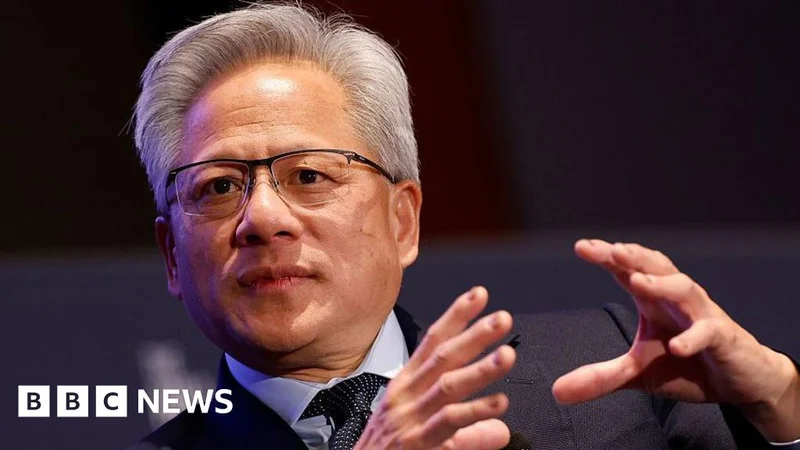
Image: Bbc
Main Takeaway
Nvidia's Jensen Huang expects China to allow US AI chip imports after joining Trump's Beijing summit, even as his own China market share has collapsed.
Jump to Key PointsSummary
Why Huang is pushing for China access now
Nvidia CEO Jensen Huang has zeroed in on China as the make-or-break market his company cannot afford to lose. Speaking at the Dell World conference after returning from President Donald Trump's summit in Beijing, Huang told Bloomberg he expects Chinese authorities will eventually allow imports of American AI chips. The statement marks a sharp pivot from just weeks earlier, when Huang disclosed that US export restrictions had sanded Nvidia's China market share down to zero percent.
The urgency is financial and strategic. According to Fox Business, Huang called China a "significant source of revenue" and argued that American companies need access to stay competitive globally. The Chinese AI market is expanding at roughly 50% annually and could reach $50 billion, making it the world's second-largest AI market behind the United States. For a company that once dominated China's AI accelerator market, the loss stings doubly.
Huang's recent travel with Trump signals a deliberate alignment with the administration's trade diplomacy. He told Bloomberg he did not directly negotiate H200 chip sales with Chinese officials during the trip, but his presence alone telegraphed Nvidia's interests to both governments.
How US export policy backfired on Nvidia
Washington's tightening restrictions on AI chip exports have produced the exact outcome critics warned about. Tom's Hardware reported Huang's blunt assessment that US policy "has already largely backfired," with Nvidia's China market share collapsing from dominance to nothing. The restrictions, designed to slow China's AI advancement, instead accelerated domestic alternatives while eliminating American leverage.
The irony runs deep. Nvidia spent years building relationships and technical infrastructure in China, only to watch Huawei and other domestic chipmakers fill the vacuum. As Huang noted in a September 2025 BG2 podcast interview, China is "nanoseconds behind" the US in chipmaking capability, a gap that closes faster when American companies are locked out. He argued then that allowing competition would actually spread US technology and extend geopolitical influence, not diminish it.
The South China Morning Press cited Huang's broader argument that global competition, including in China, would "maximise US economic success." This frames the export controls as self-defeating: they cost American companies revenue while doing little to prevent Chinese technological progress.
What changed with the H200 approval
The US Department of Commerce approved Nvidia's H200 chip sales to China in January 2026, a significant policy shift that preceded but did not fully resolve the trade standoff. BBC reported the H200, Nvidia's second-most-advanced processor, had been restricted over national security concerns about China's military and technology sector applications.
The approval came with strings and uncertainty. Reuters, citing the Financial Times, reported that Nvidia AI chip sales to China were subsequently stalled by a US security review, suggesting bureaucratic friction continues even after the nominal green light. This fits a pattern of policy whiplash that has left companies like Nvidia unable to plan with confidence.
The H200 sits below Nvidia's most advanced Blackwell architecture, which Huang has also pushed to sell in modified form to China. RCR Wireless noted his assessment that Blackwell exports could follow if licensing hurdles clear. Each chip generation faces fresh scrutiny, creating a treadmill of approvals that disadvantages American companies against competitors from countries without similar restrictions.
Where Trump administration priorities diverge from Nvidia's
Barron's highlighted a tension that runs through this story: Huang wants to sell chips to China, but Trump has other priorities. The president's summit focused on broad trade rebalancing, manufacturing returns, and strategic competition, not specifically on reopening the AI chip spigot for American companies.
This misalignment creates political risk for Nvidia. Huang's optimism about China opening its market rests partly on his interpretation of diplomatic signals, not on concrete policy agreements. He told Bloomberg he saw no evidence of AI chip leakage to China during his discussions, addressing a concern that animates hawks in Washington. Yet this reassurance may not satisfy security-focused officials who view any advanced chip sales as risky.
The Investing.com report on Huang's comments about leakage underscored his defensive posture. He must simultaneously convince Chinese officials that Nvidia respects their regulatory concerns, and American officials that sales do not undermine national security. Walking this line while market share sits at zero percent is an unenviable position.
What happens next for AI chip trade
The path forward depends on whether Huang's optimism about Chinese market opening translates into durable policy. Yicaiglobal reported Huang calling China a "unique, singular market," language that suggests he views it as irreplaceable rather than one of many growth opportunities. This concentration risk worries investors and policymakers alike.
Several scenarios are plausible. China could allow limited imports of modified chips while continuing to build domestic alternatives, creating a temporary reprieve rather than a stable market. The US could impose additional conditions or reverse approvals based on geopolitical developments. Or both countries could strike a broader technology trade framework that normalizes chip commerce.
For Nvidia, the stakes extend beyond immediate revenue. China represents a massive training ground for AI applications and a source of engineering talent and partnerships. Exclusion from this ecosystem would cede influence to competitors and shape global AI development patterns for decades. Huang's advocacy reflects a bet that commercial engagement serves American interests better than isolation, a case he will keep making as long as the market remains closed.
Key Points
Nvidia's China market share collapsed to zero percent under US export restrictions
Huang joined Trump's Beijing summit and predicts Chinese market opening
Commerce Department approved H200 chip sales to China in January 2026
Huang argues export controls backfired and accelerated Chinese alternatives
Chinese AI market growing 50% annually toward $50 billion total value
Questions Answered
According to CEO Jensen Huang, Nvidia's market share of AI accelerators in China has dropped to zero percent due to US export restrictions.
Huang told Bloomberg he did not directly discuss selling H200 chips to Chinese officials during the summit, though he traveled with the delegation.
The Department of Commerce approved Nvidia's H200, its second-most-advanced processor, in January 2026, though a later security review stalled some sales.
He argues they cost American companies revenue and market position while Chinese firms like Huawei rapidly developed domestic alternatives, closing the technology gap.
Huang estimates China's AI market is expanding at roughly 50% annually and could reach $50 billion, making it the world's second-largest after the US.
Source Reliability
42% of sources are highly trusted · Avg reliability: 77
Go deeper with Organic Intel
Simple AI systems for your life, work, and business. Each one includes copyable prompts, guides, and downloadable resources.
Explore Systems