NASA Awards Blue Origin First Moon Base Contracts in $20 Billion Lunar Push
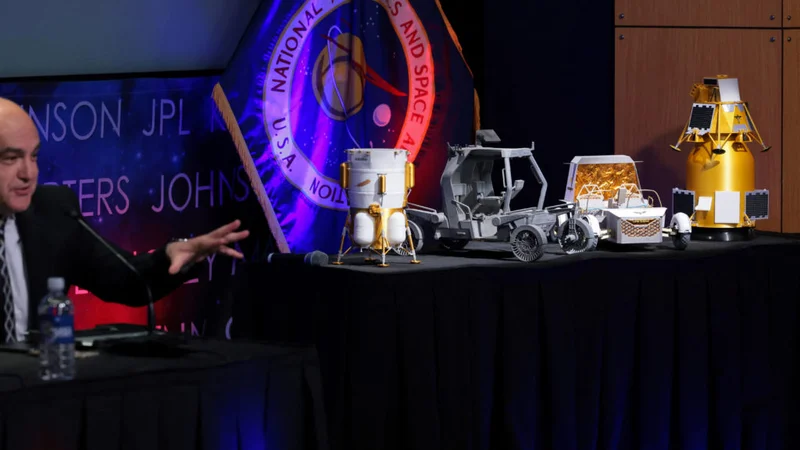
Image: Pbs
Main Takeaway
NASA awarded Blue Origin its first moon base contracts to deliver landers and rovers to the lunar south pole by 2028.
Jump to Key PointsSummary
What NASA just announced
NASA awarded hundreds of millions of dollars in initial contracts to four U.S. companies for its first permanent moon base, with Jeff Bezos's Blue Origin selected to conduct the first uncrewed lunar mission. The space agency outlined the first phase of its moon base plans at a headquarters event on May 26, 2026, less than two months after Artemis II's record-breaking lunar flyaround. Three lunar landings are planned for this year alone to kickstart construction of what The Guardian reports as a $20 billion facility. Blue Origin will provide a pair of landers to deliver moon buggies near the lunar south pole, a region of intense scientific interest due to suspected water ice deposits.
The awards cover lunar terrain vehicles for crew to drive, uncrewed cargo landers, and a set of drones under the "MoonFall" program. NASA leaders shared target launch timeframes and upcoming milestones for infrastructure and exploration missions ahead of future Artemis crewed expeditions. The agency is targeting 2028 for initial base operations.
Why Blue Origin beat SpaceX this round
NASA chose Blue Origin ahead of Elon Musk's SpaceX for these initial uncrewed cargo missions, a notable reversal of recent lunar contracting patterns. SpaceX had previously won the flagship human landing system contract for Artemis III, while Blue Origin was selected as the second provider for Artemis V. This new award gives Blue Origin an earlier path to the lunar surface and represents a diversification of NASA's supplier base. The firm fixed-price structure of these contracts means companies design, build, and launch spacecraft while NASA purchases services, shifting more financial risk to contractors.
Blue Origin's Blue Moon lander, already in development for the Artemis V human landing system mission, will serve as the foundation for these cargo deliveries. The company has multiple spacecraft in development, with at least one potentially flying to the lunar surface as soon as late this year according to Spaceflight Now. This accelerated timeline suggests Blue Origin has moved past earlier delays that plagued its orbital rocket programs.
The other winners and what they're building
Firefly Aerospace, Astrolab, and a fourth unnamed company joined Blue Origin in receiving initial awards. Firefly and Astrolab will also deliver rovers to the lunar south pole alongside Blue Origin's landers. The lunar terrain vehicles represent a critical capability gap NASA has prioritized, crewed buggies that astronauts will drive across the surface during extended stays. NASA separately awarded contracts for uncrewed cargo landers and the MoonFall drone constellation, which will survey the surface and support construction activities.
The multi-vendor approach mirrors NASA's commercial lunar payload services program but at far larger scale and with integrated base infrastructure rather than one-off experiments. Bloomberg's reporting on the contract awards emphasized NASA's deliberate spreading of work across multiple providers to ensure redundancy and competitive pressure. Each company brings different technical approaches, with Firefly notably having already demonstrated lunar landing capability with its Blue Ghost mission earlier in 2026.
How the money works
The contracts use a firm fixed-price service model that NASA has increasingly favored, where contractors bear development cost overruns rather than taxpayers. Spacepolicyonline noted this continues NASA's recent practice for lunar acquisition, though the dollar amounts for this specific award remain partially undisclosed. The hundreds of millions in initial awards represent just the first tranche of what The Guardian cited as a $20 billion total moon base program cost.
NASA's budget realities suggest these early contracts are structured to show progress without immediate massive outlays. The 2028 operational target for base functionality requires rapid procurement cycles unusual for space agency programs. Whether Congress fully funds the $20 billion vision or forces staged reductions remains unresolved, particularly given competing priorities including Mars preparation and Earth science missions.
What comes next for Artemis
These awards reset the Artemis timeline around base construction rather than purely crewed exploration. NASA's announcement came with specific target launch timeframes for initial infrastructure missions, with the three uncrewed landings this year forming a compressed preparatory sequence. Blue Origin must now execute on an accelerated schedule that contrasts with its historical program delays, including the long development of its New Glenn orbital rocket.
The lunar south pole destination locks in a scientifically compelling but technically challenging landing environment, with permanently shadowed craters and extreme temperature swings. Success here would validate NASA's commercial partnership model for large-scale space infrastructure. Failure or significant delay would raise questions about the Artemis architecture and potentially benefit alternative approaches, including SpaceX's Starship-based lunar plans or international partnerships. NASA indicated additional contract awards and milestone announcements will follow through late 2026 as the base design matures.
Key Points
NASA awarded first moon base contracts to four U.S. companies led by Blue Origin
Blue Origin selected ahead of SpaceX for initial uncrewed lunar landing mission
Three lunar landings planned for 2026 to begin $20 billion base construction
Contracts cover crew rovers, cargo landers, and MoonFall survey drones
Target operational date of 2028 for initial moon base functionality
Questions Answered
NASA diversified its supplier base, giving Blue Origin earlier lunar access while SpaceX retains the Artemis III human landing system contract.
A pair of landers carrying lunar terrain vehicles, essentially moon buggies, to the south pole region.
NASA targets 2028 for initial base operations, with crewed missions following the uncrewed construction phase.
The Guardian reports a $20 billion total program cost, with hundreds of millions in these initial contracts.
Scientists suspect permanently shadowed craters contain water ice, critical for sustaining human presence and producing rocket fuel.
Yes, they use firm fixed-price service contracts where companies bear development risk, unlike traditional cost-plus arrangements.
Source Reliability
50% of sources are highly trusted · Avg reliability: 79
Go deeper with Organic Intel
Simple AI systems for your life, work, and business. Each one includes copyable prompts, guides, and downloadable resources.
Explore Systems