Menlo Ventures Locks In $3 Billion to Double Down on AI, Led by Anthropic Backer Ganesan
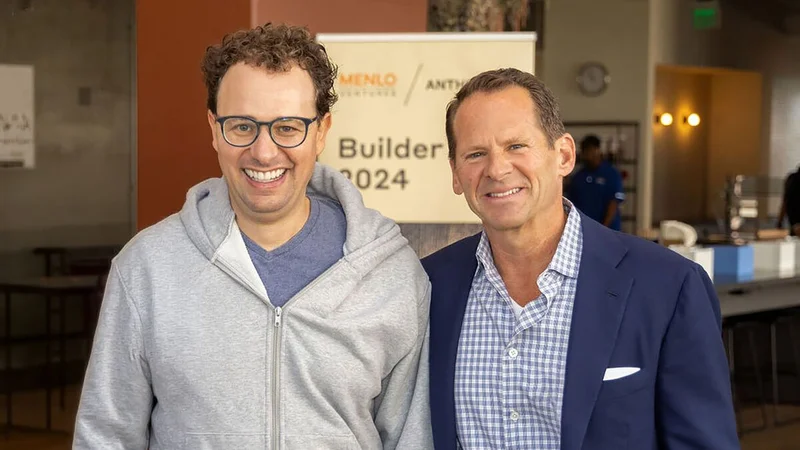
Image: Bloomberg AI
Main Takeaway
Menlo Ventures raised $3 billion, its largest fund ever, to back AI startups from seed to growth stage after early Anthropic bets paid off.
Jump to Key PointsSummary
Menlo's record-breaking AI war chest
Menlo Ventures closed $3 billion in new capital on June 23, 2026, marking the firm's biggest fundraise in its 50-year history. The capital splits across two vehicles: Menlo Ventures XVII for seed and Series A investments, and Menlo Inflection IV for growth-stage companies at Series B and beyond. Bloomberg reports the total reflects how dramatically venture capital is reallocating toward artificial intelligence as investors race to back winners across the stack. The firm explicitly frames itself as "ALL IN on AI," targeting infrastructure, frontier models, and applications in enterprise, healthcare, and consumer markets. This isn't a side bet; it's a firm-wide repositioning around a single technology wave.
How the Anthropic gamble reshaped Menlo
The firm's AI credibility stems from an early, contrarian bet on Anthropic. In 2024, Menlo raised $500 million specifically to invest in Anthropic when it was still an underdog to OpenAI, lacking meaningful revenue or mainstream adoption, according to Bloomberg. That risk has compounded into repeated follow-on investments: Menlo led Anthropic's Series C in May 2023 when the company was pre-revenue and pre-launch, participated in the Series D during its early ramp, and joined the $3.5 billion Series E at a $61.5 billion valuation in March 2025. Partner Venky Ganesan, who focuses on AI, cybersecurity, and infrastructure investments, has been the public face of this relationship. The Anthropic stake now serves as Menlo's calling card in competitive AI deals.
The Anthology Fund's $100 million ecosystem play
Menlo and Anthropic jointly launched the Menlo Anthology Fund, a $100 million initiative to seed AI startups building on or adjacent to Anthropic's technology. The fund combines Menlo's company-building experience with Anthropic's research expertise and model access. This structure mirrors corporate venture strategies where platform companies use venture arms to cultivate ecosystems around their core products. For Anthropic, it locks in a pipeline of application-layer companies that deepen Claude's integration into enterprise workflows. For Menlo, it provides preferential deal flow and a differentiated sourcing mechanism in a market where every major VC chases the same AI founders. The fund targets "world-changing AI companies," per Menlo's announcement.
What Menlo actually backs across the AI stack
Menlo organizes its AI investments into four layers: foundation models, data and infrastructure, middleware developer tools, and end-user applications. The Anthropic investment covers the foundation model layer, while portfolio companies fill out the rest of the stack. Ganesan's board seats include Abnormal AI (security), ConverzAI (conversational AI), and infrastructure plays like BitSight and Obsidian, giving Menlo coverage across the modern AI architecture. The firm's 2023 investment thesis described generative AI as a platform shift exceeding mobile, cloud, and web in adoption velocity. That prediction looks less speculative now that AI spending consumes growing shares of enterprise IT budgets. Menlo's challenge is deploying $3 billion without overpaying for momentum-driven rounds in a market where AI startup valuations have decoupled from near-term fundamentals.
The competitive landscape Menlo faces
Menlo's mega-fund enters a crowded field. Andreessen Horowitz, Sequoia, and General Catalyst have all raised multibillion-dollar AI-focused vehicles. The Information reported that Anthropic itself was raising $750 million in a Menlo-led deal, suggesting the relationship has deepened to include ongoing co-investment structures. Meanwhile, Newcomer's analysis notes that AI model startups now compete directly with big tech's bundled offerings, pressuring pure-play infrastructure companies from two directions. Menlo's answer is to back the full stack rather than betting on any single layer winning. The firm's 50-year survival through multiple technology cycles gives it institutional credibility that newer AI-focused funds lack, though that history also means it must overcome the inertia of prior investment theses.
What this signals about venture capital's AI concentration
The $3 billion raise represents a structural shift in how venture capital allocates capital. Menlo's flagship and growth funds are now effectively AI funds, with non-AI investments likely relegated to legacy portfolio management. This concentration creates systemic risk if the AI market corrects, but also reflects limited partner demand: institutions want AI exposure and prefer established managers with track records over first-time AI specialists. Ganesan's public role promoting the Anthropic relationship suggests Menlo recognizes that in venture capital, reputation and access compound faster than returns alone. The question is whether $3 billion can be deployed with discipline across a market where every AI startup claims foundation-model ties and every VC claims AI specialization.
Key Points
Menlo Ventures raised $3 billion, its largest fund in 50 years, to invest across all AI layers from infrastructure to applications.
Partner Venky Ganesan led Menlo's early Anthropic investment in 2024 when the company was pre-revenue and an underdog to OpenAI.
Menlo and Anthropic launched a $100 million joint fund to seed startups building on Anthropic's technology and models.
The capital splits between Menlo Ventures XVII for seed and Series A, and Menlo Inflection IV for growth-stage companies.
Menlo's AI investments span foundation models, infrastructure, developer tools, and end-user applications across enterprise and consumer markets.
Questions Answered
Menlo Ventures raised $3 billion in June 2026, the largest fundraise in the firm's 50-year history. The capital is split between Menlo Ventures XVII for seed and Series A investments, and Menlo Inflection IV for growth-stage companies at Series B and beyond.
Menlo raised $500 million in 2024 specifically to invest in Anthropic when it was still an underdog to OpenAI without meaningful revenue or mainstream adoption. Partner Venky Ganesan led the conviction that Anthropic's approach to AI safety and capability would win enterprise trust.
The Menlo Anthology Fund is a $100 million joint initiative between Menlo Ventures and Anthropic to fund early-stage AI startups. It combines Menlo's company-building expertise with Anthropic's model access and research capabilities to cultivate an ecosystem around Claude.
Menlo organizes its AI investments into four layers: foundation models like Anthropic, data and infrastructure for productionizing LLMs, middleware developer tools, and end-user applications in enterprise, healthcare, and consumer markets.
Menlo's $3 billion competes with similar multibillion-dollar AI-focused vehicles from Andreessen Horowitz, Sequoia, and General Catalyst. Menlo differentiates through its 50-year track record and early Anthropic conviction, though all major firms now concentrate capital in AI.
Source Reliability
33% of sources are highly trusted · Avg reliability: 67
Go deeper with Organic Intel
Simple AI systems for your life, work, and business. Each one includes copyable prompts, guides, and downloadable resources.
Explore Systems