Google DeepMind CEO Demis Hassabis Steps Back as AI Lab Faces Leadership Overhaul and Researcher Exodus
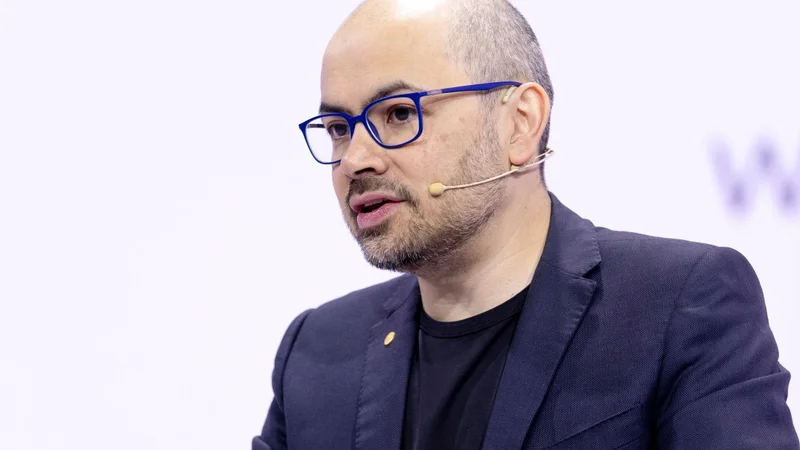
Image: The Verge AI
Main Takeaway
Demis Hassabis is stepping down as CEO of Google DeepMind to become chairman and Alphabet chief scientist, handing daily operations to CTO Koray Kavukcuoglu amid model delays and high-profile researcher departures.
Jump to Key PointsSummary
Google DeepMind’s CEO title disappears as Demis Hassabis steps into a new Alphabet-wide role
Google DeepMind is undergoing its most significant leadership restructure since the 2023 merger of Google Brain and DeepMind. Demis Hassabis is giving up the CEO title to become chairman of the AI unit and chief scientist of Alphabet, CEO Sundar Pichai announced on Wednesday. This formalizes a shift away from day-to-day management and toward a broader focus on AGI strategy and scientific applications of AI across the parent company. Koray Kavukcuoglu, previously DeepMind's chief technology officer and Alphabet's chief AI architect, will take over daily operations. He assumes the title of senior vice president of Google DeepMind and will report directly to Sundar Pichai rather than holding a standalone CEO title, a structural change that folds the lab more tightly into Google's corporate hierarchy. Hassabis will continue to lead Isomorphic Labs, the Alphabet subsidiary that applies AI to drug discovery, keeping his foothold in scientific research.
A wave of researcher departures and model delays triggered the restructure
The leadership change arrives during a rocky period for the lab. According to Fortune, the restructure follows model delays and a string of high-profile exits from the research team. Bloomberg reports that the reshuffle is sweeping, touching multiple layers of the internet giant's AI organization. The Verge notes that some of Google's top researchers are leaving as part of this transition. Mediapost and Yahoo Finance report that DeepMind's chief scientist is departing to start a new company, with Google itself planning to invest in the venture. This pattern of senior talent spinning out, sometimes with Alphabet's blessing and checkbook, suggests a deliberate recalibration of how Google retains and deploys its AI brain trust. The departures are not framed as a brain drain but as a controlled restructuring that creates room for new leadership while keeping former researchers in the orbit.
Investors react as the standalone CEO title disappears and the lab folds into Google
Google's stock dropped on the news, Yahoo Finance reports, reflecting investor jitters about stability inside the company's most critical AI unit. DeepMind is the engine behind the Gemini model series, and any perception of disarray there rattles confidence in Google's ability to keep pace with OpenAI, Anthropic, and Meta. The market's concern is not just about Hassabis stepping back. It is the combination of a CEO transition, simultaneous researcher departures, and the elimination of the standalone CEO title in favor of a senior vice president reporting to Pichai. That reporting line suggests the AI lab is being absorbed more directly into Google's product organization rather than operating with the quasi-autonomous status it held after the Brain merger. For investors, that raises questions about speed and independence in model development.
Koray Kavukcuoglu's elevation signals a shift from long-horizon research to shipping
Kavukcuoglu is not a new face. He has been DeepMind's CTO and holds the title of Alphabet's chief AI architect, a dual role that already placed him at the intersection of research and infrastructure. His elevation to senior vice president signals that Google wants a leader who can connect the lab's research output to the product teams shipping Gemini into Search, Cloud, and Workspace. Unlike Hassabis, whose public identity is tied to Nobel Prize-level scientific ambition and AGI, Kavukcuoglu's background is in applied deep learning and systems. The appointment suggests a shift in emphasis from long-horizon research toward shipping models that compete directly with commercial rivals. Reporting to Pichai rather than operating as a standalone CEO gives Google tighter control over roadmap and resource allocation at a moment when AI timelines are compressing.
Hassabis retains influence through Alphabet's chief scientist role and Isomorphic Labs
Hassabis is not leaving Alphabet. His new role as chief scientist of Alphabet gives him a remit that spans beyond DeepMind into the broader parent company's scientific AI applications. He also retains the chairmanship of Google DeepMind, meaning he will still influence the lab's direction at the board level, and he continues to run Isomorphic Labs, the drug discovery subsidiary that represents his most personal scientific bet. The move mirrors a pattern seen across tech: a founder-level leader steps back from operational management to become a strategic figurehead while a more execution-focused successor takes over the product pipeline. The difference here is that Hassabis is not a founder of the parent company, and the restructuring is happening amid performance pressure rather than on his own timeline. That makes the transition more fragile than a planned succession.
The next six months will test whether a tighter product focus can stabilize the lab
The restructure sets up a critical six-month window. Kavukcuoglu must stabilize the team, stop the researcher exodus, and ship the next generation of Gemini models on a timeline that satisfies both internal product teams and external investors. The removal of the standalone CEO role means DeepMind's performance will be measured more directly against product metrics rather than research benchmarks. For the broader AI industry, this is a signal that even the most celebrated AI labs are under operational pressure. The era of unlimited patience for research-first cultures is ending. Google is tightening the connection between its AI lab and its product organization at the same moment that OpenAI is restructuring toward a for-profit model and Anthropic is scaling its enterprise business. The race is shifting from who has the best researchers to who can ship the most reliable models fastest.
Key Points
Demis Hassabis steps down as DeepMind CEO to become chairman and Alphabet's chief scientist, handing operations to CTO Koray Kavukcuoglu.
The restructure follows model delays and a wave of high-profile researcher departures, including the chief scientist leaving to start a Google-backed company.
Kavukcuoglu assumes the title of senior vice president rather than CEO, reporting directly to Sundar Pichai and signaling tighter integration with Google's product organization.
Google's stock declined on the announcement, reflecting investor concern about stability inside the company's most critical AI unit.
Hassabis retains leadership of Isomorphic Labs and will focus on AGI strategy and scientific applications across Alphabet.
Questions Answered
Demis Hassabis stepped down as CEO of Google DeepMind amid a major restructure following model delays and a string of high-profile researcher exits. He transitions to chairman of the unit and chief scientist of Alphabet to focus on AGI strategy and scientific applications of AI across the parent company.
Koray Kavukcuoglu is DeepMind's former chief technology officer and Alphabet's chief AI architect. He has been appointed senior vice president of Google DeepMind, taking over daily operations and reporting directly to CEO Sundar Pichai rather than holding a standalone CEO title.
No, Demis Hassabis is not leaving Google. He becomes chairman of Google DeepMind and chief scientist at Alphabet, and he continues to lead Isomorphic Labs, Alphabet's AI drug discovery subsidiary. His role shifts from day-to-day management to strategic oversight.
Google's stock dropped following the announcement of the leadership shakeup. Investor concerns center on stability inside the company's most critical AI unit, given that the restructure coincides with model delays and high-profile researcher departures.
The restructure signals that Google is tightening operational control over DeepMind and prioritizing product shipping speed over research autonomy. This comes as OpenAI restructures toward a for-profit model and Anthropic scales its business, shifting the AI race from research benchmarks to reliable model deployment.
Source Reliability
40% of sources are highly trusted · Avg reliability: 77
Go deeper with Organic Intel
Simple AI systems for your life, work, and business. Each one includes copyable prompts, guides, and downloadable resources.
Explore Systems