SoftBank Posts Smaller-Than-Expected Profit Drop as OpenAI Bet and Chip Holdings Offset AI Cost Surge
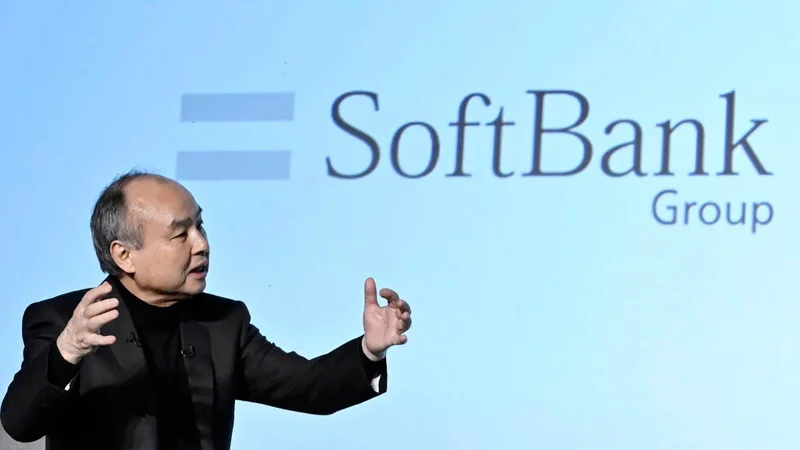
Image: Apnews
Main Takeaway
SoftBank Group reported a smaller-than-expected 18% decline in quarterly profit as a $25 billion gain on its OpenAI stake and a rally in chip stocks offset rising costs, though shares fell 4% amid debt and funding concerns.
Jump to Key PointsSummary
How SoftBank beat the profit forecasts
SoftBank Group Corp. reported a smaller-than-expected decline in fiscal first-quarter net income, defying analyst expectations of a steeper drop. The Japanese technology investment giant booked an 18% fall in profit for the period, according to Fortune, a result that beat market forecasts thanks to a rally in its chip stock holdings and the ballooning value of its OpenAI stake.
Bloomberg reports that the beat was driven in part by a $25 billion gain on the OpenAI bet, as detailed by the Wall Street Journal via Yahoo Finance. This comes on the heels of a fiscal year where profits nearly quintupled, with SoftBank recording an annual profit of 5 trillion yen, AP News reported in May. The company’s Vision Fund, which has been notoriously volatile, posted a $19 billion gain in the fiscal second quarter of 2025 alone, CNBC noted, driven heavily by the AI portfolio.
The earnings beat is a reprieve for founder Masayoshi Son, whose all-in approach to artificial intelligence has drawn both admiration and skepticism. The Daily Upside noted that SoftBank’s 13% stake in OpenAI, valued at $64.6 billion, has become the single most important asset in its portfolio, turning Son’s “go big or go home” strategy into a major market mover.
The OpenAI bet that changed the math
SoftBank’s relationship with OpenAI has reshaped its balance sheet. The company secured a $10 billion margin loan backed by its OpenAI stake, Bloomberg AI reported, marking a new fundraising milestone that underscores how deeply Son is leveraging his most valuable asset to fuel further AI expansion.
The Vision Fund’s yearly gain hit $46 billion, CNBC reported, driven in large part by the rise in value of the OpenAI investment. That single bet has become the gravitational center of SoftBank’s portfolio, pulling the entire fund into positive territory and validating Son’s conviction that AI is the defining investment theme of the decade.
But the concentration risk is enormous. Bloomberg AI noted that investors are increasingly asking whether SoftBank’s AI value extends beyond its debt-fueled bet on the ChatGPT maker. With OpenAI facing its own set of challenges, including leadership turnover and intensifying competition, the margin loan adds a layer of financial engineering that makes SoftBank’s fate tightly coupled to a single private company’s trajectory.
Why the stock still dropped 4 percent
Despite beating expectations, SoftBank shares fell 4% in Tokyo trading, Fortune reported. The selloff reflects a deeper unease that has nothing to do with quarterly numbers. Higher costs offset investment gains, and the market’s focus has shifted from past performance to the sustainability of SoftBank’s financing model.
Reuters AI reported that SoftBank’s AI funding plans were facing a reckoning at the earnings call. The company has issued debt, sold stakes, and borrowed aggressively to fund its AI commitments, Yahoo Finance noted. The $10 billion margin loan against the OpenAI stake is only the latest example of a leverage-heavy strategy that analysts are watching closely.
SoftBank’s shares had already slumped in the weeks leading up to earnings, CNBC reported, as concerns of an AI bubble sent jitters through global markets. The stock’s decline despite a beat suggests investors are pricing in the risk that the AI trade is overextended and that SoftBank’s debt load could become a liability if valuations correct.
The debt and financing question that looms
SoftBank’s ability to continue bankrolling its AI ambitions is now a central question for investors. The Economic Times reported that the company faces growing scrutiny over how it plans to finance its aggressive expansion while managing a growing debt pile. With shares declining and the cost of capital rising, the margin for error is narrowing.
Bloomberg AI framed the earnings as a critical test of investor appetite for AI bets beyond ChatGPT. The company’s reliance on debt, asset sales, and complex financial instruments to maintain its investment pace has analysts questioning the long-term viability of the approach. The $10 billion margin loan, while unlocking liquidity, also introduces a risk of forced selling if the value of the OpenAI stake declines.
SoftBank’s balance sheet now reflects a high-stakes game of leverage that could amplify returns in a bull market but could accelerate losses if the AI hype cycle cools. The earnings beat, in this context, is less a sign of strength and more a temporary reprieve from the structural questions that the market is now asking.
What happens next for Son’s AI empire
SoftBank’s next moves are expected to center on monetizing its AI holdings through public listings. The Daily Upside reported that IPOs are near, with the company positioning its portfolio companies for public debuts that could unlock even more value. The Vision Fund’s pipeline of AI startups, combined with the OpenAI stake, gives Son multiple paths to return capital to shareholders.
But the timing is tricky. The AI sector faces headwinds from regulatory uncertainty, competitive pressure from China, and growing skepticism about whether the massive capital inflows will produce commensurate returns. SoftBank’s own shares, down 4% on the day of the earnings beat, suggest that the market wants proof of execution, not just paper gains.
SoftBank’s ability to navigate the next 12 months will depend on whether it can convert its AI paper wealth into realized returns without triggering a margin call or a debt crisis. The company has bet the house on AI, and the market is now waiting to see if that bet pays off in cash, not just in headlines.
The broader signal for AI investment
SoftBank’s earnings are a bellwether for the AI investment landscape. The company’s ability to post a $46 billion Vision Fund gain and a $25 billion OpenAI profit shows that the AI trade has generated real financial returns, not just hype. But the simultaneous stock drop and debt concerns highlight the fragility of a market built on a few concentrated bets.
For the broader AI ecosystem, SoftBank’s results are a mixed signal. On one hand, they validate the thesis that AI can drive enormous value creation. On the other, they show that the market is now demanding proof of sustainability, not just growth. The AI investment boom, which has lifted SoftBank and its peers, is entering a phase where balance sheet strength and cash flow matter as much as vision.
Key Points
SoftBank beat quarterly profit expectations despite an 18% net income decline, driven by a $25 billion OpenAI stake gain and chip stock rally.
SoftBank secured a $10 billion margin loan backed by its OpenAI stake, adding leverage to an already debt-heavy AI investment strategy.
SoftBank shares fell 4% as investors focused on rising debt and the sustainability of its concentrated AI bets.
The Vision Fund posted a $46 billion yearly gain, with OpenAI representing the single largest driver of value.
SoftBank’s 13% stake in OpenAI is now valued at $64.6 billion, making it the company’s most important asset.
Questions Answered
SoftBank reported an 18% drop in net income for its fiscal first quarter, but the result beat analyst expectations because of a $25 billion gain on its OpenAI investment and a rally in chip stock holdings.
SoftBank holds a 13% stake in OpenAI valued at approximately $64.6 billion. The investment has become the single largest driver of SoftBank’s asset value and was a key factor in the Vision Fund’s $46 billion yearly gain.
SoftBank shares fell 4% because investors are concerned about the company’s growing debt and the sustainability of its AI investment strategy. Higher costs and reliance on a concentrated OpenAI bet outweighed the positive earnings surprise.
SoftBank secured a $10 billion margin loan backed by its OpenAI stake, Bloomberg reported. This loan is part of SoftBank’s strategy to fund further AI investments but also introduces risk if the value of the OpenAI stake declines.
SoftBank is preparing several of its portfolio companies for IPOs, according to The Daily Upside. The company aims to monetize its AI holdings through public listings to generate returns and reduce leverage.
Source Reliability
38% of sources are highly trusted · Avg reliability: 78
Go deeper with Organic Intel
Simple AI systems for your life, work, and business. Each one includes copyable prompts, guides, and downloadable resources.
Explore Systems