Howard Buffett Takes Berkshire Chair After a Career Spanning Farming, Law Enforcement and Global Philanthropy
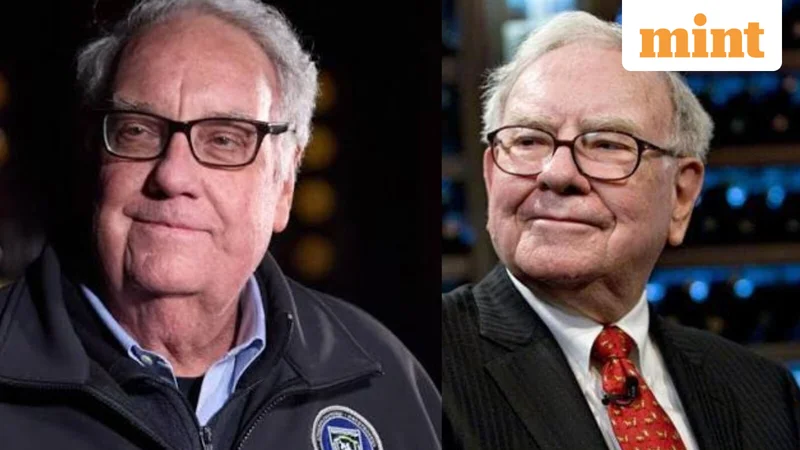
Image: Livemint
Main Takeaway
Howard G. Buffett became Berkshire Hathaway chairman as his 96-year-old father, Warren Buffett, moved to chairman emeritus after more than five decades leading the company.
Jump to Key PointsSummary
Berkshire enters a new chapter
Howard G. Buffett became Berkshire Hathaway’s chairman on September 18, 2026, succeeding his father, Warren Buffett, who moved to chairman emeritus after more than 50 years in the role. Warren Buffett remains a director, while Howard’s appointment formalizes a succession step at the $1 trillion conglomerate.
The company’s announcement made Howard’s appointment effective immediately and described Warren Buffett’s new position as recognition of his contributions to Berkshire and its owners. The transition follows Greg Abel’s move into the chief executive role, separating day-to-day management from the board chairmanship for the first time in Berkshire’s modern history. Howard has served on Berkshire’s board since 1993, giving him more than 3 decades of familiarity with its businesses, managers and culture.
A chairman shaped outside finance
Howard Buffett brings a career rooted in agriculture, public service and humanitarian work rather than conventional Wall Street investing. Born in 1954, he began farming in Nebraska in 1977 and later worked with food, beverage and agricultural companies. His experience includes managing thousands of acres, giving him a practical connection to Berkshire’s long-standing preference for operating businesses and decentralized management.
His public profile also includes elected law enforcement. Buffett served as sheriff of Macon County, Illinois, and held the position from 2017 until 2022, according to biographical records. He has photographed war zones and endangered wildlife in more than 100 countries, experiences that shaped his work on food security, conflict and conservation. Those activities give Berkshire’s new chairman a markedly different résumé from his father’s investing career.
Philanthropy across conflict zones
Howard Buffett’s humanitarian work is central to his public identity. Through the Howard G. Buffett Foundation, he has committed more than $1 billion to projects in conflict-affected regions, including Sudan and the Democratic Republic of Congo. The foundation’s work has focused on food security, peacebuilding, justice and support for communities facing violence and displacement.
His international work has earned him top civilian honors from Mexico, Colombia and Rwanda. Photography has also served as a reporting tool, taking him into areas affected by war and poverty rather than keeping his philanthropy at a distance. That record gives him experience with institutional decision-making, risk and long-term commitments, although Berkshire’s board role will center on governance rather than running the conglomerate’s operating companies.
What his board role requires
Howard Buffett’s immediate responsibility is to help preserve Berkshire’s governance model while Greg Abel leads the company as chief executive. Berkshire operates through a large collection of insurance, railroad, energy, manufacturing, retail and investment businesses, with considerable authority delegated to subsidiary managers. The chairman’s influence rests heavily on board oversight, leadership continuity and the protection of that operating culture.
His long board tenure gives him institutional knowledge, while his background provides a public record built outside the financial sector. Warren Buffett has said the company’s culture and values need guarding as leadership changes, and Howard’s appointment places a family member in the formal role responsible for that continuity. Abel remains the executive leader, so the arrangement creates a clearer division between operational authority and board stewardship.
The succession signal for investors
The leadership change closes one of the longest chapters in corporate America. Warren Buffett took control of Berkshire in 1965 and became its defining investor, transforming a struggling textile company into a diversified conglomerate. At 96, he said age had become a factor in his decision and wrote that “Father Time always wins,” while describing his tenure as a privilege.
Investors will now watch how the board balances family continuity with professional management. Howard Buffett’s appointment offers reassurance to shareholders who value Berkshire’s culture, but Abel’s performance will determine capital allocation, acquisitions and operating results. Warren Buffett’s continued presence as chairman emeritus and director keeps his experience inside the company, while Howard’s role places greater emphasis on governance and succession discipline.
What happens next at Berkshire
Berkshire’s next phase will test whether its decentralized culture can survive the retirement of its central figure. Howard Buffett’s background gives him credibility on stewardship, public service and long-term commitments, while Greg Abel carries responsibility for execution and business performance. The company has now assigned those responsibilities across distinct leadership roles.
The transition also puts renewed attention on Berkshire’s board, its succession planning and the future role of Warren Buffett’s family. Howard is not taking over his father’s investment portfolio or executive duties. He is becoming the board’s chair at a moment when Berkshire must preserve trust, evaluate major capital decisions and show that its identity rests on systems and managers as well as one celebrated investor.
Key Points
Howard Buffett became Berkshire Hathaway chairman as Warren Buffett moved to chairman emeritus after 50 years.
Greg Abel leads Berkshire Hathaway’s operations while Howard Buffett oversees board stewardship and cultural continuity.
Howard Buffett’s career spans Nebraska farming, elected law enforcement, photography, conservation and humanitarian philanthropy.
Howard Buffett’s foundation has committed more than $1 billion to conflict-affected regions including Sudan and Congo.
Warren Buffett remains a Berkshire Hathaway director after stepping down as chairman at age 96.
Questions Answered
Howard G. Buffett is Warren Buffett’s eldest son and Berkshire Hathaway’s new chairman. He has served on the board since 1993 and built a career in farming, law enforcement, photography and philanthropy.
Warren Buffett stepped down as Berkshire Hathaway chairman at age 96 and became chairman emeritus. He cited age and described the change as part of the company’s leadership succession.
Howard Buffett leads Berkshire Hathaway’s board as chairman, focusing on governance, succession and preservation of the company’s culture. Greg Abel remains responsible for executive management as chief executive.
Howard Buffett is known for Nebraska farming, serving as sheriff of Macon County, Illinois, and photographing war zones and endangered species worldwide. His foundation has committed more than $1 billion to conflict-affected regions.
Warren Buffett remains involved with Berkshire Hathaway as chairman emeritus and a director. His continued presence keeps his experience within the company while Howard Buffett assumes the board chairmanship.
Source Reliability
46% of sources are trusted · Avg reliability: 71
Go deeper with Organic Intel
Simple AI systems for your life, work, and business. Each one includes copyable prompts, guides, and downloadable resources.
Explore Systems