Groq Raises $650 Million to Pivot From Chipmaker to AI Inference Neocloud After Nvidia Deal
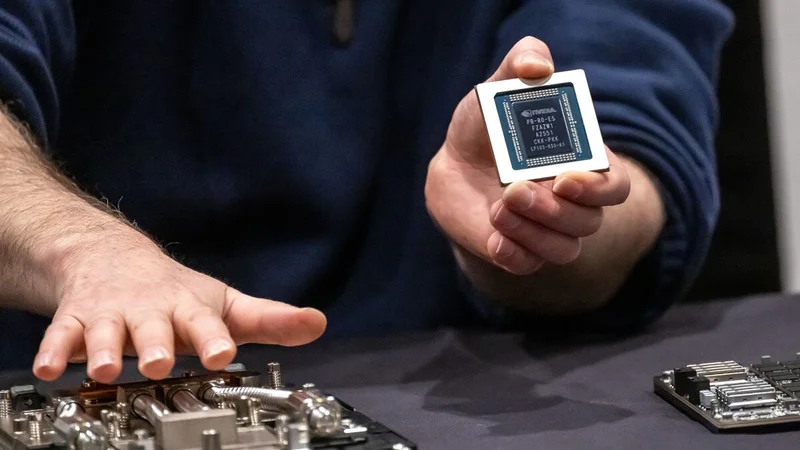
Image: Bloomberg AI
Main Takeaway
Groq raised $650 million from existing investors to transform into an AI inference cloud provider after Nvidia's $20 billion talent and technology deal.
Jump to Key PointsSummary
Why Groq is raising fresh capital now
Groq closed a $650 million funding round in June 2026, six months after Nvidia paid approximately $20 billion to license its LPU chip technology and recruit most of its senior engineering team. The deal, described by multiple outlets as a "not-acqui-hire," left Groq's investors cashed out but the company itself stripped of its core hardware talent. According to TechCrunch, the same investors who profited from the Nvidia transaction are now backstopping this new round, with Disruptive and Infinitum guaranteeing the full amount.
The speed of the turnaround surprised some observers. Bloomberg reports the new capital targets expanded data center capacity, signaling Groq intends to compete as a cloud service rather than a chip designer. CEO Adam Winter, installed after cofounder Jonathan Ross departed for Nvidia, faces the unusual task of rebuilding a company whose technology now belongs to its largest competitor.
How the Nvidia deal reshaped Groq's future
Nvidia's Christmas Eve 2025 announcement represented its largest acquisition on record, according to CNBC. The deal structure was atypical: Nvidia licensed Groq's proprietary LPU architecture rather than buying the company outright, while simultaneously hiring away CEO Jonathan Ross and most of the engineering leadership. Fortune noted this arrangement hinted that Nvidia sees inference (running trained AI models) as the next competitive battleground, not merely training.
The $20 billion valuation validated Groq's technical approach but effectively ended its independence as a chip developer. As The Next Web observed, investors who were "cashed out" in December 2025 have now been asked to reinvest in what remains: a cloud service running chips that Nvidia now understands intimately. This creates a paradox where Groq's competitive differentiation relies on technology its rival has already absorbed.
What Groq's neocloud pivot actually means
Groq's transformation from hardware manufacturer to "AI inference neocloud" follows a pattern familiar in tech: when proprietary advantage erodes, wrap remaining assets in a service layer. According to AI Weekly, new CEO Winter is betting that Groq's LPU chips still deliver sufficient speed and cost advantages for inference workloads to justify standalone cloud infrastructure. The company apparently retains enough chip inventory and manufacturing relationships to operate as a service provider.
The neocloud positioning places Groq in direct competition with hyperscalers and specialized inference providers. PYMNTS notes this category has attracted significant investment as enterprises seek alternatives to Nvidia-dominated GPU clouds. Groq's challenge is proving its remaining technology stack can compete without the engineering team that originally designed it, while Nvidia now possesses detailed knowledge of its architecture.
Who is backing this second act
The investor composition reveals both confidence and constraint. Disruptive, which had invested over $500 million in Groq previously according to CNBC, is leading the new round alongside Infinitum. Reuters confirmed the $650 million figure, noting it comes entirely from existing backers rather than new institutional investors. This suggests the funding environment for AI hardware remains challenging, or that Groq's unusual circumstances required insider commitment.
The circularity is notable: investors who received payouts from Nvidia's licensing deal are now redeploying capital into the same entity, albeit in a diminished form. Whether this represents genuine conviction or a form of salvage operation depends on Groq's ability to demonstrate operational traction as a cloud service. The absence of new named investors in any source suggests the company has work to do rebuilding market credibility.
What success would look like from here
Groq's trajectory now depends on execution speed and market timing. The inference cloud market is attracting entrants ranging from Cerebras to specialized divisions of Amazon and Google, yet demand growth may outpace supply for years. Bloomberg's framing of the funding as helping Groq "become a provider of artificial intelligence computing" implies the company is essentially restarting its identity.
The competitive dynamics are treacherous. Nvidia now controls Groq's original technology roadmap and has absorbed its key talent. Groq must differentiate through operational excellence, pricing, or vertical specialization rather than architectural superiority. As Fortune analyzed, the deal signaled that "the economics of AI chip-building are still unsettled," suggesting room for new models. Whether Groq's particular model survives the transition from innovator to service operator remains the open question that this $650 million round attempts to answer.
Key Points
Groq raised $650 million from existing backers to fund its pivot to AI inference cloud services.
Nvidia paid $20 billion in December 2025 to license Groq's LPU technology and recruit its engineering team.
CEO Adam Winter replaced cofounder Jonathan Ross, who departed for Nvidia in the deal.
Investors Disruptive and Infinitum guaranteed the full round after being cashed out by the Nvidia transaction.
Groq now operates as a neocloud provider running inference on its proprietary chips rather than selling hardware.
Questions Answered
Groq is pivoting from AI chip designer to AI inference neocloud provider, running cloud services on its proprietary LPU chips rather than selling hardware to other manufacturers. The $650 million funding round targets expanded data center capacity for this cloud service model.
Nvidia structured a licensing deal that COMPONENTS: extracted Groq's technology and talent without assuming its liabilities or operational overhead. This not-acqui-hire approach allowed Nvidia to absorb Groq's intellectual property and engineering leadership while leaving the corporate shell behind.
Adam Winter became CEO of Groq after cofounder Jonathan Ross departed for Nvidia in the December 2025 deal. Winter is tasked with transforming the diminished company into a viable cloud inference business without its original engineering team.
The same investors who received payouts from Nvidia's $20 billion licensing deal, primarily Disruptive and Infinitum, are backstopping Groq's new round. This circular financing suggests either continued belief in the remaining assets or a strategy to protect prior investment value.
Groq now competes against well-capitalized hyperscalers and specialized inference providers while lacking its original engineering team and facing a competitor, Nvidia, that intimately understands its technology architecture from the licensing deal.
Source Reliability
40% of sources are highly trusted · Avg reliability: 69
Go deeper with Organic Intel
Simple AI systems for your life, work, and business. Each one includes copyable prompts, guides, and downloadable resources.
Explore Systems