Google Unveils Universal Gemini Agent to Coordinate Workplace Tasks Across Enterprise Apps
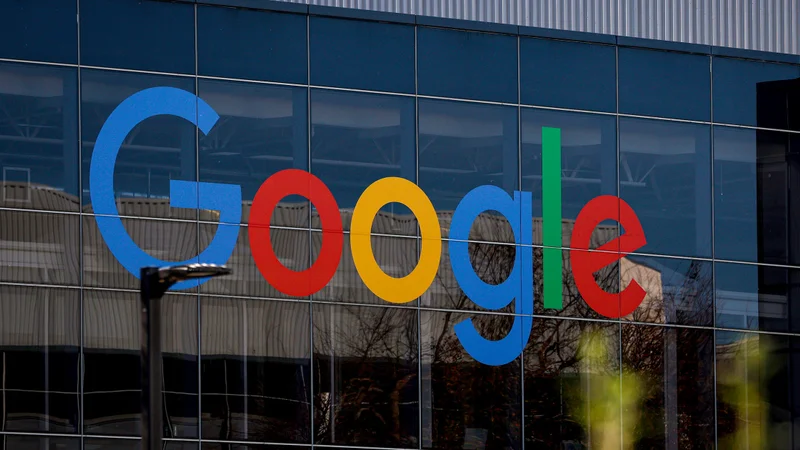
Image: Nbcnews
Main Takeaway
Google launched a universal Gemini workplace agent that connects Workspace, Slack, Microsoft 365 and enterprise systems through one cloud-based interface.
Jump to Key PointsSummary
Google’s workplace agent arrives
Google has launched a universal Gemini agent designed to coordinate workplace tasks across applications, devices and enterprise systems. The agent is available through the Gemini Enterprise app, where employees can chat with it, delegate work and receive results from a single interface. Google announced the product at its Gemini at Work event on October 8, 2026.
The system connects with Gmail, Drive, Docs, Sheets and Calendar, while also reaching users through the web, desktop and mobile devices. Integrations with Slack and Microsoft 365 extend its reach beyond Google’s own software. Because the agent runs in the cloud, it maintains context across connected devices, according to The Verge AI.
Objectives replace task-by-task prompts
Gemini is being positioned as a system that accepts objectives rather than a sequence of detailed instructions. Employees can delegate an outcome, while the agent plans work, selects tools and interacts with business systems to complete it. Google Cloud CEO Thomas Kurian described the model as giving the agent an objective and returning to finished work, according to Constellationr.
That approach places planning and execution at the center of the product. The agent is intended to use business context, personal workflows and systems of record, rather than operate as a standalone chatbot. Google Cloud also says Gemini will provide a single API, model routing and cost-control tools, giving companies a way to manage how automated work moves through their technology stack.
Enterprise controls shape adoption
Governance is a core part of Google’s workplace pitch. Gemini agent is designed to operate within enterprise policies and connect to systems of record, putting permissions and organizational controls around automated actions. That matters because an agent with access to email, documents, calendars and third-party applications can affect business processes rather than simply generate text.
The product’s unified interface also creates a single place for employees to assign work across multiple services. Its value will depend on how reliably it preserves context, respects access boundaries and completes multistep tasks. Google’s earlier agent announcements emphasized that ease of use, security and usefulness remain unfinished challenges, with CEO Sundar Pichai describing the broader agent category as still in its early stages at Google I/O, according to NBC News.
Google’s broader agent strategy
The universal workplace agent is part of a wider Google effort to make Gemini an operating layer for both personal and professional tasks. At its May 2026 developer conference, the company introduced Gemini 3.5 Flash and Gemini Spark, a personal assistant designed to organize meeting notes, emails and chats before producing documents with key takeaways. CNBC described those announcements as part of Google’s effort to keep pace with OpenAI and Anthropic.
The workplace launch extends that strategy into corporate workflows. Rather than presenting a single new model as the main product, Google is combining models, application access, enterprise data and automation controls. Cloudwars previously described Gemini 2.0 Flash as a model built for the agentic era, providing context for Google’s longer-running effort to develop systems that can perceive environments and take automated actions.
Competition moves into corporate workflows
Google’s universal agent puts the company into direct competition for enterprise AI budgets with OpenAI, Anthropic and Microsoft. Bloomberg framed the launch as part of Alphabet’s contest for corporate customers, while Google’s own product design targets a decisive advantage in access to workplace data and software through Workspace and connected services.
Microsoft already controls a major enterprise software footprint through Microsoft 365, and Slack remains a widely used collaboration hub. Google’s willingness to connect Gemini to both ecosystems makes interoperability a central competitive tool. For businesses, the choice will involve more than model quality: deployment controls, data access, pricing, reliability and the ability to automate work across existing applications will all shape adoption.
What happens next for companies
Companies will now assess whether Gemini can safely handle delegated work at production scale. Early evaluations will focus on routine coordination across email, documents, calendars, chats and business systems, where the promised benefit is fewer manual handoffs and less time spent moving information between applications.
Google’s earlier announcements indicate that agentic products are still being refined, while the new enterprise design provides tools for policy enforcement, model routing and cost management. Those controls give IT teams a framework for deployment, but the practical test will be whether employees trust the agent with meaningful objectives and whether completed work requires limited human correction. The launch raises the stakes for enterprise AI vendors as they compete to become the front door to corporate workflows.
Key Points
Google launched a universal Gemini agent that delegates workplace objectives across enterprise applications.
Gemini connects Google Workspace, Slack and Microsoft 365 through one cloud-based workplace interface.
Google Cloud designed the agent to plan tasks, use tools and follow enterprise governance policies.
The launch intensifies competition with OpenAI, Anthropic and Microsoft for corporate AI customers.
Google’s broader Gemini strategy combines agentic models, personal assistants and workplace automation.
Questions Answered
Google’s universal Gemini workplace agent is a cloud-based assistant for delegating work across business applications. It operates through Gemini Enterprise and connects Workspace tools, Slack, Microsoft 365 and enterprise systems.
Google Gemini workplace agent can work with Gmail, Drive, Docs, Sheets and Calendar, along with Slack and Microsoft 365 integrations. Users can access it from web, desktop and mobile devices.
Google Gemini agent accepts objectives, plans work and uses connected tools to complete multistep tasks. Google Cloud says the system is designed to return finished outcomes instead of requiring detailed instructions for every action.
Google Gemini protects enterprise workflows through policy governance, system-of-record connections, model routing and cost-control tools. The design gives companies mechanisms for managing permissions and automated activity.
Google’s universal Gemini agent competes with OpenAI, Anthropic and Microsoft in the enterprise AI market. Its main battleground is the automation of corporate workflows across productivity software and business systems.
Source Reliability
67% of sources are highly trusted · Avg reliability: 76
Go deeper with Organic Intel
Simple AI systems for your life, work, and business. Each one includes copyable prompts, guides, and downloadable resources.
Explore Systems