Anthropic and OpenAI Can Both Win as AI Race Shifts Toward Price, Enterprise Reach
Main Takeaway
Anthropic’s enterprise ambitions and OpenAI’s pricing pressure show the AI race is expanding beyond model quality into distribution, cost and business execution.
Jump to Key PointsSummary
A two-company race expands
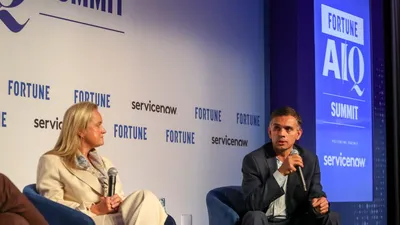
Anthropic and OpenAI can both build durable AI businesses because the market is separating into multiple winners, according to T. Rowe Price partner Emma Norchet. Anthropic is entering a second phase of growth, moving from early strength in coding toward becoming an AI layer that businesses use to execute work.
That view challenges the idea that the AI market must produce a single champion. OpenAI retains broad recognition and a large user base, while Anthropic has strengthened its position with Claude’s coding and enterprise capabilities. Coverage across Bloomberg, CNBC and Yahoo Finance frames the contest as a shift in leadership and strategy rather than a settled result.
Anthropic pushes beyond coding
Anthropic’s next test is turning technical credibility into a wider business platform. Its coding success has given Claude a strong foothold among developers, but enterprise adoption depends on reliability, workflow integration, security and the ability to handle more than software tasks.
T. Rowe Price’s investment perspective places Anthropic in an “act two” phase, where the company seeks to sit between businesses and the AI-powered execution of their work. That expansion brings Anthropic into direct competition with OpenAI across workplace software, automation and agentic systems. Analysis from Finance Yahoo, T. Rowe Price and Shawn Kanungo also places Google in the competitive frame, making distribution and infrastructure as important as benchmark performance.
Price becomes a strategic weapon
AI model pricing is becoming a central battleground as large customers demand lower costs and software startups turn to cheaper open models. OpenAI is weighing steep price reductions in response to competition from Anthropic, a move that would pressure revenue per unit while making advanced models more accessible to developers and enterprises.
The pricing debate affects the entire market. Bloomberg and the Wall Street Journal describe rising pressure from big AI users, while CNBC and PYMNTS focus on OpenAI’s consideration of cuts. Lower prices can accelerate usage, but they also force model providers to defend margins, manage computing expenses and prove that premium performance produces enough business value to justify higher fees.
Valuation raises the stakes
Anthropic’s reported valuation of $965 billion, highlighted by Morningstar, underscores how quickly private AI companies are being repriced. Funding histories and IPO analysis from Pinggy and TradingKey place Anthropic and OpenAI in a race for capital, market confidence and eventual public-market credibility.
Valuation alone doesn't determine which company wins. Investors still need evidence of recurring enterprise revenue, efficient model deployment and a path through the price competition. The funding race gives both labs resources to train models and build products, but it also raises expectations. A higher valuation leaves less room for execution mistakes, especially as customers gain more bargaining power.
Open models reshape buyer power
Open models are giving AI users more negotiating power by creating alternatives to proprietary systems. Startups that once depended on OpenAI or Anthropic can compare hosted models, self-managed systems and specialized providers, then shift workloads according to cost, performance and data requirements.
That pressure makes the contest broader than a head-to-head product comparison. OpenAI and Anthropic must keep improving models while reducing the friction of adoption. Commentary from Towards AI, Mindmeandering and Shawn Kanungo reflects the wider argument over each company’s strengths and weaknesses, although those opinions vary sharply and carry less evidentiary weight than the commercial reporting.
Enterprise adoption will decide
Enterprise distribution will determine whether Anthropic and OpenAI convert technical leadership into durable businesses. T. Rowe Price’s work with Anthropic to bring Claude into more of its investment process offers a concrete example of a financial firm embedding generative AI in research and investment workflows.
The next phase will be measured through repeat usage, workflow depth and economic returns rather than model demonstrations alone. OpenAI’s pricing deliberations, Anthropic’s push beyond coding and Google’s presence as a competing full-stack provider all point to the same pressure: customers want capable systems at predictable costs. Both labs can win if they establish distinct strengths across products, distribution and enterprise execution.
What happens next
The immediate contest will focus on pricing, enterprise contracts and the expansion of coding assistants into broader workplace agents. OpenAI’s response to Anthropic’s momentum will show whether it prioritizes market share, revenue protection or a balance between the two.
Anthropic faces an equally demanding task: turning its reputation for coding and Claude quality into a broad operating layer for companies. The competing paths can coexist, as T. Rowe Price argues, but both businesses must survive falling prices, open-model competition and investor expectations. The AI race is becoming a test of business systems as much as model intelligence.
Key Points
Anthropic is expanding Claude from coding strength into an enterprise AI execution layer.
OpenAI is considering major price cuts as Anthropic and open models intensify competition.
AI customers are gaining bargaining power as cheaper open models challenge proprietary providers.
Anthropic’s reported $965 billion valuation raises pressure to prove durable enterprise revenue.
T. Rowe Price is bringing Claude into investment workflows as enterprise adoption accelerates.
Questions Answered
Anthropic and OpenAI can both build successful AI businesses because the market has multiple enterprise and consumer segments. Their results will depend on distribution, pricing, workflow integration and recurring business value.
OpenAI is considering price cuts because Anthropic and cheaper open models are increasing pressure from large AI customers. Lower prices could expand usage while reducing revenue per unit and putting pressure on margins.
Anthropic is expanding Claude beyond coding toward an AI layer that businesses use to execute work. The strategy targets enterprise workflows, automation and deeper integration into professional processes.
Anthropic’s reported $965 billion valuation raises expectations for growth, enterprise revenue and market leadership. It also intensifies the funding and eventual IPO competition with OpenAI.
Open models are giving startups and large customers cheaper alternatives to proprietary AI systems. That increases buyer bargaining power and forces OpenAI and Anthropic to compete on cost, performance and deployment flexibility.
Source Reliability
38% of sources are highly trusted · Avg reliability: 67
Go deeper with Organic Intel
Simple AI systems for your life, work, and business. Each one includes copyable prompts, guides, and downloadable resources.
Explore Systems