Google Pics Launches With Comment-Style AI Image Editing, Powered by Gemini and Nano Banana 2
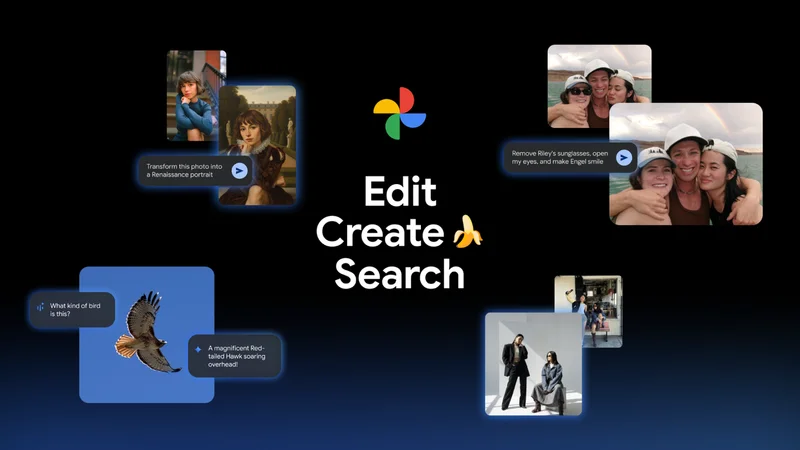
Image: Google AI Blog
Main Takeaway
Google unveiled Pics at I/O 2026, a new Workspace app that lets users edit AI-generated images by clicking elements and leaving notes instead of rewriting.
Jump to Key PointsSummary
How Pics changes the AI image editing workflow
Google Pics replaces prompt rewriting with a visual comment system. Users click any element in an AI-generated image and leave a note, similar to commenting on a Google Doc. The app then applies the requested change directly. According to The Verge, the tool runs on a combination of Gemini and Nano Banana 2, Google's latest image generation model. This approach targets a pain point that has plagued AI image tools since their mainstream arrival: the endless cycle of regenerating entire images to fix small details.
The interface strips away the need for technical prompting skills. TechCrunch reports that Google designed Pics for teachers, small business owners, and other non-designers who need marketing materials, invitations, or social media graphics without learning complex software. The app generates mockups and graphics from simple text prompts, then refines them through the comment-style feedback loop.
The competitive target behind Google's design push
Google is aiming Pics squarely at Canva and Adobe's Firefly-integrated tools. TechCrunch's analysis frames the launch as Google declaring itself a contender in AI design, a market where it previously lacked a dedicated product. The company has watched Canva grow to 200 million monthly users while building AI features into its own fragmented product suite. Pics consolidates Google's image generation capabilities into a single, branded Workspace application.
The timing follows months of Google baking AI editing into Google Photos. In November 2025, the company rolled out Nano Banana-powered features allowing users to edit images by describing changes in voice or text. Pics extends this conversational editing philosophy into a standalone creation tool. The competitive pressure is real: dedicated AI image platforms like Midjourney, Ideogram, and FLUX continue to advance, while Canva and Adobe have entrenched positions in the creative workflow market.
What powers the engine under the hood
Pics combines two Google AI systems: Gemini for understanding natural language instructions, and Nano Banana 2 for actual image generation and manipulation. Google first introduced Nano Banana in late 2025 as part of Google Photos' editing toolkit, where users could ask to remove sunglasses or fix smiles through conversational prompts. The model's second iteration powers Pics with more precise regional editing capabilities.
The technical architecture matters because it determines what Pics can and cannot do. Gemini handles the interpretation layer, translating vague user comments into specific edit instructions. Nano Banana 2 executes those instructions while maintaining visual consistency across the image. This split approach mirrors how other AI design tools operate, but Google's integration with Workspace data (Docs, Sheets, Drive) gives it distribution advantages that standalone competitors lack.
Where this fits in Google's broader AI product strategy
Pics arrives as Google reorganizes its consumer and enterprise AI offerings around Gemini. The app joins a growing family of AI tools that share a common language: Ask Photos for searching image libraries, AI editing in Google Photos, and now dedicated creation in Pics. This layering strategy lets Google test features in one product before promoting them to standalone status.
The Workspace integration is deliberate. By anchoring Pics to Google's productivity suite rather than releasing it as a consumer app, Google targets organizational budgets and IT procurement channels. Teachers need classroom materials. Small business owners need marketing assets. These users already live in Docs and Gmail. Pics becomes the path of least resistance for AI image creation within existing workflows, reducing friction that would send them to Canva or Adobe.
What happens next for users and competitors
Pics will roll out to Google Workspace customers in phases following the I/O announcement. Google has not disclosed pricing tiers or whether consumer Gmail users will access the tool. The success metric will be whether comment-style editing actually reduces iteration time, or merely shifts the frustration from prompt engineering to comment clarity.
Competitors are unlikely to sit still. Canva's Magic Studio already offers AI editing with established brand trust. Adobe continues integrating Firefly across Creative Cloud. Midjourney and Ideogram serve power users who want fine-grained control. Google's bet is that simplicity and distribution beat depth for the vast middle market of occasional creators. Whether that bet pays off depends on execution: Nano Banana 2's quality, Gemini's interpretation accuracy, and the speed of the edit-generate-feedback loop. Early hands-on reviews will determine if Pics earns a permanent place in the creative toolkit or becomes another Google experiment quietly sunset in two years.
The open questions Google hasn't answered
Several critical details remain unclear. Google has not specified content ownership terms for Pics-generated images, a flashpoint in AI creativity where artists have challenged training data legality. The company also avoided discussing C2PA Content Credentials integration in Pics, though it implemented this transparency feature in Google Photos AI editing in 2025. Commercial usage rights, indemnification for generated content, and data privacy for enterprise customers all need clarification.
The pricing question looms largest. Workspace already carries subscription costs; will Pics require additional fees? Google's history suggests freemium or bundled approaches for consumer features, with premium tiers for advanced capabilities. For competitors, Pics represents both threat and validation. Canva and Adobe now face a well-funded rival with massive distribution. But they also gain confirmation that AI design tools have reached mainstream enterprise readiness, expanding the total addressable market for everyone.
Key Points
Google Pics launches with comment-style editing instead of prompt rewriting
Powered by Gemini and Nano Banana 2 for understanding and generation
Targets non-designers in Workspace, competing directly with Canva
Follows months of Google Photos AI editing feature rollouts
Pricing, ownership terms, and commercial rights remain undisclosed
Questions Answered
Pics uses comment-style editing where users click elements and leave notes rather than rewriting entire prompts, powered by Gemini and Nano Banana 2.
Google designed Pics for non-designers including teachers, small business owners, and Workspace users who need marketing materials and social media graphics without learning complex software.
Google announced Pics at I/O 2026 on May 19, 2026, with phased rollout to Workspace customers; consumer availability remains unannounced.
Pics extends the conversational editing approach Google introduced in Photos with Nano Banana in late 2025, but as a standalone creation tool rather than photo editing feature.
Primary competitors include Canva with Magic Studio, Adobe Firefly-integrated tools, and dedicated AI generators like Midjourney, Ideogram, and FLUX.
Source Reliability
30% of sources are highly trusted · Avg reliability: 61
Go deeper with Organic Intel
Simple AI systems for your life, work, and business. Each one includes copyable prompts, guides, and downloadable resources.
Explore Systems