Google Finance exits beta with AI overhaul and first-ever mobile app
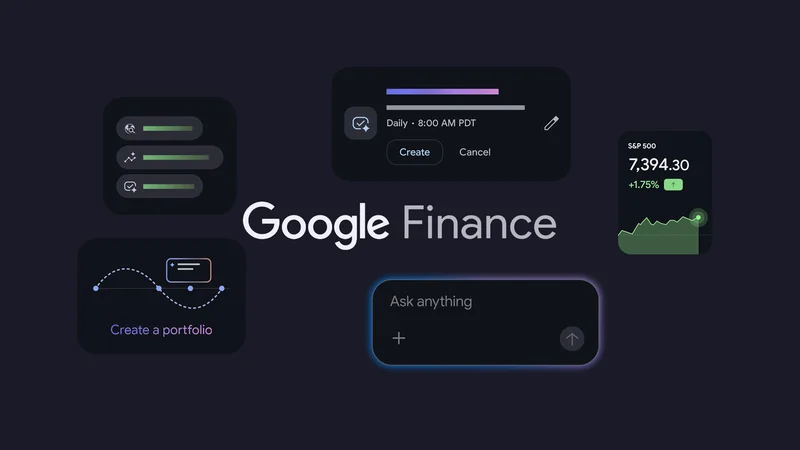
Image: Google AI Blog
Main Takeaway
Google Finance launched its first Android app after 20 years and rolled out AI features globally including portfolio tracking and live earnings.
Jump to Key PointsSummary
Why Google Finance waited two decades for an app
Google Finance has existed for 20 years without a dedicated mobile app, a notable omission in an era where nearly every Google product has mobile companionship. That gap closed on June 25, 2026, when Google released the first standalone Google Finance app for Android. According to Ars Technica, the service originally launched when Flash powered its charts, and it has survived multiple redesigns without ever getting native mobile software. The app is available globally through the Play Store, with an iOS version promised for later this year.
The timing carries strategic weight. Google's decision to bolt on a mobile app now, rather than during any of the previous two decades, signals that the company sees fresh opportunity in financial services. Yahoo Finance and Bloomberg have long dominated mobile financial tracking, and Google's late entry suggests it believes its AI differentiation can overcome first-mover advantage.
What the AI-powered features actually do
The new Google Finance wraps several AI capabilities into its search and tracking experience. Users can ask complex financial questions and receive synthesized answers with links to relevant sites, rather than hunting through individual stock pages. A "Key Moments" feature explains why specific stocks moved, and "Deep Search" handles more intricate research queries. Google also added advanced charting tools, prediction markets data from Kalshi and Polymarket, and live earnings call audio with AI-generated insights. The November 2025 rollout included these features in India with English and Hindi support, marking the first expansion beyond the U.S.
These tools position Google Finance as a research layer rather than a trading platform. The company has been explicit that this is not a robo-advisor or personalized investing app. Instead, it functions as an AI-augmented information destination, keeping users within Google's ecosystem rather than sending them to dedicated financial platforms.
How portfolio tracking works now
Portfolio tracking is rolling out globally in the new Google Finance, replacing the older version's more limited watchlist functionality. Users can monitor their holdings across multiple accounts and see consolidated performance data. The feature launched alongside the broader AI overhaul, which exited beta status in June 2026. Google has included a toggle allowing users to switch between the new AI-powered interface and the original version, suggesting the company recognizes that not all users want algorithmic summaries of their financial data.
The portfolio tools represent a direct challenge to existing personal finance apps and brokerage platforms that have built loyalty through similar tracking features. By making this free and integrated with Search, Google removes friction that might otherwise send users to specialized competitors.
The competitive play against Yahoo and Bloomberg
Google's standalone app launch is less about convenience and more about claiming territory in crowded financial information markets. Yahoo Finance, Bloomberg, and numerous fintech apps have established strong positions, but none combine Google's search infrastructure with native AI summarization. The "Key Moments" feature in particular addresses a pain point: understanding causality in market movements without reading multiple news sources or analyst reports.
The prediction markets integration from Kalshi and Polymarket adds another differentiation layer. These platforms traffic in event-based contracts rather than traditional securities, and their inclusion signals Google's broader appetite for alternative data sources. For Google, financial engagement also means advertising opportunity. Users researching investments represent high-intent audiences that command premium ad rates.
What expansion and iOS timing reveal
The India launch in late 2025 preceded the global rollout, with English and Hindi language support. This pattern, launching in a major English-speaking non-U.S. market before wider deployment, has become standard for Google product rollouts. The iOS app remains in development with no specific release date beyond "coming months" or "later this year" depending on the source. This Android-first approach mirrors Google's typical mobile strategy but risks ceding engaged iPhone users to competitors during the gap.
Future features teased include the ability to listen to live earnings calls directly within the app. This would further reduce the need for investors to maintain separate relationships with financial data providers. The earnings call integration, combined with AI-generated insights, could compress the time between corporate disclosures and actionable understanding for retail investors.
Where Google Finance sits in the AI race
The Google Finance overhaul exemplifies a broader pattern: Google sanded down its existing products with AI layers rather than building new ones from scratch. This approach conserves engineering resources while creating fresh engagement hooks. Compared to OpenAI's financial tools or specialized fintech AI, Google's advantage remains its data access and distribution through Search. The risk is feature bloat and the occasional hallucination in financial advice, a high-stakes domain where errors carry real monetary consequences. Google has hedged by keeping human traders and advisors as the decision-makers, positioning its AI as research support rather than recommendation engine.
Key Points
Google Finance released its first Android app after 20 years without mobile software.
AI features include Key Moments, Deep Search, prediction markets, and live earnings audio.
Portfolio tracking is rolling out globally with a toggle to the original interface.
The service expanded to India in late 2025, its first market outside the U.S.
An iOS app is planned but has no confirmed release date beyond later in 2026.
Questions Answered
Yes, Google Finance launched its first standalone mobile app for Android on June 25, 2026. The app includes portfolio tracking, real-time market data, live news, and AI features, with an iOS version planned for later in 2026.
Google Finance includes AI-powered Key Moments that explain stock movements, Deep Search for complex financial questions, advanced charting tools, prediction markets data from Kalshi and Polymarket, and live earnings call audio with AI-generated insights.
No, Google Finance is not a robo-advisor or personalized investing app. It functions as an AI-augmented financial research and information destination within Google Search, without executing trades or providing personalized investment advice.
Google Finance expanded to India in November 2025 with English and Hindi language support, marking its first market outside the United States before the global rollout of the new version.
Yes, Google includes a toggle that allows users to switch between the new AI-powered Google Finance interface and the original version, accommodating users who prefer the traditional experience.
Source Reliability
43% of sources are highly trusted · Avg reliability: 64
Go deeper with Organic Intel
Simple AI systems for your life, work, and business. Each one includes copyable prompts, guides, and downloadable resources.
Explore Systems