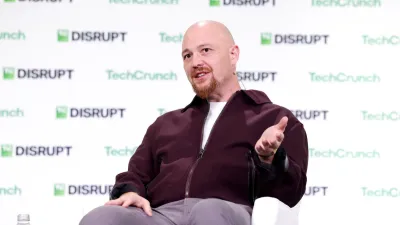
Goldman Sachs CEO David Solomon Warns AI Investment Has Entered Greed Mode

Image: Bloomberg AI
Main Takeaway
Goldman CEO David Solomon says AI markets show more greed than fear, comparing the frenzy to past bubbles while insisting young workers remain core.
Jump to Key PointsSummary
Why Solomon sees AI mania as nothing new
David Solomon has heard this song before. The Goldman Sachs CEO told audiences in Turin, Italy that the capital flooding into artificial intelligence is following the same pattern as every other market frenzy he has witnessed. His assessment is blunt: it is not different this time. Solomon noted that plenty of money will get deployed without generating returns, a familiar aftermath when excitement outpaces fundamentals. He admitted he is not smart enough to call the top, but the historical rhymes are impossible to miss. Investors have shifted decisively into greed mode, with fear largely absent from the equation.
This framing carries weight because it comes from someone who helps steer one of the world's most powerful investment banks through boom and bust cycles. Solomon's skepticism does not mean he dismisses AI entirely. Rather, he places the current moment in a longer continuum of technological enthusiasm that reliably separates winners from losers. The implication for market participants is to temper expectations and prepare for consolidation.
What the greed-fear balance signals for markets
CNBC reported that Solomon specifically warned markets are in greed mode as AI companies prepare to raise billions in what could become one of the busiest equity issuance periods on record. The pipeline includes potential mega-IPOs from firms like OpenAI that would test investor appetite at unprecedented scale. Solomon's concern is not abstract. Goldman Sachs itself stands to benefit from underwriting these offerings, which makes his public caution more notable. He is essentially warning that the very deals his bank might profit from could face a cooler reception than promoters expect.
The timing matters because it follows a period when AI valuations defied gravity. Solomon's comments suggest the window for easy capital raising may narrow. For institutional investors, this signals due diligence will become more critical. For startups, it means the bar for public market readiness is rising just as the cost of staying private grows more expensive.
Why young bankers are not going anywhere
Despite the automation anxiety permeating finance, Solomon has been explicit that young talent remains a huge core part of Goldman's future. Investopedia reported his view that AI will alter how financial services function without displacing the need for entry-level analysts and associates. This stance runs counter to predictions of Wall Street jobs apocalypse, where coding and large language models replace armies of fresh graduates. Solomon's argument rests on historical precedent. Every technological wave from spreadsheets to algorithmic trading was supposed to eliminate junior roles. Instead, the nature of the work changed while headcounts adapted.
The Goldman CEO sees AI as another tool that will reshape tasks rather than erase positions. Young workers bring adaptability and digital fluency that complement emerging technologies. His message is partly recruitment strategy, positioning Goldman as a place where human capital still matters. But it also reflects a genuine belief that relationship-driven, judgment-intensive banking functions resist full automation. The question is whether this optimism holds if AI capabilities accelerate faster than workforce retraining can keep pace.
How Goldman is positioning for the AI transition
Solomon's public commentary aligns with broader strategic positioning at Goldman Sachs. Bloomberg separately reported that Christina Minnis, global head of alternatives origination, described AI as a generational shift blurring traditional business boundaries. Her team sees structured products, investment management, and technology converging in ways that create new revenue opportunities. This internal enthusiasm contrasts with Solomon's external caution, suggesting Goldman is trying to thread a needle: participate fully in the AI economy while managing reputational and financial risk if the hype cycle turns.
The bank's dual posture makes sense for a 156-year-old institution that has survived multiple technological revolutions. Sequoia Capital highlighted Solomon's belief that experience is vastly underrated in Silicon Valley, where youth and speed often dominate narratives. His perspective emphasizes timing and serendipity over pure technical brilliance. For Goldman, this means betting on durable competitive advantages rather than chasing every AI trend. The consumer banking retreat under Solomon demonstrated willingness to cut losses when strategic bets misfire, a discipline he may apply if AI investments sour.
What happens when the capital cycle turns
Solomon's historical comparison carries a warning. He told the Turin audience that capital deployed without returns is the inevitable outcome of speculative peaks. For the AI sector, this implies a coming reckoning where overfunded companies face down rounds, consolidation, or failure. Goldman Sachs is positioned to benefit from both sides of this cycle, underwriting IPOs on the way up and advising distressed deals on the way down. The bank's research has already flagged concentration risk in AI-related equities.
The broader financial system faces contagion questions if AI valuations collapse. Pension funds, sovereign wealth vehicles, and retail investors have crowded into the theme. Solomon's intervention serves as a rare voice of institutional sobriety from within the profit-making machinery. Whether anyone listens before the correction arrives is another matter entirely. Past bubbles suggest warnings from even the most credible figures rarely prevent the final frenzy.
Why experience still matters in a hype-driven era
Solomon's emphasis on experience over raw intelligence, as highlighted in his Sequoia Capital appearance, offers insight into his leadership philosophy during turbulent periods. He argues that being smart enough matters more than being the smartest person in the room, a view shaped by navigating Goldman through pandemic disruptions, regulatory scrutiny, and strategic pivots. This framework helps explain his measured response to AI exuberance. He has seen enough cycles to recognize the pattern without claiming predictive certainty.
The contrast with Silicon Valley's cult of the wunderkind is deliberate. Banking rewards relationships built over decades, regulatory navigation, and crisis management, skills that resist disruption by even the most capable language model. Solomon is essentially making a case for institutional memory in an industry prone to amnesia. If AI does transform finance as deeply as promoters claim, his bet is that organizations combining technological adoption with human judgment will outperform those that automate too aggressively. The coming years will test whether this balance is achievable or merely comforting rhetoric.
Key Points
Solomon compares AI investment frenzy to past market bubbles, warns it is not different this time
Markets shifted to greed mode ahead of massive AI company equity issuance pipeline
Young bankers and entry-level talent will remain core to Goldman despite automation fears
Goldman internally calls AI a generational shift while CEO publicly urges caution
Solomon emphasizes experience and timing over pure intelligence for navigating disruption
Questions Answered
Solomon says he is not smart enough to call it a bubble, but insists the current mania is not different from past market frenzies and that plenty of capital will be deployed without returns.
According to Solomon, young talent will remain a huge core part of the bank, and AI will alter how work gets done rather than eliminate entry-level positions.
He told CNBC that investors have shifted decisively into greed mode, with more greed than fear currently driving AI investment decisions.
The bank is internally treating AI as a generational business shift while Solomon maintains public caution about overheated valuations and speculative excess.
He emphasizes that experience, timing, and being smart enough matter more than pure intelligence when navigating technological and market transitions.
Source Reliability
40% of sources are trusted · Avg reliability: 72
Go deeper with Organic Intel
Simple AI systems for your life, work, and business. Each one includes copyable prompts, guides, and downloadable resources.
Explore Systems