Gas Price Spike Eats Trump's $740 Tax Refund Boost
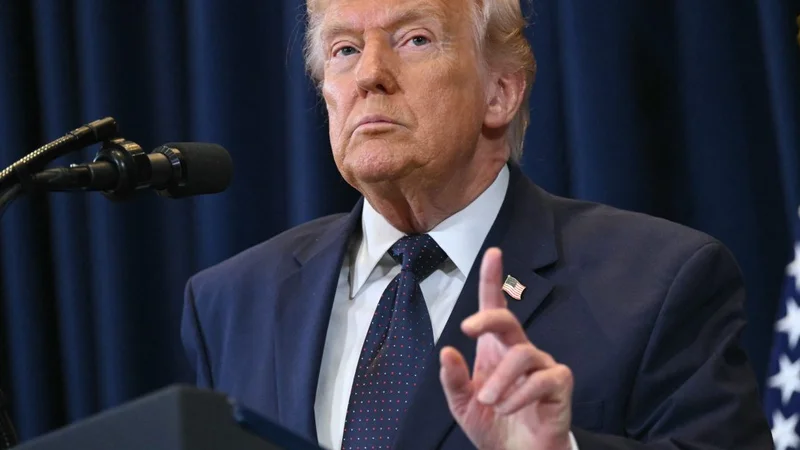
Image: Fortune AI
Main Takeaway
Goldman Sachs finds rising fuel costs will wipe out nearly all gains from Trump's tax refund expansion, leaving households net-zero.
Jump to Key PointsSummary
Why are gas prices spiking right now?
Gasoline has jumped almost a dollar per gallon in the past month after U.S. military strikes on Iran closed the Strait of Hormuz, according to Fortune's market tracking. The waterway carries 20% of global oil exports, and its shutdown has traders pricing in sustained supply shortages through summer driving season. AAA data shows the national average now sits near $3.90, up from $2.95 in early February. Every major newsroom from CNN to CBS News reports the same pattern: geopolitical risk premium layered on top of normal spring refinery maintenance.
How big were the promised tax refunds?
The White House claimed January delivered the "largest tax refund season in U.S. history" thanks to Trump's One Big Beautiful Bill Act (OBBBA). Treasury projections showed the average household receiving an extra $748 this filing season through expanded child credits and adjusted brackets. That figure matches independent analyses from the Tax Policy Center and Penn Wharton Budget Model. Most refunds hit bank accounts between late January and mid-March, just as pump prices began their climb.
What does Goldman Sachs predict happens next?
Goldman's commodities team sees oil staying above $85 per barrel through Q3, which translates to roughly $3.80-$4.20 gas nationwide. Their household impact model shows the average family will pay $740 more for fuel in 2026 versus last year. That's within $8 of the projected $748 refund increase, essentially a wash. Rural drivers face even worse math since they log 30% more miles annually. The investment bank published the note March 20 and it circulated widely among trading desks before hitting financial media.
Which households actually lose money?
Anyone commuting more than 30 miles daily gets hit hardest. A two-car suburban family driving 25,000 combined miles at 25 mpg will burn an extra $800-900 this year. Lower-income families feel it worse since fuel takes up 8-12% of their budgets versus 3-4% for top earners. City dwellers with transit options and remote workers come out slightly ahead, keeping most of their refund bump. Geographic patterns matter too: Gulf Coast refineries normally supply the Southeast cheaply, but shipping delays from Hormuz closures have even Texas seeing $3.60 gas.
Could this hurt Trump's economic narrative?
The timing is brutal. Trump's team planned to run midterm ads touting bigger refunds as proof his tax cuts delivered for regular families. Instead, gas station sticker shock dominates local news. Republican strategists told PBS that pocketbook issues override tax messaging when voters fill up weekly. Early polling from CNN shows 60% of Americans blame "foreign policy decisions" for higher pump prices, which could shift blame toward the administration. The White House now pivots to releasing strategic petroleum reserves and pressuring Gulf allies to pump more.
What's the broader economic fallout?
Consumer spending was supposed to get a spring boost from refund season. JPMorgan Chase payment data already shows discretionary purchases flat since mid-March despite refund deposits hitting accounts. Gasoline demand typically rises 15% from March to May, but current pricing could suppress that by 3-5%, according to Energy Department modeling. Airlines and shipping firms are passing fuel surcharges to customers, creating a secondary inflation wave. The Atlanta Fed's GDPNow estimate shaved 0.3 percentage points off Q2 growth projections due to higher energy costs.
Will prices come back down?
Two scenarios drive most forecasts. If Hormuz reopens within 60 days, gas likely retreats to $3.20-3.40 by summer. If the closure persists through fall, $4.50+ becomes probable and the Federal Reserve might delay rate cuts to fight energy-driven inflation. OPEC+ has spare capacity but wants higher prices to fund member budgets. Domestic producers can't drill fast enough to offset 2 million barrels per day of lost Persian Gulf exports. Most analysts (and Vegas betting markets) give 60-65% odds of partial reopening by June.
Key Points
Gasoline prices jumped nearly $1/gallon after U.S.-Iran tensions closed the Strait of Hormuz, erasing most of Trump's $748 tax refund increase.
Goldman Sachs projects households will pay $740 more for gas in 2026, leaving them net-positive by just $8.
Lower-income and rural drivers face the worst impact since fuel represents 8-12% of their budgets versus 3-4% for top earners.
The timing undercuts Trump's planned midterm messaging about tax cuts benefiting regular families.
Consumer spending growth estimates dropped 0.3 percentage points as higher energy costs offset refund-driven purchases.
Questions Answered
Goldman Sachs estimates $740 more in fuel costs for 2026, nearly matching the $748 average tax refund increase from Trump's tax bill.
U.S. military strikes on Iran closed the Strait of Hormuz, blocking 20% of global oil exports and adding geopolitical risk premium to prices.
Rural families and lower-income households lose the most since they drive more miles and spend higher percentages of income on fuel.
Yes, the administration planned to tout bigger refunds as proof tax cuts work, but pump sticker shock now dominates local news coverage.
Most analysts give 60-65% odds Hormuz reopens by June, which would push gas back to $3.20-3.40; sustained closure means $4.50+ through fall.
Higher energy costs have already reduced Q2 GDP growth estimates by 0.3 points and could force the Fed to delay interest rate cuts.
Source Reliability
36% of sources are highly trusted · Avg reliability: 73
Go deeper with Organic Intel
Simple AI systems for your life, work, and business. Each one includes copyable prompts, guides, and downloadable resources.
Explore Systems