Google Pledges Water Positive Data Centers by 2030 as AI Boom Strains Drought-Prone Regions
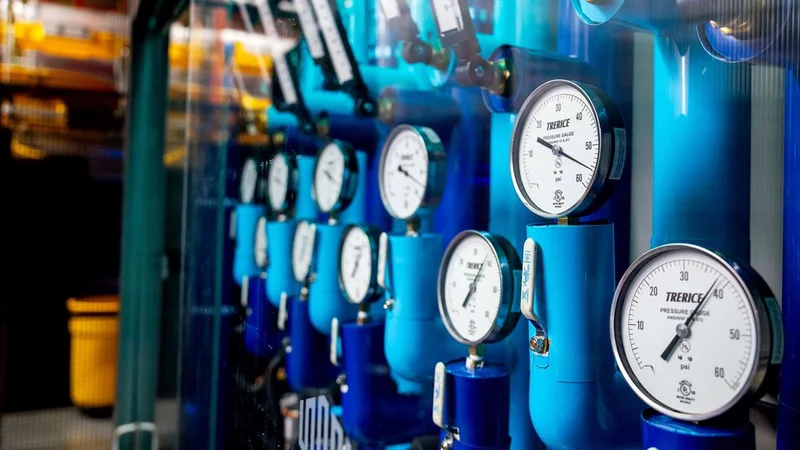
Image: Spectrum.ieee
Main Takeaway
Google commits to replenishing more water than its data centers consume by 2030 amid surging AI-driven demand.
Jump to Key PointsSummary
Why AI data centers guzzle so much water
AI data centers consume extraordinary volumes of water to cool servers running power-hungry models. A single large facility can use up to 5 million gallons per day, equivalent to a town of 10,000 to 50,000 people, according to EESI. This consumption comes in two forms: direct water for cooling systems and indirect water embedded in electricity generation. The IEEE Spectrum notes that confusion abounds about actual usage figures, but the trend is unmistakably upward as AI-focused facilities proliferate.
The geographic concentration of these centers amplifies the strain. Brookings reports that development is surging from Virginia to Michigan to Arizona, often in regions already facing water stress. Stanford's Western studies program documents how agricultural communities like Quincy, Washington, have been transformed by data center deals, with local grids and plumbing reshaped to serve tech giants rather than farms. The water demands are not abstract; they drain aquifers that communities depend upon.
Google's five-part water strategy
Google responded to mounting backlash with a blog post detailing five commitments, including replenishing more water than it uses at data centers by 2030. The company pledged to match 100% of its data center water consumption with water stewardship projects in the same watersheds, fund wastewater recycling and clean energy desalination, and publish annual water use reports. Google also committed to engaging local communities before expanding into new regions.
This marks a distinct approach from competitors. While Microsoft, OpenAI, and Oracle have announced moves away from evaporative cooling entirely, Google is betting on replenishment and local investment rather than elimination. The company already funds wetland restoration in Chile's Maipo River Basin and similar projects globally, according to its data center blog. Whether this constitutes genuine stewardship or strategic positioning depends on execution.
The backlash driving corporate action
Community opposition to data centers has become a potent political force. Protests have erupted from Arizona to the Netherlands, fueled by fears that tech facilities are draining local supplies, reports FWP COA. Environmental concerns now rank among the top drivers of American opposition to data center construction, per The Verge. SpaceX even amended its IPO filing to flag water scarcity and drought as material risks to data center development, a signal that investors are taking notice.
This pressure is reshaping corporate behavior. Bloomberg reports that AI is draining water from areas that need it most, highlighting the moral hazard of siting thirsty facilities in drought-prone regions. Google's 2030 pledge arrives as local governments begin conditioning permits on water guarantees. The company is reading the room: environmental credentials are becoming competitive necessities, not optional branding.
Whether the water issue is overstated
Not everyone agrees that AI data centers deserve special scrutiny. One blogger argues that electric car factories use comparable water volumes without attracting comparable outrage, suggesting the AI water issue is "fake" insofar as it singles out one industry for attention that many deserve. The point has some merit; data centers are not uniquely thirsty compared to semiconductor fabs or manufacturing plants.
Yet this framing misses the scale and velocity of AI expansion. Data center water use is growing faster than most industrial categories, and the geographic clustering in water-stressed Western states creates localized crises even if national totals seem manageable. IEEE Spectrum emphasizes that direct comparisons are hampered by poor transparency, most operators do not report water consumption at all. The lack of standardized disclosure makes it difficult to assess whether concerns are proportionate, but the trend direction is clear.
What competitors are doing differently
Microsoft, OpenAI, and Oracle are pursuing technological fixes rather than replenishment pledges. These companies are moving toward dry cooling and liquid cooling systems that eliminate evaporative water loss entirely, according to Ars Technica. OpenAI and Oracle's Stargate expansion in Texas, a notably water-stressed region, will employ these alternative approaches. This represents a fundamentally different philosophy: prevent consumption rather than offset it.
Each approach carries trade-offs. Dry cooling typically uses more electricity, potentially increasing carbon emissions unless powered by renewables. Google's replenishment model preserves operational flexibility but depends on verification that restored wetlands actually deliver claimed water benefits. Neither approach has proven scalable yet. The competitive divergence suggests the industry has not settled on a single solution, and the coming years will test which model delivers measurable results.
What happens next for regulation and communities
The patchwork of local responses is giving way to broader policy interest. Brookings calls for regional coordination among utilities, regulators, and tech companies to prevent race-to-the-bottom dynamics where communities sacrifice water security for short-term tax revenue. Some states are already considering water use reporting mandates for data centers, which would address the transparency gap that Spectrum and others have identified.
For communities, the calculus is shifting. Early data center deals promised jobs and tax base; now residents increasingly demand water protections upfront. Google's commitment to community engagement before expansion acknowledges this new reality. Whether 2030 replenishment pledges satisfy local stakeholders will depend on interim reporting and whether projects face drought-year shortfalls. The companies that build trust through verifiable action, not just promises, will find smoother paths to expansion.
Key Points
Google pledges to replenish more water than its data centers consume by 2030 through five commitments.
A single large data center can consume up to 5 million gallons of water per day for server cooling.
Microsoft, OpenAI, and Oracle are eliminating evaporative cooling entirely to reduce water use.
Community protests have erupted from Arizona to the Netherlands over data center water consumption.
SpaceX identified water scarcity and drought as material risks to data center development in its IPO filing.
Questions Answered
Google has pledged to replenish more water than its data centers consume by 2030, matching 100% of usage with stewardship projects in the same watersheds. The commitment also includes funding wastewater recycling and clean energy desalination, plus annual public reporting of water use.
AI data centers use water primarily for cooling servers that generate enormous heat from power-hungry AI models. A single large facility can consume up to 5 million gallons per day, with additional indirect water use from electricity generation.
Microsoft, OpenAI, and Oracle are moving away from evaporative cooling entirely, adopting dry and liquid cooling systems that eliminate water consumption. This technological approach contrasts with Google's replenishment and offset strategy.
Yes, community protests have occurred from Arizona to the Netherlands, driven by fears that data centers drain local water supplies. Environmental concerns now rank among the top drivers of American opposition to data center development.
Some argue that electric vehicle factories and other manufacturing use comparable water without similar scrutiny. However, AI data centers are growing faster than most industrial categories and are often concentrated in already water-stressed regions, creating localized strain.
Source Reliability
50% of sources are highly trusted · Avg reliability: 68
Go deeper with Organic Intel
Simple AI systems for your life, work, and business. Each one includes copyable prompts, guides, and downloadable resources.
Explore Systems