Google DeepMind CEO Demis Hassabis calls for a US-led global AI watchdog with power to halt dangerous models
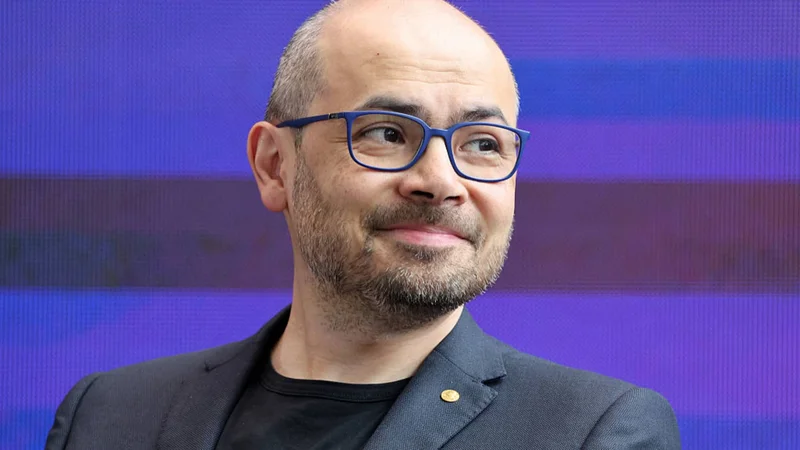
Image: Cnbc
Main Takeaway
Google DeepMind CEO Demis Hassabis proposed a US-led global AI standards body modeled after FINRA that would screen frontier models for cybersecurity.
Jump to Key PointsSummary
The proposal for a new regulatory body
Demis Hassabis, CEO of Google DeepMind and a Nobel laureate, published a framework on Tuesday calling for the creation of an independent AI standards body led by the United States. The proposal, titled "A Framework for Frontier AI and the Dawning of a New Age," argues that the institution should have the authority to test frontier AI models before they are deployed and, if necessary, hit the brakes on models deemed too dangerous. Hassabis pointed to cybersecurity threats as an already visible challenge, while also flagging nuclear and biological risks as areas requiring urgent attention.
According to TechCrunch, the proposed body would be modeled after the Financial Industry Regulatory Authority (FINRA), a self-regulatory organization that oversees brokerage firms in the US securities industry. Quartz reports that Hassabis envisions a public-private partnership funded by the AI industry itself, screening models before they reach US deployment. The Verge notes that Hassabis hopes to see the institution up and running before the end of the year, underscoring the urgency he attaches to the timeline.
Why Hassabis frames this as a species-level transition
Hassabis has been building the intellectual scaffolding for this proposal for months. In a fireside chat at the Stanford Graduate School of Business posted Tuesday, he described artificial intelligence as entering a "species-level transition" that leaves humanity with "little margin for error" over the next decade. Business Insider reports that Hassabis said artificial general intelligence, the point at which AI matches or surpasses human cognitive abilities, is just a few years away and that humanity does not have much time to prepare for what he called a "new human era."
The Stanford Daily, which covered the same Stanford event in May, quoted Hassabis saying AI is advancing roughly 10 times faster than the Industrial Revolution and that we are currently in the "foothills of the singularity." He also raised the possibility of a "post-scarcity world" arriving with AGI, a framing that mixes utopian potential with existential risk. This dual message, immense promise alongside catastrophic danger, forms the rhetorical backbone of his call for pre-deployment safety testing.
The FINRA model and what it would actually do
The FINRA comparison is the operational core of Hassabis's proposal. FINRA is not a government agency but a self-regulatory body authorized by Congress, funded by the industry it oversees, and empowered to write rules, conduct examinations, and levy fines. TechCrunch reports that Hassabis wants the AI equivalent to develop best practices for model release, test frontier systems against safety benchmarks, and coordinate international standards. Quartz adds that the watchdog would screen models specifically before US deployment, suggesting a gatekeeping function at the point of market entry.
Gary Marcus, an AI critic who testified before the Senate in 2023 advocating for preflight safety testing, endorsed Hassabis's framework on his Substack, calling it "good news, for once." Marcus noted that the proposal aligns with recommendations he has made for years, including in his 2024 book "Taming Silicon Valley." The endorsement from a prominent AI safety advocate lends weight to the proposal, though Marcus has frequently clashed with major AI labs over the pace of deployment.
The US leadership question and geopolitical stakes
Hassabis explicitly argues that the United States is best positioned to lead the standards body "given its concentration of frontier labs, technical talent, and capital," according to The Verge. The proposal arrives at a moment when AI governance is fragmented across jurisdictions, with the EU AI Act taking a regulatory approach, China pursuing state-directed development, and the UK and US relying largely on voluntary commitments from companies. By calling for a US-led body with international coordination, Hassabis is effectively proposing an American-anchored alternative to a fragmented global patchwork.
Axios reports that the call for urgent action comes as frontier model capabilities advance rapidly, with multiple labs racing toward AGI. The geopolitical dimension is implicit but clear: whoever sets the standards for testing and approving frontier models gains significant influence over the trajectory of AI development worldwide. Hassabis's framing positions the US as the natural leader, but it also raises questions about whether other nations, particularly China and the EU, would accept American-led oversight of a technology they view as strategically vital.
Industry reaction and the self-regulation tension
Hassabis's proposal lands in a complicated political environment. AI companies have spent years resisting binding regulation while publicly embracing voluntary safety commitments. A self-regulatory body funded by industry, even one with real enforcement powers, fits that pattern: it offers a mechanism for oversight without direct government control. Quartz notes that the industry-funded model mirrors FINRA's structure, where Wall Street firms pay for their own watchdog.
Critics will likely question whether an industry-funded body can truly act independently when its budget depends on the companies it regulates. The FINRA comparison cuts both ways: FINRA has faced recurring criticism for being too lenient on the financial industry. Gary Marcus's endorsement suggests that some safety advocates see the proposal as a genuine step forward, but the structural tension between funding source and regulatory independence remains unresolved in Hassabis's framework as reported.
What happens next
Hassabis published the framework as a blog post and on X, signaling an intent to drive public and policy discussion rather than waiting for legislative action. The Verge reports that he wants the watchdog operational before the end of 2026, an aggressive timeline that would require rapid coalition-building among AI companies, policymakers, and international partners. No formal legislative vehicle exists yet for creating such a body, and Congress has moved slowly on AI governance despite years of hearings.
The proposal enters a landscape where the EU AI Act is already being implemented, the UK's AI Safety Institute is conducting model evaluations, and multiple US agencies are developing their own AI oversight capacities. Whether Hassabis's call catalyzes concrete action or becomes another well-intentioned framework depends on how quickly the major labs, particularly OpenAI, Anthropic, and Meta, signal support or opposition. The clock Hassabis has set, operational by year-end, is ambitious enough to force a near-term reckoning.
Key Points
Demis Hassabis proposed a US-led global AI watchdog modeled after FINRA to screen frontier models before deployment.
The proposed body would have authority to halt dangerous AI models and address cybersecurity, nuclear, and biological threats.
Hassabis warned AGI is just a few years away and described AI as a species-level transition with little margin for error.
The watchdog would be a public-private partnership funded by the AI industry, mirroring FINRA's self-regulatory structure.
Hassabis wants the institution operational before the end of 2026, setting an aggressive timeline for coalition-building.
Questions Answered
Demis Hassabis proposed a US-led global AI standards body modeled after FINRA, the financial industry's self-regulatory organization. The watchdog would test frontier AI models for safety risks before deployment and have the power to block models deemed too dangerous.
Hassabis believes artificial general intelligence is only a few years away and has described AI as a species-level transition moving ten times faster than the Industrial Revolution. He argues that cybersecurity threats from frontier models are already visible and that nuclear and biological risks demand immediate oversight.
The body would be funded by the AI industry itself, operating as a public-private partnership. This mirrors FINRA's model where Wall Street firms pay for their own regulator, though critics have questioned whether industry funding undermines true independence.
According to The Verge, Hassabis hopes the US-led institution will be up and running before the end of 2026. That timeline is aggressive and would require rapid coalition-building among AI companies, policymakers, and international partners.
Yes, AI critic Gary Marcus endorsed the proposal on his Substack, calling it good news. Marcus has advocated for preflight safety testing of AI models since his 2023 Senate testimony and in his 2024 book Taming Silicon Valley, making Hassabis's framework align with his longstanding recommendations.
Source Reliability
44% of sources are highly trusted · Avg reliability: 77
Go deeper with Organic Intel
Simple AI systems for your life, work, and business. Each one includes copyable prompts, guides, and downloadable resources.
Explore Systems