OpenAI Proposes 5% Government Stake Worth $42.6 Billion to Trump Administration
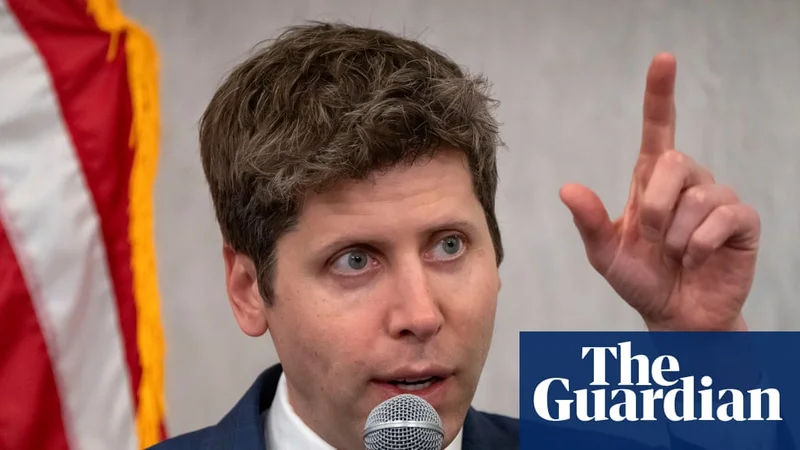
Image: Theguardian
Main Takeaway
OpenAI proposes giving the U.S. government a 5% equity stake worth $42.6 billion to ease political pressure and share AI profits.
Jump to Key PointsSummary
What OpenAI is offering Washington
OpenAI has proposed handing the U.S. government a 5% ownership stake in the company, according to the Financial Times. At OpenAI's $852 billion valuation from its March 2026 funding round, that stake would be worth approximately $42.6 billion. Neither OpenAI nor the White House has confirmed the negotiations publicly. The proposal represents one of the most aggressive attempts by a technology company to formalize its relationship with federal policymakers.
Chief executive Sam Altman has personally championed the idea, arguing that giving the American public a financial interest in OpenAI is the best mechanism to distribute the benefits of artificial intelligence broadly. According to two people familiar with the discussions cited by the FT, Altman views the equity structure as preferable to alternative models of public benefit sharing. The talks have been ongoing for more than a year, with Altman first raising the concept with the Trump administration in early 2025.
The scale of the proposed stake distinguishes this from typical corporate lobbying or political donations. A 5% position would make the federal government one of OpenAI's largest shareholders, with potential board representation and governance influence depending on the share class offered.
Why the Trump administration is receptive
The timing reflects heightened scrutiny of AI companies by Republican policymakers. The Trump administration has signaled interest in extracting tangible concessions from technology firms that benefit from federal research funding, regulatory accommodation, and export control exemptions. A direct equity stake would give the administration a concrete achievement to point toward, rather than relying on voluntary safety commitments or future tax revenue.
Senior U.S. officials have held preliminary discussions with multiple AI companies about government equity participation, according to three people familiar with the matter cited by Notus. Altman reportedly pitched the concept directly to President Trump in early 2025. The administration's openness to the proposal suggests a departure from traditional antitrust or regulatory approaches toward more direct state involvement in strategically important industries.
For OpenAI specifically, the calculus includes defusing potential regulatory threats. The Verge AI notes that a Aguilar government stake could help the company avoid onerous regulation by aligning federal financial incentives with OpenAI's commercial success. This model would transform a potentially adversarial regulatory relationship into a partnership structure. \ intrigue
How this would reshape AI governance
The proposal extends beyond OpenAI to encompass the broader AI sector. According to the Financial Times reporting cited by multiple outlets, Altman has advocated for other U.S. AI companies to offer the government similar stakes. This collective approach would prevent any single firm from bearing competitive disadvantage while normalizing public equity participation as an industry standard.
The governance implications are substantial. Government shareholders typically exercise fiduciary duties toward profit maximization, but with additional public interest considerations that private investors do not face. This hybrid model has no exact parallel in American technology policy. Previous federal interventions in private industry, such as the auto industry bailouts of 2008-2009, involved temporary stakes with explicit constraints. An ongoing, open-ended equity position in a fast-growing AI company would represent a structural innovation in state-capital relations.
Bloomberg AI reports that executives proposed the move as part of a broader arrangement, though details remain sparse. The share class, voting rights, and exit mechanisms would determine whether this represents symbolic participation or meaningful control. Preferred shares with limited governance rights would differ substantially from common stock with board seats.
What critics and competitors will argue
The proposal faces predictable objections from multiple directions. Antitrust advocates will warn that government ownership creates conflicts of interest when regulators evaluate mergers, acquisitions, and market behavior by firms in which the state holds equity. Competitors like Anthropic, xAI, and Google may argue that OpenAI is purchasing regulatory favoritism through a mechanism unavailable to them, particularly if they decline or are excluded from parallel arrangements.
Conservative critics of industrial policy will likely frame the proposal as crony capitalism, substituting political connections for market competition. Progressive critics may counter that 5% is insufficient compensation for public investment in AI research infrastructure, or that the structure privatizes gains while socializing only token risk. The valuation question is particularly sensitive. OpenAI's $852 billion valuation, established in March 2026, reflects extraordinary growth expectations. If the company fails to meet them, the government's position could diminish dramatically or require additional capital commitments.
The precedent risk cuts both ways. Future administrations could demand expanded stakes, or conversely, be pressured to divest for ideological reasons. The durability of any arrangement across political cycles remains uncertain.
What happens if this goes through
Formalization of the stake would require navigating complex legal and structural barriers. The federal government lacks a standard vehicle for holding private equity in non-financial companies. Creation of a dedicated fund or trust would be necessary, with unclear oversight mechanisms and congressional appropriations requirements. The Administrative Procedure Act and federal acquisition regulations do not contemplate this precise scenario.
For OpenAI's existing investors, dilution is a technical concern, though 5% is manageable if distributed across all share classes proportionally. More significant is the signaling effect to international markets and regulators. European and Chinese authorities may view U.S. government equity participation as justifying reciprocal state involvement in AI companies within their jurisdictions, accelerating a global trend toward techno-nationalism.
The Financial Times reporting, amplified by CNBC, Bloomberg AI, and other outlets, indicates the discussions remain preliminary. No agreement is imminent, and the political calendar complicates rapid resolution. However, the fact that Altman has sustained advocacy for over a year, including direct presidential engagement, suggests this is not a casual trial balloon. The coming months will determine whether this proposal crystallizes into a model for AI governance or collapses under the weight of its own novelty.
Key Points
OpenAI proposes 5% U.S. government equity stake worth $42.6 billion at current valuation
Sam Altman has advocated for public financial stake since early 2025 Trump administration engagement
Proposal envisions parallel equity arrangements across multiple U.S. AI companies
Ongoing talks for over a year indicate sustained institutional commitment to concept
Implementation requires novel federal structures for private equity holding and oversight
Questions Answered
The proposed 5% stake would be worth approximately $42.6 billion based on OpenAI's $852 billion valuation from its March 2026 funding round. The valuation was established in a record-breaking funding round and represents one of the highest private company valuations in history.
Altman argues that giving the American public a financial stake in OpenAI is the best way to distribute AI benefits broadly. According to sources familiar with the discussions, he also views it as a mechanism to ease political pressure and build constructive relationships with the Trump administration.
The proposal envisions other U.S. AI companies offering similar government stakes, though no other firms have been identified publicly. Altman has reportedly advocated for this as an industry-wide approach to prevent competitive disadvantage for any single company.
CNBC confirmed that discussions have proceeded for more than a year. Altman first shared the concept with the Trump administration in 2025 and reportedly pitched it directly to President Trump in early 2025.
The federal government lacks standard vehicles for holding private equity in non-financial companies, requiring novel legal structures. Antitrust concerns arise about regulatory impartiality, and congressional oversight mechanisms would need establishment.
Source Reliability
50% of sources are highly trusted · Avg reliability: 76
Go deeper with Organic Intel
Simple AI systems for your life, work, and business. Each one includes copyable prompts, guides, and downloadable resources.
Explore Systems