Flock Safety Tightens Police Camera Access as Privacy Backlash Threatens Contracts Nationwide
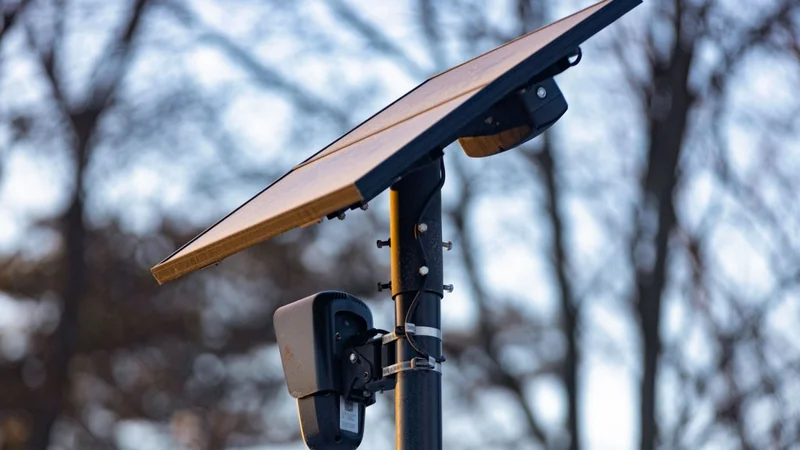
Image: MIT Technology Review AI
Main Takeaway
Flock Safety is restricting police access to its license-plate reader network after misuse allegations, wrongful stops, camera attacks, and contract cancellations intensified privacy concerns.
Jump to Key PointsSummary
Flock responds to mounting backlash
Flock Safety is changing how police departments access its license-plate reader network after allegations of officer abuse, wrongful stops, and mass surveillance intensified across the United States. The company’s chief executive, Garrett Langley, framed the changes as privacy protections and said Flock is not “Big Brother,” Bloomberg reported.
The announcement follows a broader crisis for the company. Flock operates about 120,000 cameras that record passing vehicles and allow participating agencies to search vehicle-location data. Cities have suspended or canceled contracts, while residents and activists have disabled cameras in several states. The response places Flock’s commercial model, which depends on broad law-enforcement participation, under pressure.
New limits target officer misuse
The new guardrails focus on controlling who can search Flock’s network and why, particularly after reports that officers used the system to follow or harass current and former romantic partners. MIT Technology Review reported that Flock is changing officer access to its nationwide database, with the stated goal of preventing improper searches and rebuilding trust with police customers.
The restrictions address a specific weakness in a system that turns thousands of local cameras into a searchable national data pool. Yet the safeguards leave important questions about oversight, enforcement, and access by other agencies. The LAPD suspended its partnership while seeking clearer rules on data privacy, security, and sharing, according to ABC7. That dispute shows that technical access controls alone won't settle disagreements over contracts and governance.
Cities and residents push back
Flock’s privacy controversy has produced both institutional resistance and direct attacks on its equipment. Municipalities including Fort Collins, Eugene, Madison, Knoxville, Syracuse, and Walla Walla have deactivated cameras or ended contracts, ABC7 New York reported. Residents have cut down cameras, covered their lenses, painted them, or rammed them with vehicles in incidents spanning New York, California, Idaho, and Florida.
The protests reflect competing views of the cameras’ purpose. Flock presents the network as a tool for investigating crimes, finding missing people, and reconstructing vehicle movements. Critics describe the same capabilities as a system that records and analyzes nearly every passing vehicle, creating location histories that can be searched by law enforcement. The spread of both government cancellations and vigilante action indicates that the dispute has moved beyond ordinary product criticism.
Accuracy failures raise the stakes
Errors in Flock’s system can turn a data problem into an immediate police encounter. The Drive described a case in which an apparent license-plate error involving a Range Rover contributed to officers surrounding the publication’s author and his wife. The account said human error played a role, while Flock’s artificial-intelligence systems compounded the mistake over several days.
That episode gives the privacy debate a practical dimension: inaccurate vehicle identification can affect people who have no connection to a crime. Flock’s CEO later discussed the incident with The Drive, while the company’s broader defense has emphasized the benefits of modern, accountable surveillance compared with older closed-circuit television systems. Critics at IPVM challenged that argument, saying automated searchable records create a wider and more invasive form of monitoring.
The company’s privacy argument
Langley has argued that older surveillance systems were more invasive because they lacked storage controls and accountability, according to IPVM. His position is that Flock’s technology improves public safety while respecting civil liberties through rules, auditability, and controlled access.
IPVM disputes the premise, arguing that searchable vehicle histories create risks that static cameras did not impose at the same scale. The disagreement turns on whether privacy depends mainly on camera visibility and retention, or on the ability to aggregate and search movements across jurisdictions. Flock’s new rules therefore face a credibility test: police agencies and residents will judge them by documented enforcement, independent review, and the company’s handling of errors, not by the slogan that it is not Big Brother.
What happens next
Flock’s next challenge is restoring contracts while proving that its guardrails work in daily police operations. Agencies will examine access logs, data-sharing terms, retention practices, error handling, and the consequences for officers who misuse the system. The LAPD’s suspension makes those contractual details especially significant for other departments weighing renewals.
The controversy also raises a broader policy question for automated public surveillance. A network of 120,000 cameras can help investigators locate vehicles, but its value depends on public confidence that searches are lawful, accurate, and limited to legitimate cases. Flock’s reforms respond to immediate criticism, yet cities and privacy advocates are demanding durable governance. The company’s survival as a major police-technology provider will depend on whether those controls narrow the system’s reach without undermining its investigative appeal.
Key Points
Flock Safety is restricting police access to its 120,000-camera license-plate reader network after misuse allegations.
LAPD suspended Flock’s partnership while seeking stronger privacy, security, and data-sharing requirements.
Cities nationwide have canceled contracts as residents disable cameras and challenge vehicle-tracking practices.
Reported license-plate errors have contributed to wrongful police stops and intensified scrutiny of Flock’s AI systems.
Flock CEO Garrett Langley argues modern surveillance offers more accountability than older CCTV networks.
Questions Answered
Flock Safety is changing how police officers access its license-plate reader network and adding controls aimed at preventing unauthorized searches. The changes respond especially to allegations that officers used the system to stalk or harass romantic partners.
The LAPD suspended Flock Safety services while it sought clearer contractual protections for data privacy, security, and information sharing. The department had maintained a three-year partnership with the company.
Flock Safety operates about 120,000 cameras connected to a searchable vehicle-data network. Participating police departments use the system to investigate crimes, find missing people, and reconstruct vehicle movements.
Yes, residents have cut down, painted, blocked, and rammed Flock Safety cameras in several states. Cities including Fort Collins, Eugene, Madison, Knoxville, Syracuse, and Walla Walla have also deactivated cameras or canceled contracts.
Flock Safety technology has been linked to a reported wrongful stop involving an apparent license-plate error. The incident described by The Drive shows how inaccurate data and AI-assisted tracking can escalate into direct police encounters.
Source Reliability
63% of sources are trusted · Avg reliability: 81
Go deeper with Organic Intel
Simple AI systems for your life, work, and business. Each one includes copyable prompts, guides, and downloadable resources.
Explore Systems