EU Unveils Ambitious Tech Sovereignty Plan to Cut Dependence on US and Asian Technology
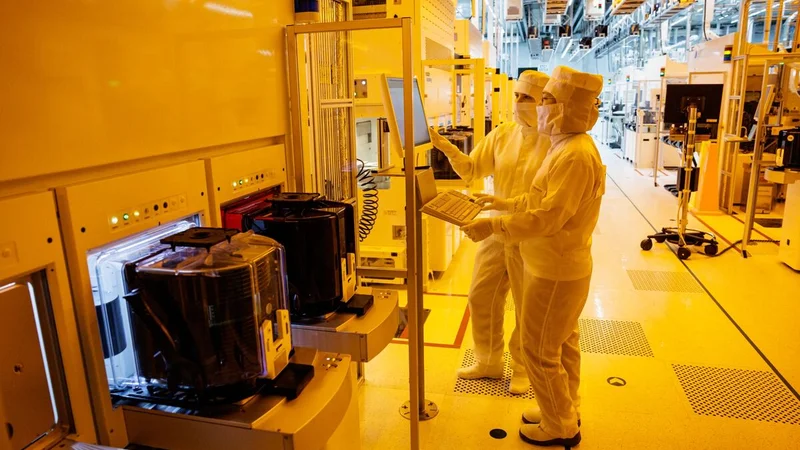
Image: Bloomberg AI
Main Takeaway
The EU launched a sweeping tech sovereignty package to reduce reliance on US AI and Asian chip suppliers.
Jump to Key PointsSummary
Why Brussels is pushing for tech independence now
The European Union unveiled a comprehensive tech sovereignty package on Wednesday, aiming to sever its dependence on American artificial intelligence and cloud computing providers while reducing reliance on Asian semiconductor manufacturers. The 27-nation bloc's initiative arrives as geopolitical tensions and supply chain vulnerabilities have made strategic autonomy a top priority for European leaders.
According to Bloomberg, the package targets domestic expansion across semiconductors, artificial intelligence, and cloud computing infrastructure. Fortune reports that EU leaders are specifically worried about the continent's heavy reliance on American companies for AI services and Asian suppliers for microchips. The urgency behind these efforts has intensified as global technology competition has sharpened, with Brussels viewing technological dependence as both an economic liability and a national security risk.
What the package covers across chips, AI, and cloud
The sovereignty measures span three critical technology layers: hardware, software, and infrastructure. Bloomberg's reporting indicates the plan includes specific provisions to expand European semiconductor manufacturing capacity, though exact funding figures remain undisclosed in available excerpts. The chip component builds upon earlier EU efforts, including the European Chips Act, which sought to double the continent's share of global semiconductor production.
Fortune notes the package promotes European-based alternatives to foreign Big Tech services, suggesting direct competition with established American cloud providers and AI platforms. Politico's framing, headlined 4 ways Europe wants to wean off US tech, implies the strategy is multifaceted and operational rather than merely aspirational. The cloud computing element addresses a particularly sore spot for European regulators, who have long chafed at the dominance of Amazon Web Services, Microsoft Azure, and Google Cloud in storing and processing European data.
The geopolitical calculus behind the move
Europe's tech sovereignty push cannot be separated from broader transatlantic and global dynamics. The Atlantic Council has previously characterized digital sovereignty as Europe's declaration of independence, a framing that resonates with the current package's ambition. The timing suggests European leaders are responding to perceived vulnerabilities exposed by recent geopolitical disruptions, including trade disputes and concerns about extraterritorial application of US laws.
The CEPA roadmap for Europe-US tech cooperation, published before this announcement, indicates that even cooperation-focused analysts recognized the need for Europe to develop indigenous capabilities. Euractiv's reporting on delays to earlier sovereignty proposals suggests this week's unveiling represents a breakthrough after bureaucratic stasis. The question now is whether Brussels can execute faster than it has on previous digital initiatives, which have often been bogged down by the need to harmonize 27 national interests.
Challenges facing implementation
Execution remains the critical unknown. The European Chips Act, referenced in EU official communications, provided a framework for semiconductor investment but has struggled to match the scale of US CHIPS Act funding or Asian government subsidies. Digitalsme and industry groups like the European DIGITAL SME Alliance have previously advocated for EuroStack, a sovereign technology stack, yet translating concept to deployment has proven difficult.
Steptoe's analysis of upcoming tech sovereignty regulations flagged potential legal and compliance complications that could slow rollouts. The ECDPM's research on digital sovereignty in European international policy further underscores how trade relationships and diplomatic commitments may constrain how aggressively Brussels can mandate local procurement. Without concrete funding commitments and enforcement mechanisms, the package risks becoming another well-intentioned white paper.
What happens next for companies and consumers
Technology companies operating in Europe should anticipate tighter procurement rules and potential preference for EU-based vendors in public sector contracts. Microsoft, already referenced in tech sovereignty coverage, faces particular scrutiny given its dominant position in enterprise cloud and productivity software. American AI providers including OpenAI, Google, and Anthropic may encounter new barriers to public sector deployment.
For European consumers, the immediate impact is likely minimal, though longer-term effects could include more localized cloud services and potentially higher costs if scale efficiencies are sacrificed for geographic control. The critical path ahead involves whether the European Commission can secure member state funding, attract private capital to match public investment, and build technology that competes on functionality rather than merely on origin. The Digital Strategy office's involvement signals high-level political commitment, but the next 12 months will reveal whether that commitment translates into steel in the ground and code in production.
How this reshapes global technology competition
The EU's move adds a third pole to an increasingly bifurcated global technology order dominated by the United States and China. Europe's strategy differs from China's state-directed model and America's market-driven approach by attempting to regulate its way to competitiveness while simultaneously investing in domestic capacity. This hybrid approach has few precedents at this scale.
Success would validate Europe's regulatory power as a tool for industrial development; failure would confirm critics who view the continent as better at writing rules than building products. The package also tests whether mid-sized economies can achieve technology sovereignty without matching the hundreds of billions in subsidies that Washington and Beijing have committed. For the global technology industry, a meaningful European alternative would fragment markets and complicate product strategies that currently assume American or Chinese dominance.
Key Points
EU launches comprehensive tech sovereignty package targeting chips, AI, and cloud independence
Plan aims to reduce reliance on US AI services and Asian semiconductor manufacturers
Package builds on European Chips Act and targets public sector procurement rules
Implementation faces funding gaps and regulatory complexity across 27 member states
Move establishes Europe as potential third pole in US-China technology competition
Questions Answered
The package focuses on semiconductors, artificial intelligence, and cloud computing infrastructure, aiming to build European alternatives to current American and Asian suppliers.
Geopolitical tensions and supply chain vulnerabilities have intensified concerns about strategic dependence on foreign technology, particularly following recent global disruptions.
While the Chips Act focused specifically on semiconductor manufacturing, this broader package extends to AI software and cloud infrastructure services.
Cloud providers like Amazon Web Services, Microsoft Azure, and Google Cloud face procurement restrictions, along with AI companies including OpenAI and Google.
Funding scale, coordination across 27 member states, attracting private investment, and building technology competitive with established global leaders.
Specific implementation timelines remain unclear, though the announcement signals immediate policy direction with detailed regulations expected in coming months.
Source Reliability
55% of sources are trusted · Avg reliability: 73
Go deeper with Organic Intel
Simple AI systems for your life, work, and business. Each one includes copyable prompts, guides, and downloadable resources.
Explore Systems